Background
Ptuj Police got a warrant to search someone's house because they saw a light.
In Court, the officer
claimed the light was very strong.
She was asked to look up, where a battery of LED lights were assembled.
"It was brighter than that," she claimed, sticking to her story.
Power density = Total
fixture watts / Room floor area
2 battens (conservative setup):
2 × 120 cm (40W each) = 80W total → 80W / 60 m² = 1.3 W/m²
2 × 180 cm (50W each) = 100W total → 100W / 60 m² = 1.7 W/m²
Realistic range: 1.3–1.7 W/m²
4 battens
(brighter/more uniform setup):
4 × 120 cm (40W each) = 160W total → 160W / 60 m² = 2.7 W/m²
4 × 180 cm (50W each) = 200W total → 200W / 60 m² = 3.3 W/m²
Realistic range: 2.7–3.3 W/m²
Modern LED battens are highly efficient: A 40W 120 cm fixture gives
~5,000–6,000 lumens (6500K high-CRI).
For courtrooms: EU
standard EN 12464-1 recommends 300–500 lux at desk/eye level for
reading/writing tasks.
~120 lm/W LEDs at 2.5–4
W/m² achieve ~300–480 lux.
Includes utilization
factor ~0.6–0.8 in room with good reflectances.
Suspended battens:
Closer to eye level than flush ceiling: more effective lux/watt, but
power density (W/m² floor) is unchanged.
No photo evidence of
suspended battens in Slovenian courtrooms — they use recessed grids,
often 4–8 panels per room.
40–60W each total
200–400W for 60 m² = 3.3–6.7 W/m²
Final estimate in a typical Ptuj courtroom (~60 m²):
2 battens: 1.3–1.7 W/m²
4 battens: 2.7–3.3 W/m²
Most likely average: ~2.5–3 W/m² (balances brightness and efficiency
for 400–500 lux at eye level).
A comparison of the Defendant's light, being 16 watts at 14 m
distance, and the courtroom lighting, 1.4 m from eye/desk level
In which the following
very generous assumptions are made to the benefit of the Prosecution:
No glass.
Only 100 watts in the Court.
Equal lumens per watt (domestic LEDs are likely lower than professional office lighting)
The 14 m distant 16 W
source occupies 5% of the field of vision (solid angle ≈ 5% of visual
field).
The rest of the field
of vision (95%) is in otherwise streetlit darkness, which we model as
very low background illuminance (~2–5 lux typical for urban street
lighting at night, away from direct lampposts).
We calculate the
perceived brightness (effective lux weighted by visual field
occupancy) and compare it to the required 300–500 lux.
Assumptions and
Setup
Inverse square law
still applies for point-source approximation.
16 W source at 14 m — we keep its illuminance as calculated
previously.
100 W source at 1.4 m — reference for comparison (close, bright
source).
Eye-level distance to
14 m source ≈ 14 m (assumes horizontal distance dominates, i.e. the
observer is looking up)
Field of view (FOV):
Human binocular FOV is ~120° horizontal × ~60° vertical → total solid
angle ≈ 2 sr (steradians). 5% occupancy ≈ 0.1 sr solid angle for the
distant source.
Streetlit darkness
background: ~3 lux average (conservative; real street lighting varies
1–10 lux in peripheral vision).
Lux to perceived
brightness: For extended sources, the weighted average illuminance
across the visual field approximates the perceived brightness level.
Step 1: Recalculate
illuminance from each source (point-source approximation)
E = (P × η) / (4π d²) (η = luminous efficacy, assume 120 lm/W for
modern LEDs at 6500K)
16 W source at 14 m
Luminous flux = 16 W × 120 lm/W = 1,920 lm E₁ = 1,920 / (4π × 14²) ≈
1,920 / (4π × 196) ≈ 0.78 lux at 14 m
100 W source at 1.4 m Luminous flux = 100 W × 120 lm/W = 12,000 lm E₂
= 12,000 / (4π × 1.4²) ≈ 12,000 / (4π × 1.96) ≈ 486 lux at 1.4 m
Step 2: Perceived
brightness (weighted by field of view)
Perceived illuminance ≈ (E_source × fraction_of_FOV) + (E_background ×
remaining_FOV)
14 m source (5% FOV)
Contributes: 0.78 lux × 0.05 = 0.039 lux
Background (95% FOV): 3 lux × 0.95 ≈ 2.85 luxTotal perceived ≈ 2.89
lux
1.4 m source assumes 5%
FOV for fair comparison
1.4 m source contributes: 486 lux × 0.05 = 24.3 lux Background (95%):
3 lux × 0.95 ≈ 2.85
lux. Total perceived ≈ 27.15 lux
Step 3: How far short
of 300–500 lux?
14 m source (16 W):
~2.9 lux perceived → ~100–170 times too dim compared to 300–500 lux
target.
1.4 m source (100 W): ~27 lux perceived → ~11–18 times too dim for the
same 5% occupancy.
Step 4: What wattage
would it take to reach 300–500 lux with the 14 m source?
To deliver 300 lux at eye level from a source at 14 m occupying only
5% of FOV:
Required E_source = 300 lux / 0.05 = 6,000 lux at 14 m
Required luminous flux = 6,000 × 4π × 14² ≈ 6,000 × 4π × 196 ≈
14,800,000 lm
At 120 lm/W → power needed ≈ 123,000 W (123 kW)
For 500 lux target → ~205 kW
Interpretation and
Reality Check
A 16 W LED at 14 m,
even if it occupies 5% of your visual field, contributes only ~0.04
lux — completely negligible against typical street lighting background
(~3 lux).
The perceived
brightness is dominated by the 95% dark background: the observer sees
~3 lux total, regardless of the tiny distant source.
To make the 14 m source
alone provide courtroom-level reading light (300–500 lux) across your
visual field, it would need to be absurdly powerful (~123–205 kW) —
equivalent to hundreds of high-power streetlamps focused on one point.
Conclusion
At 14 meters, a 16 W
source occupying only 5% of the officers' field of view adds almost
nothing to brightness in otherwise streetlit darkness (~2.9 lux total
perceived vs. 300–500 lux target).
L
ight framed by a window
will stand out in darkness, due to both edge contrast and
"story-telling". Ptuj Police decided to exploit this for
discriminatory purposes [5956].
The Defendant's
street-facing exterior was just too contrasty not to give probable
cause, these observers might have explained in the warrant
application - but didn't.
As with any strong
source, the courtroom lighting will result in miosis.
The brightness ratio from the previous calculation (1:625) still holds — the close 100 W source at 1.4 m is vastly brighter, but even that is far below courtroom requirements when limited to 5% occupancy.
The officers' perceptions
of types of light sources with which everyone is familiar is
unreliable due to ideological incitements. Because it deviates from
the observable facts the evidence is untrue.
Ptuj Court's
one-sided
acceptance of their wild tale neither tested nor enhanced its
accuracy.
The Witness was enmeshed
in the legislature's vague and false premises about cannabis growing,
which the government of Slovenia has now admitted
in a non-binary kind of way
is perfectly ok, beneficial,
and lawful. It plans to cut out the middle-man - as Slovenia's doctors
are all against cannabis or fired.
In a parallel Solomon
Asch-ish display of perception subdued, the Witness chose to adjust
her perceptual claims in order to make them consonant with
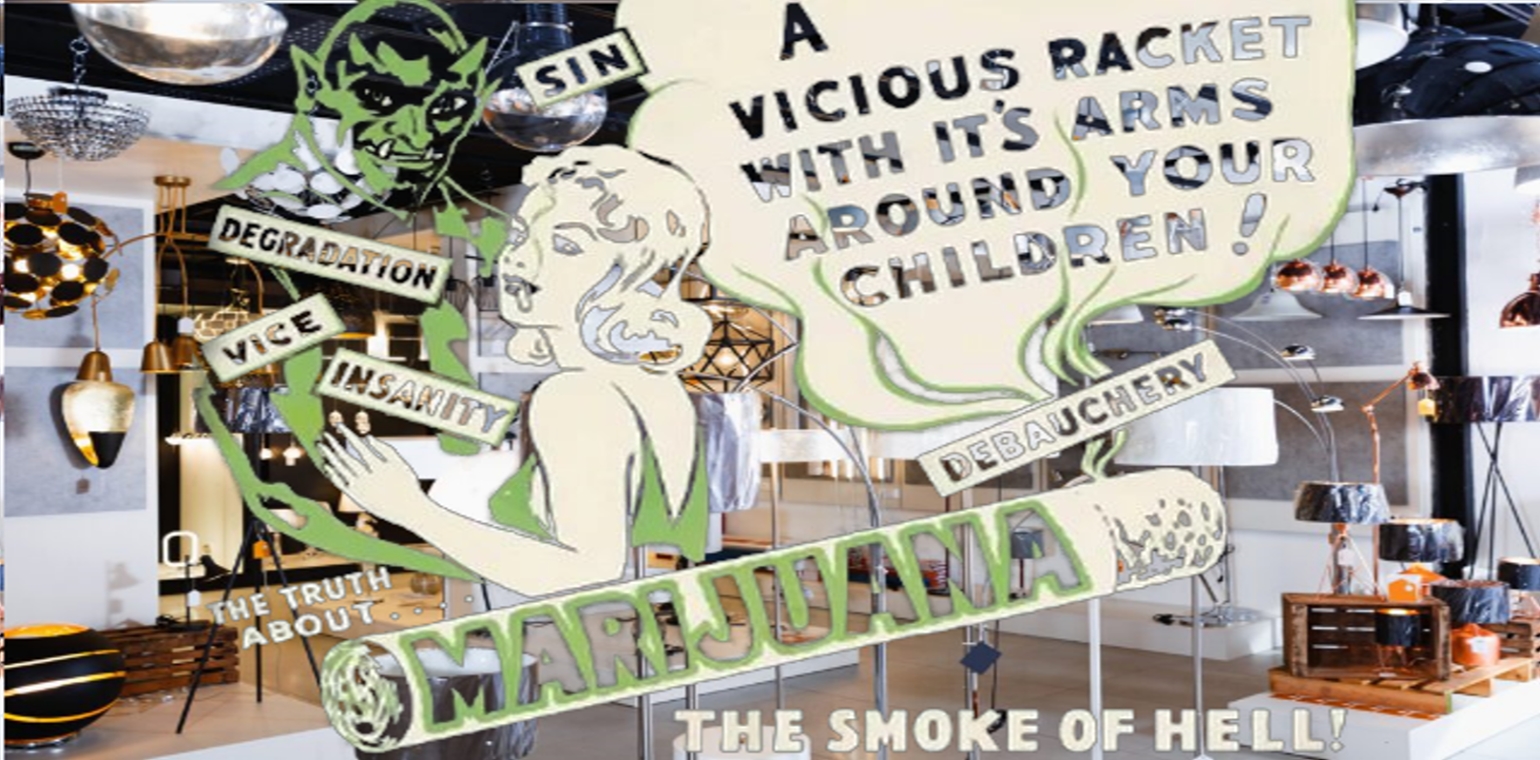
governments' and courts' erstwhile scientific ideology about the smoke of Hell
causing sin, degradation, vice, insanity, and debauchery, especially
when foreigners and politically divergent people are involved.
This reminds us that the Police are an undiscerning tool, adaptable not only to good purposes.
Her testimony on
lighting lawlessness, in
defiance of the laws of physics and ophthalmology,
is a suitable epitaph to an age
of deceit (NB: In defiance of Ljubljana, may continue as
quasi-official policy in Ptuj for 30 more years).
Electric Epilogue to
the Police evidence
The Defendant's June 2020 electricity bill was €45.75 including DDV,
for 156 VT units and 220 MT units, a 41.5:58.5 ratio in kWh. Unit and
network charges including DDV then resembled 14.7 and 12.2 cents
respectively.
On weekdays, for the 24 hour lighting cycle proposed by the Witness to
be at least equally as bright as the 300-500 lux courtroom workspace
standard, the range 123-205 kWh would mean a spend of 16h x 0.147 x VT
kWh (€289.30 to €482.16) + 8h x 0.122 x MT kWh (€120.05 to €200.08).
The least expensive weekend/holiday costs per 24 hours would be 24h x
0.122 x MT kWh, so €360.14 to €600.24.
Taking both lux values and both types of day into account,
the analysis therefore finds
between
€
2767.03 and €4611.68 weekly
would have been required to make Ptuj Police's
testimony
and their
dreams come true - and the
Defendant's light brighter than the Court.
-----------------------------------------------------------------------------
THE BENEDICTIONS REFERENCES TIMELINE OF DRUG LAW v. SCIENCE