CANNABIS AS AN EXIT DRUG
As part of its official religion,
alcohol has been protected in Slovenia, and users wishing to
transition to a safer drug have been told the cure is illegal and
immoral or something, stigmatised, criminalised, and used as a cash
cow by the judiciary, in the way alcoholics tend to see the economy.
Typically, Slovenia has not
noticed anything non-economic about cannabis. To Slovenia, a suicide
is not a wasted life, but a waste of educational resources. But it has
been observed that alcohol and cannabis are substitutes when it comes
to user expenditure.
https://www.tandfonline.com/doi/full/10.1080/1331677X.2018.1561321
[806]
"L'alcoolisme a conduit 2
membres de ma famille au suicide. Le cannabis a permis 2 autres
d'arrter l'alcool."
https://twitter.com/ConradMaj [808]
According to Tod H Mikuriya
(2004):
"No clinical trials of the efficacy of cannabis as a substitute for
alcohol are reported in the literature, and there are no papers
directly on point prior to my own account (Mikuriya 1970) of a patient
who used cannabis consciously and successfully to discontinue her
problematic drinking. There are ample references, however, to the use
of cannabis as a substitute for opiates (Birch 1889) and as a
treatment for delirium tremens (Clendinning 1843; Moreau 1845), which
were among the first uses by European physicians. The 1873 Indian
Government Finance Department Resolution recommended against
suppressing cannabis use for fear that people (p. 1395) 'would in all
probability have recourse to some other stimulant such as alcohol.'
"The Indian Hemp Drugs Commission Report of (1893-1894) articulated
the same concern (p. 359): '. . . driving the consumers to have
recourse to other stimulants or narcotics which may be more
deleterious.
"Birch (1889) described a patient weaned off alcohol by use of opiates
who then became addicted and was weaned off opiates by use of
cannabis. He noted (p. 625), 'Ability to take food returned. He began
to sleep well; his pulse exhibited some volume; and after three weeks
he was able to take a turn on the verandah with the aid of a stick.
After six weeks he spoke of returning to his post, and I never saw him
again.'"
Reviewing his own 92 patients using cannabis as an alcohol substitute:
"All patients reported benefit, indicating that for at least a subset
of alcoholics, cannabis use is associated with reduced drinking."
https://hams.cc/mikuriya.pdf
[3822]
In "Reductions in alcohol use following medical cannabis initiation:
results from a large cross-sectional survey of medical cannabis
patients in Canada", Lucas et al (2020) found the same, rather
obvious, thing, publishing their results almost 21 years after the
ZPPPD in the International Journal of Drug Policy:
"Background: Evidence details
how cannabis can influence the use of other psychoactive substances,
including prescription medications, alcohol, tobacco and illicit
drugs, but very little research has examined the factors associated
with these changes in substance use patterns. This paper explores the
self-reported use of cannabis as a substitute for alcohol among a
Canadian medical cannabis patient population.
"Methods: Data was derived from
a survey of 2102 people enrolled in the Canadian medical cannabis
program. We included 973 (44%) respondents who reported using alcohol
on at least 10 occasions over a 12 month period prior to initiating
medical cannabis, and then used retrospective data on the frequency
and amount of alcohol use pre-and post medical cannabis initiation to
determine which participant characteristics and other variables were
associated with reductions and/or cessation of alcohol use.
"Results: Overall, 419 (44%)
participants reported decreases in alcohol usage frequency over 30
days, 323 (34%) decreased the number of standard drinks they had per
week, and 76 (8%) reported no alcohol use at all in the 30 days prior
to the survey. Being below 55 years of age and reporting higher rates
of alcohol use in the pre-period were both associated with greater
odds of reducing alcohol use, and an intention to use medical cannabis
to reduce alcohol consumption was associated with significantly
greater odds of both reducing and ceasing alcohol use altogether.
"Conclusions: Our findings
suggest that medical cannabis initiation may be associated with
self-reported reductions and cessation of alcohol use among medical
cannabis patients. Since alcohol is the most prevalent recreational
substance in North America, and its use results in significant rates
of criminality, morbidity and mortality, these findings may result in
improved health outcomes for medical cannabis patients, as well as
overall improvements in public health and safety."
https://www.sciencedirect.com/science/article/abs/pii/S0955395920303017?via%3Dihub
[399]
Pince et al (2025) found similar support for substitution:
"We investigated the effects of legal-market cannabis on alcohol
self-administration and craving using a within-subjects human
laboratory drug administration paradigm. We tested whether cannabis
serves as a substitute for alcohol (i.e., attenuating alcohol
consumption and craving) in a sample of community adults who drink
heavily and use cannabis regularly. Consistent with our hypothesis, we
found that across the entire sample, self-administering cannabis
before alcohol significantly reduced alcohol consumption compared to
when alcohol was offered without cannabis. Furthermore, we found that
cannabis and alcohol co-administration was associated with significant
acute reduction in alcohol craving compared to alcohol administration
alone."
In "the first study to test effects of legal-market cannabis on
alcohol intake...Cannabis use was associated with a reduction in
alcohol intake...Those who drank less after cannabis reported greater
decreases in alcohol craving" reported Pince et al (2025):
"While human laboratory studies are comparatively limited, Mello and
colleagues instructed participants to complete a basic operant task
wherein they could earn cannabis or money after 30 min of work
and alcohol after 15 min, and found that individuals
self-administered less alcohol when cannabis was concurrently
available (Mello et al., 1978). Later, Ballard and DeWitt found that
co-administration of low doses of THC and alcohol reduced alcohol
craving (Ballard and de Wit, 2011). An unpublished laboratory study
also observed that cannabis use was associated with acute reductions
in alcohol intake and some measures of craving in a within-subjects
design with individuals who engage in heavy drinking (Metrik et al.,
unpublished). Other observational studies have reported similar
reductions in alcohol consumption when cannabis was used before
alcohol (Gunn et al., 2021; Karoly et al., 2023, Karoly et al., 2024;
Rootman, 2020). The effects of cannabis on alcohol craving and
consumption during simultaneous use may be mediated in part by
subjective effects (i.e., relaxation versus stimulation), as
simultaneous use predicted discontinuation of drinking via increased
relaxation and decreased alcohol craving at the event-level in an
ecological momentary assessment study (Waddell et al., 2024).
Together, these findings suggest the potential for cannabis to act as
a substitute for alcohol. Further research is needed to elucidate
variables that may predict such substitution behavior."
https://www.sciencedirect.com/science/article/abs/pii/S0376871625003138
[4933]
Metrik et al eventually appeared in
the American Journal of Psychiatry with "Acute Effects of Cannabis on
Alcohol Craving and Consumption: A Randomized Controlled Crossover
Trial" (2025), wherein:
"Across three experimental days, 157 participants reporting heavy
alcohol use and cannabis use two or more times weekly were randomized
to smoke cannabis cigarettes containing 7.2% THC, 3.1% THC, or 0.03%
THC (placebo), followed by exposures to neutral and personalized
alcohol cues and an alcohol choice task for alcohol
self-administration. A total of 138 participants completed two or more
experimental sessions (mean age, 25.6 years [SD=5.1]; 35% women; 45%
racial/ethnic minorities). Primary outcomes included craving, Alcohol
Craving Questionnaire–Short Form, Revised (ACQ-SF-R), and an
alcohol urge question; the secondary outcome was percent of total
available milliliters of alcohol consumed.
"Results:
There were no significant effects of cannabis on ACQ-SF-R ratings
after smoking and during alcohol cue exposure, but 7.2% THC reduced
alcohol urge immediately after smoking. Participants consumed
significantly less alcohol after smoking cannabis with 3.1% THC and
7.2% THC, reducing consumption by 19% and 27%, respectively.
"Conclusions:
Following overnight cannabis abstinence, smoking cannabis acutely
decreased alcohol consumption compared to placebo. Further controlled
research on a variety of cannabinoids is needed to inform clinical
alcohol treatment guidelines."
https://psychiatryonline.org/doi/10.1176/appi.ajp.20250115
[6066]
Gunn et al (2025) think "Working memory capacity predicts
cannabis-induced effects on alcohol urge":
"Participants aged 21 to 44 (N = 125, 32 % female) reporting heavy
alcohol use and cannabis use ≥ twice weekly completed a laboratory
protocol across three days where they smoked a placebo, 3.1 % delta-9
tetrahydrocannabinol (THC), and 7.2 % THC cannabis cigarette.
Participants were asked to rate their alcohol urge pre and post
smoking. Prior to the experimental sessions, participants completed
WMC measures including the n-back and the complex span tasks,
operation span (OS) and symmetry span (SS).
"Results
Those with higher WMC, as assessed via the SS task, reported
significantly lower alcohol urge after smoking the 7.2 %, but not the
3.1 %, THC dose, relative to placebo. Performance on the OS task was
not associated with alcohol urge. Lower WMC as determined via n-back
scores was associated with higher alcohol urge overall, but n-back
scores did not moderate the impact of cannabis on alcohol urge.
"Conclusion
Findings suggest individuals with higher but not lower working memory
experience lower alcohol urge under acute effects of cannabis.
Although cannabis is increasingly perceived as a substitute for
alcohol, individuals with lower working memory may be less likely to
experience such benefits when attempting to reduce their drinking."
https://www.sciencedirect.com/science/article/pii/S030646032500334X?via%3Dihub
[5664]
In "Acute cannabidiol administration
reduces alcohol craving and cue-induced nucleus accumbens activation
in individuals with alcohol use disorder: the double-blind randomized
controlled ICONIC trial" and using CBD only, Zimmermann et al (2024)
were able to confirm the effect of cannabis on craving found in
alcoholism and addiction in general [see 2978].
"Here we report data from the double-blind randomized controlled
ICONIC trial that compared the effects of a single dose of
800 mg cannabidiol against placebo (PLC) in
N = 28 individuals with AUD. Cue-induced nucleus
accumbens (NAc) activation, alcohol craving during a combined stress-
and alcohol cue exposure session, as well as craving during an fMRI
alcohol cue-reactivity task and CBD plasma levels served as outcomes.
Individuals receiving CBD showed lower bilateral cue-induced NAc
activation (tleft_NAc(23) = 4.906,
p < 0.001, d = 1.15; tright_NAc
(23) = 4.873, p < 0.001,
d = 1.13) and reported significantly lower alcohol
craving after a combined stress- and alcohol cue exposure session
(Fgroup(1,26) = 4.516, p = 0.043,
eta2 = 0.15) and during the fMRI cue-reactivity task
(Fgroup(1,24) = 6.665, p = 0.015,
eta2 = 0.23). CBD levels were significantly higher in
the CBD group (t(25) = 3.808,
p < 0.001, d = 1.47) and showed a
significant negative association with alcohol craving during the cue
exposure experiment (r = −0.394,
pFDR = 0.030) and during fMRI
(r = −0.389, pFDR = 0.030), and with
left and right NAc activation (rleft_NAc = −0.459,
pFDR = 0.030; rright_NAc = −0.405,
pFDR = 0.030). CBDs capacity to reduce stress- and
cue-induced alcohol craving and to normalize NAc activation a region
critical to the pathophysiology of AUD contribute to understanding the
neurobiological basis of its clinical effects and support its
potential as a treatment option for AUD."
https://www.nature.com/articles/s41380-024-02869-y [3787]
Pince et al (2026) are researching
"Behavioral phenotypes associated with cannabis and alcohol
substitution":
"This study is an exploratory analysis of data from a within-subjects,
crossover laboratory study on alcohol and cannabis co-administration.
Participants completed two sessions: one in which they
self-administered alcohol after using cannabis, and one in which they
self-administered alcohol but did not use cannabis. We aim to compare
behavioral phenotypes of individuals who self-administered less
alcohol after cannabis ('substituters'; n = 23), more
alcohol after cannabis ('complementers'; n = 7), or the
same amount of alcohol regardless of whether cannabis was used
('non-substituters'; n = 16). We utilized Welch's ANOVAs
and Kruskal-Wallis tests to compare baseline group differences,
drawing on domains from the Addictions Neuroclinical Assessment (ANA)
framework. Wilcoxon tests were employed to test differences in
laboratory self-administration measures between sessions for each
group.
"Results
Substituters had significantly lower scores on measures corresponding
to ANA domains of negative emotionality (BDI-II, DASS-Depression) and
executive function (UPPS-P Lack of Premeditation) than
non-substituters. Substituters endorsed higher positive cannabis
expectancies than non-substituters, though expectancy differences did
not reach significance.
"Conclusions
Individuals who use cannabis and alcohol and have lower levels of
negative emotionality and impulsivity may be more likely to substitute
cannabis for alcohol. Future research is needed to explore long-term
outcomes of cannabis substitution."
https://link.springer.com/article/10.1186/s12954-026-01432-y
[6002]
CBD was an exit drug for fruit flies in "Long term exposure to dietary
cannabinoids inhibits rapid functional tolerance to ethanol in
Drosophila melanogaster adults" by Vidal et al (2025):
"Given that CBD acts as a natural antagonist of CB1R, and CB1R
antagonists have been shown to reduce the self-administration and
appetitive value of ethanol in rodent models (Arnone et al., 1997;
Economidou et al., 2006), as well as inhibit the development of rapid
tolerance to ethanol in rats (Lemos et al., 2007), CBD had long been
viewed as a promising pharmacotherapy candidate to treat alcohol used
disorders (AUD). Accordingly, CBD treatment was shown to inhibit the
context-dependent relapse into alcohol seeking in rats with a history
of alcohol consumption (Gonzalez-Cuevas et al., 2018), and their
ability to develop tolerance to sedation by alcohol following
re-exposure (Szulc et al., 2023). Not surprisingly, most previous work
has focused on the potential role of CB1/2R-dependent signaling in the
cross-talk between ethanol and CBD. Notably, Viudez-Martinez and
colleagues showed that a 5HT1A serotonin receptor antagonist could
block the reduction in alcohol self-administration triggered by the
combined treatment with CBD and naltrexone (Viudez-Martnez et al.,
2018), establishing a precedent for the potential involvement of
non-canonical cannabinoid signaling in the cross-talk between CBD and
alcohol."
https://www.micropublication.org/journals/biology/micropub-biology-001825
[5816]
In a prelude to their
larger 2021 study "Cannabis Significantly Reduces the Use of
Prescription Opioids and Improves Quality of Life" [2815]
in 2017 Lucas and Walsh published a study in which they surveyed 271
medical cannabis patients in research funded by Tilray.
"Findings include high
self-reported use of cannabis as a substitute for prescription drugs
(63%), particularly pharmaceutical opioids (30%), benzodiazepines
(16%), and antidepressants (12%). Patients also reported substituting
cannabis for alcohol (25%), cigarettes/tobacco (12%), and illicit
drugs (3%). A significant percentage of patients (42%) reported
accessing cannabis from illegal/unregulated sources in addition to
access via LPs, and over half (55%) were charged to receive a medical
recommendation to use cannabis, with nearly 25% paying $300 or more."
https://www.sciencedirect.com/science/article/abs/pii/S0955395917300130
[3083]
Holman et al
"...conducted an anonymous,
cross-sectional online survey in May 2021 for seven days with adult
Canadian federally-authorized medical cannabis patients (N = 2697)
registered with two global cannabis companies to evaluate patient
perceptions of Primary Care Provider (PCP) knowledge of medical
cannabis and communication regarding medical cannabis with PCPs,
including PCP authorization of licensure and substitution of cannabis
for other medications. Overall, 47.1% of participants reported
substituting cannabis for pharmaceuticals or other substances (e.g.,
alcohol, tobacco/nicotine).
https://jcannabisresearch.biomedcentral.com/counter/pdf/10.1186/s42238-022-00141-0.pdf
[1826]
Similar results for alcohol
came from Kruger et al (2026) at Buffalo University, NY, for whom
cannabis is a "novel harm reduction strategy":
"Alcohol consumption is associated with nearly 200 health conditions.
As cannabis-infused beverages emerge in the legal market, their
potential as a substitute for alcohol is of growing interest. This
study investigates whether cannabis beverages may reduce alcohol use.A
total of 438 anonymous adults who used cannabis in the past year
completed a survey including cannabis use and alcohol consumption
items from the Behavioral Risk Factor Surveillance System (BRFSS).
Chi-square and t-tests compared alcohol use between cannabis beverage
users and non-users, and before vs. after cannabis beverage
initiation.About one-third (33.6%) of respondents used cannabis
beverages, typically consuming one per session. Users were more likely
to report substituting cannabis for alcohol (58.6%) than non-users
(47.2%). They also reported fewer weekly alcoholic drinks after
starting cannabis beverages (M = 3.35) compared to before (M = 7.02),
and binge drank less frequently (80.7% reported less than monthly or
never, vs. 47.2% before). Those who cited reducing other substance use
were more likely to use cannabis beverages (45.8%).Findings suggest
cannabis beverages may support alcohol substitution and reduce
alcohol-related harms, offering a promising alternative for
individuals seeking to lower alcohol intake."
https://pubmed.ncbi.nlm.nih.gov/41533430/ [5873]
Anderson et al at the National Bureau of Economic Research:
"...find that both state MMLs
and RMLs are associated with decreases in teen marijuana consumption,
consistent with the hypothesis that selling to minors becomes a
relatively risky proposition for licensed marijuana dispensaries. In
addition, we find that MMLs are associated with decreases in teen
cigarette use."
https://www.nber.org/system/files/working_papers/w26780/w26780.pdf
[400]
Raman and Bradford (2022) find
"Recreational cannabis legalizations associated with reductions in
prescription drug utilization among Medicaid enrollees":
"We use quarterly data for all
Medicaid prescriptions from 2011 to 2019 to investigate the effect of
state-level RCLs [recreational cannabis laws] on prescription drug
utilization. We estimate this effect with a series of two-way fixed
effects event study models. We find significant reductions in the
volume of prescriptions within the drug classes that align with the
medical indications for pain, depression, anxiety, sleep, psychosis,
and seizures. Our results suggest substitution away from prescription
drugs and potential cost savings for state Medicaid programs.
https://onlinelibrary.wiley.com/doi/10.1002/hec.4519 [1827]
In Canada, Jeddi et al examined "Cost-Effectiveness of Medical
Cannabis Versus Opioids for Chronic Noncancer Pain" (in Canadian
dollars):
"Total mean annual cost per patient was $1,980 for oral medical
cannabis and $1,851 for opioids, a difference of $129 (95% confidence
interval [CI]: -$723 to $525). Mean QALYs were 0.582 for both oral
medical cannabis and opioids (95% CI: -0.007 to 0.015).
Cost-effectiveness acceptability curves showed that oral medical
cannabis was cost-effective in 31% of iterations at willingness-to-pay
thresholds up to $50,000/QALY gained. Use of opioids is associated
with nonfatal and fatal overdose, whereas medical cannabis is not.
Discussion: Our findings suggest that medical cannabis as an
alternative to opioids for chronic pain may confer similar, but
modest, benefits to patients, and reduce the risk of opioid overdose
without substantially increasing costs."
https://www.liebertpub.com/doi/10.1089/can.2024.0120?url_ver=Z39.88-2003&rfr_id=ori%3Arid%3Acrossref.org&rfr_dat=cr_pub++0pubmed
[5182]
On this side of the Atlantic, a
report by Sapphire Clinics on opioid prescription in the UK found that
one in seven (14%) chronic pain patients prescribed opioid medications
claim they became dependent or addicted, while strong side effects
reportedly stopped one in four (23%) from living a normal life.
57 million prescriptions for
opioids such as tramadol, codeine and fentanyl, were issued to UK
patients in 2022, an average of one 108 every minute.
https://www.sapphireclinics.com/wp-content/uploads/2023/06/opioid-campaign-whitepaper.pdf
[2852]
Marrinan et al (2024) in the UK
determined that increasing access to medical cannabis on the NHS for
chronic pain could save the state healthcare provider almost 4 billion
annually, 729 per patient.
"An early cost-effectiveness
model was developed to estimate the impact of prescribing CBMPs alone
and/or in addition to analgesics, physiotherapy, and cognitive
behavioral therapy for chronic pain in the UK for 1 year.
"Results
Due to their comparative
effectiveness, CBMPs were found to be cost saving."
https://www.tandfonline.com/doi/full/10.1080/14737167.2024.2412248
[3629]
In "Perceived Efficacy, Reduced
Prescription Drug Use, and Minimal Side Effects of Cannabis in
Patients with Chronic Orthopedic Pain" (2022) Greis et al explain:
"Extant inventories for
measuring cannabis use were not designed to capture the medically
relevant features of cannabis use, but rather were designed to detect
problematic use or cannabis use disorder. Thus, we sought to capture
the medically relevant features of cannabis use in a population of
patients with orthopedic pain and pair these data with objective
measures of pain and prescription drug use."
The results show:
"Medical cannabis use was
associated with clinical improvements in pain, function, and quality
of life with reductions in prescription drug use; 73% either ceased or
decreased opioid consumption and 31% discontinued benzodiazepines.
This work provides a direct relationship between the initiation of
cannabis therapy and objectively fewer opioid and benzodiazepine
prescriptions.
https://www.liebertpub.com/doi/10.1089/can.2021.0088 [1828]
In "Long-Term Inhaled Cannabis
Therapy for Chronic Low Back Pain: A Five-Year Retrospective Analysis
of Prospectively Collected Patient-Reported Outcomes in 241
Treatment-Refractory Patients", Robinson et al (2026) report:
"Background/Objectives: Chronic low back pain (CLBP) affects
approximately 20% of the global population and is a leading cause of
years lived with disability. Long-term, real-world evidence for
inhaled cannabis in patients refractory to conventional multimodal
therapy remains scarce. We assessed the five-year efficacy and safety
of inhaled cannabis in CLBP patients who had documented failure of
≥1 year of opioid analgesics, anticonvulsants, antidepressants,
NSAIDs, and physiotherapy, with each patient serving as their own
historical control.
"Methods: We analyzed prospectively collected clinical data from 241
consecutive adults with treatment-refractory CLBP (mean age 49.3
± 14.9 years; 37.8% female; mean pain duration 15.1 years)
initiated on inhaled medical cannabis (predominantly smoking, THC
4–22%, CBD 2–22%) in a single-center tertiary orthopedic
clinic between 2020 and 2025 (Hasharon Hospital, Rabin Medical Center,
Israel; IRB protocols 0807-21-RMC and 0634-25-RMC). Year-0 outcomes
during conventional therapy were compared with outcomes at Years
1–5 on cannabis. Primary outcomes were the Numeric Rating Scale
(NRS), Oswestry Disability Index (ODI), and Brief Pain Inventory
severity/interference (BPI-S/BPI-I). Concomitant-medication
trajectories were a secondary outcome. The primary analysis was a
mixed model for repeated measures (MMRM) with random intercept and
slope, REML estimation, and time as a categorical fixed effect.
Multiple imputation (MAR, m = 20, Rubin's rules) was the primary
missing-data approach; complete-case and tipping-point pattern-mixture
sensitivity analyses were used. A multivariate Hotelling T2 provided a
joint test across the four correlated PROMs. Concomitant-medication
discontinuation was modeled with GEE logistic regression and exact
McNemar tests. Time to discontinuation was estimated by
Kaplan–Meier and Cox regression. The Bonferroni-adjusted
significance threshold for the four primary outcomes was α =
0.0125. BioWell gas-discharge-visualization (GDV) parameters were
exploratory only.
"Results: Of 241 patients, 238 (98.8%) provided Year-5 data and 224
(92.9%) remained on cannabis at Year 5; only five patients (2.1%)
discontinued for adverse events or inefficacy. All four primary PROMs
improved markedly and durably. MMRM-estimated Year-5 minus Year-0
changes were: NRS −5.36 (95% CI −5.65, −5.07), ODI
−17.68 (95% CI −19.73, −15.63), BPI-S −6.73
(95% CI −6.99, −6.47), and BPI-I −3.41 (95% CI
−3.65, −3.16); all four contrasts had |z| ≥ 16.9 and p
< 10−20. MI-pooled estimates were within 0.05 of MMRM (FMI
< 0.03 for all outcomes). Hotelling T2 was F(4, 232) = 872.8, p
< 10−20. At Year 5, 89.2% achieved ≥30% NRS reduction,
77.2% ≥ 50%, and 93.4% met the NRS minimum clinically important
difference (MCID); ODI MCID 65.6%, BPI-S MCID (≥1 pt) 98.3%, BPI-I
MCID (≥1 pt) 91.3%. Concomitant opioid use fell from 100% at
baseline to 4.6% at Year 5 (within-patient absolute risk reduction
95.4%, McNemar exact p = 1.16 × 10−69), NSAID from 100% to
7.1%, SSRI/SNRI from 80.5% to 5.4%, and gabapentinoid from 38.6% to
2.5%. The ARR-derived NNT for opioid discontinuation was 1.05; this
NNT is referenced to each patient's own documented
maximal-conventional-therapy state and is not equivalent to a
between-arm randomized-trial NNT. Cannabis dose × time
interaction was consistent with no pharmacological tolerance (β =
−0.0044 per gram-month per year, p = 0.074). Across 1205
patient-years of cannabis exposure (calculated as 241 patients ×
5 follow-up years from Year 1 through Year 5; baseline Year 0
represents pre-cannabis state and is not included in person-time on
cannabis), 1338 organ-system AE events were recorded at
1.110/patient-year (Poisson 95% CI 1.05–1.17); 99.8% of graded
events were mild (grade 1), with ocular (476 events, 0.40/PY),
cognitive (460, 0.38/PY), and gastrointestinal (368, 0.31/PY)
reactions predominating. The Year-3 retention dip reflected a
documented telemedicine-clinic phenomenon during 2022–2024, with
patients returning to in-person follow-up by Year 4–5. BioWell
GDV discriminated NRS ≥ 4 only at chance level (BWS AUC 0.574, 95%
CI 0.54–0.60; BWV AUC 0.51).
"Conclusions: In a treatment-refractory CLBP cohort with five-year
longitudinal follow-up, inhaled cannabis was associated with large,
sustained, and statistically robust improvements in pain, disability,
and pain interference, accompanied by near-total displacement of
opioids, NSAIDs, antidepressants, and gabapentinoids. These
observational associations, although mechanically less susceptible to
bias for the binary medication-discontinuation outcomes than for
self-reported PROMs, cannot be interpreted causally in the absence of
a concurrent randomized control arm and may reflect a combination of
pharmacological effect, regression to the mean from a high
pre-treatment baseline, expectancy and self-selection effects
intrinsic to an actively chosen open-label therapy, and secular trends
in pain reporting. The within-patient benefit-risk
profile—ARR-derived NNT ≈ 1 for opioid sparing against a
predominantly mild adverse-event burden—supports consideration
of cannabis as a potentially clinically meaningful, opioid-sparing
option in patients who have failed multimodal conventional therapy,
pending confirmation in randomized comparative trials."
https://www.mdpi.com/2227-9059/14/6/1255
[6272]
In Israel, Aviram et al (2021)
found
Patients with chronic pain,
licensed to use MC in Israel, reported weekly average pain intensity
(primary outcome) and related symptoms before and at 1, 3, 6, 9 and 12
months following MC [medical cannabis] treatment initiation.. 43% of
the patients who had been using analgesic medications prior to MC
treatment initiation were no longer using them. This was true for all
classes of analgesic drugs including over the counter analgesics,
non-steroidal anti-inflammatory drugs, anticonvulsants and
antidepressants. As for opioid use, 24% and 20% of the participants
who had been using weak or strong opioids, respectively, at baseline
stopped using them by the time they reached the 12-month follow-up.
https://pubmed.ncbi.nlm.nih.gov/33065768/ [1829]
In "Utilization of medicinal
cannabis for pain by individuals with spinal cord injury" Stillman et
al found non-users live in a different reality:
"Never users were less likely
than current and past users to agree that cannabis should be legalized
(CU + PU = 98.00%; NU = 88.10%; χ2 = 10.92, p = .001) (Table 2)
and more likely to believe that cannabis is a 'gateway drug' (CU + PU
= 7.40%; NU = 22.50%; χ2 = 12.80, p = 0.00), a 'very dangerous'
drug (CU + PU = 1.30%; NU = 7.00%; χ2 = 5.90, p = 0.026), and that
it is safer to take prescription pain killers than to use MC (CU + PU
= 4.00%; NU = 11.80%; χ2 = 5.91, p = 0.021). There was widespread
agreement among participants that cannabis could have medicinal
effects (CU + PU = 96.00%; NU = 95.30%; χ2 = 0.07, p = 1.00) and
that its use carries either no or only slight health risks (CU + PU =
91.20%; NU = 83.60%; χ2 = 3.61, p = 0.067). There were no
significant differences in perceptions of social or legal risks
between the user groups."
But these authors did not find
any difference in pain interference. On the other hand:
"Subjects were asked to select
from a list of 33 possible effects that could be ascribed to MC and/or
prescription medications and that could be considered either positive,
negative, or neutral. On average, MC was assigned 7.6 positive effects
while prescription medications were assigned 5.35 (t = 3.9, df = 234;
p = .000). Medicinal cannabis was assigned an average of 6.0 negative
effects while prescription medications were assigned 9.9 (t =
−3.76, df = 203; p = .001).
"When asked to compare the
relative efficacy of MC with that of other medications in providing
symptom relief (98 CU and 30 PU), 63.3% reported that cannabis works
better than prescription medications, 17.20% reported the opposite,
and 10.20% answered that only cannabis offered them relief (χ2 =
7.93, p = 0.047). When asked if they suffer or had suffered from
symptoms or conditions that had not been helped by MC, 35.20% replied
yes (CU = 31.60%; PU = 46.70%; NS) and 64.80% replied no (CU = 68.40%;
PU = 53.30%; NS)."
Among our subjects, over 90
percent of CU [cannabis users] and PU [past users] reported a little
or great relief from symptoms with MC [medical cannabis] and 61.20
percent claimed that MC had allowed them to reduce or discontinue use
of other medications.
https://www.nature.com/articles/s41394-019-0208-6.pdf [1830]
In "The Impact of Isolated
Baseline Cannabis Use on Outcomes Following Thoracolumbar Spinal
Fusion: A Propensity Score-Matched Analysis" Shah et al write:
"704 patients were identified
(n=352 each), with comparable age, sex, race, primary insurance,
Charlson/Deyo scores, surgical approach, and levels fused between
cohorts (all, p>0.05). Cannabis users (versus non-users) incurred
lower 90-day overall and medical complication rates (2.4% vs. 4.8%,
p=0.013; 2.0% vs. 4.1%, p=0.018). Cohorts had otherwise comparable
complication, revision, and readmission rates (p>0.05). Baseline
cannabis use was associated with a lower risk of 90-day medical
complications (OR=0.47, p=0.005). Isolated baseline cannabis use was
not associated with 90-day surgical complications and readmissions, or
two-year revisions.
"Isolated baseline cannabis
use, in the absence of any other diagnosed substance abuse disorders,
was not associated with increased odds of 90-day surgical
complications or readmissions or two-year revisions, though its use
was associated with reduced odds of 90-day medical complications when
compared to non-users undergoing TLF (thoracolumbar spinal fusion) for
ASD (adult spinal deformity)."
https://www.ncbi.nlm.nih.gov/pmc/articles/PMC9210439/ [1942]
In 2020's "The impact of
cannabis access laws on opioid prescribing", (2020) McMichael et al
point out that
"...the number of opioid
prescriptions quadrupled in the first fifteen years of the new
millennium."
and
"The five specialties that have
the highest prescribing rates, as measured by MMEs, reduce their
opioid use by 28.3 percent when an RCL is passed and 6.9 percent when
an MCL is passed."
"Table A1 reports the means of
each of our outcome variables across different cannabis legal regimes
for all specialties for which we have at least 2,000 provider-year
observations."
"In general, we find consistent
evidence that both RCLs and MCLs reduce the use of prescription
opioids. These laws reduce the amount of annual MMEs prescribed by
individual providers by 6.9 and 6.1 percent, respectively. However,
our results are not unique to the MME measure of opioid prescriptions,
and both types of cannabis access laws similarly reduce the total days
supply of opioids, the number of patients to whom providers prescribe
opioids, and the probability that a provider prescribes any opioids.
Interestingly, while we find evidence that RCLs and MCLs reduce opioid
use across a wide array of medical (and other) specialties, the
magnitude of this reduction is not uniform across specialties."
Summary Statistics by Specialty
Panel A compares MMEs [morphine milligram equivalents] for All
Providers and Providers Not Subject to Any Cannabis Access Law. Only
two of the 48 specialties listed - Clinical Nurse Specialist and
Physician Assistant - show modestly lower MMEs where there is no
cannabis access law, and so 46 were higher.
https://scholarship.law.ua.edu/cgi/viewcontent.cgi?article=1150&context=fac_working_papers
[1831]
"Our sample included 888
individuals receiving treatment for chronic pain, of whom 99.4%
received treatment with prescription opioids or MC.
"Methods. Problematic use of
prescription opioids and MC was assessed using DSM-IV criteria,
Portenoys Criteria (PC), and the Current Opioid Misuse Measure (COMM)
questionnaire. Additional sociodemographic and clinical correlates of
problematic use were also assessed.
"Results. Among individuals
treated with prescription opioids, prevalence of problematic use of
opioids according to DSM-IV, PC, and COMM was 52.6%, 17.1%, and 28.7%,
respectively. Among those treated with MC, prevalence of problematic
use of cannabis according to DSM-IV and PC was 21.2% and 10.6%,
respectively. Problematic use of opioids and cannabis was more common
in individuals using medications for longer periods of time, reporting
higher levels of depression and anxiety, and using alcohol or drugs.
Problematic use of opioids was associated with higher self-reported
levels of pain, and problematic use of cannabis was more common among
individuals using larger amounts of MC.
"Conclusions. Problematic use
of opioids is common among chronic pain patients treated with
prescription opioids and is more prevalent than problematic use of
cannabis among those receiving MC. Pain patients should be screened
for risk factors for problematic use before initiating long-term
treatment for pain-control."
https://academic.oup.com/painmedicine/article-pdf/18/2/294/10452408/pnw134.pdf
[1832]
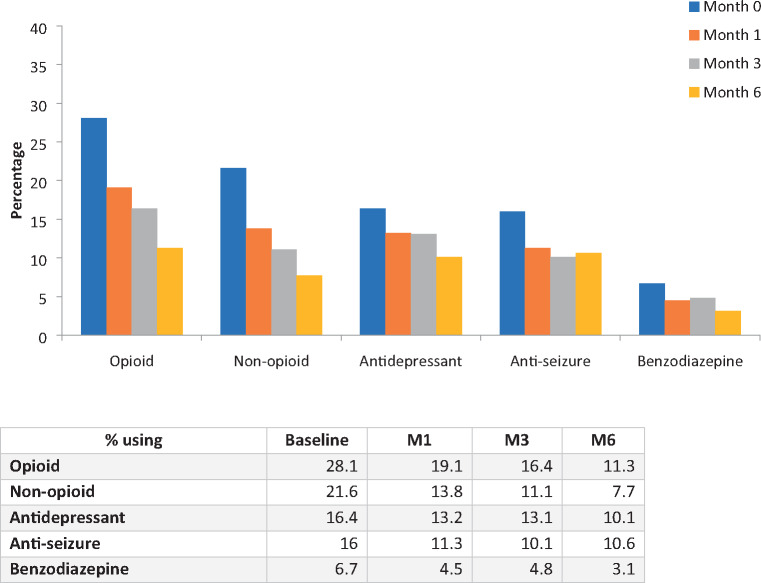
Another medical cannabis study
by Lucas et al (2021) focuses
"...on the impacts of cannabis
on prescription opioid use and quality of life over a 6-month period."
using 1145 patients and
"...a comprehensive cannabis
use inventory, the World Health Organization Quality of Life Short
Form (WHOQOL-BREF), and a detailed prescription drug questionnaire."
and
"Participants were 57.6%
female, with a median age of 52 years. Baseline opioid use was
reported by 28% of participants, dropping to 11% at 6 months. Daily
opioid use went from 152 mg morphine milligram equivalent (MME) at
baseline to 32.2 mg MME at 6 months, a 78% reduction in mean opioid
dosage. Similar reductions were also seen in the other four primary
prescription drug classes identified by participants, and
statistically significant improvements were reported in all four
domains of the WHOQOL-BREF."
and
"The high rate of cannabis use
for chronic pain and the subsequent reductions in opioid use suggest
that cannabis may play a harm reduction role in the opioid overdose
crisis, potentially improving the quality of life of patients and
overall public health."
Other pharmaceuticals suffered
terribly as well:
"Over 6 months, the percentage
of patients using non-opioid pain medications went from 21.6% (n=241)
to 7.7% (n=32), use of antidepressants declined from 16.4% (n=183) to
10.1% (n=42), use of antiseizure medications went from 16% (n=178) to
10.6% (n=44), and benzodiazepine use decreased from 6.7% of
participants at baseline (n=75) to 3.1% at M6."
https://www.ncbi.nlm.nih.gov/pmc/articles/PMC7971472/ [2815]
Dranitsaris et al (2021)
examined opioid prescribing before and after legalisation in Canada:
"Purpose: On 17 October 2018
recreational cannabis became legal in Canada, thereby increasing
access and reducing the stigma associated with its use for pain
management. This study assessed total opioid prescribing volumes and
expenditures prior to and following cannabis legalization.
"Methods: National monthly
claims data for public and private payers were obtained from January
2016 to June 2019. The drugs evaluated consisted of morphine, codeine,
fentanyl, hydrocodone, hydromorphone, meperidine, oxycodone, tramadol,
and the non-opioids gabapentin and pregabalin. All opioid volumes were
converted to a mean morphine equivalent dose (MED)/claim, which is
analogous to a prescription from a physician. Gabapentin and
pregabalin claims data were analyzed separately from the opioids.
Time-series regression modelling was undertaken with dependent
variables being mean MED/claim and total monthly spending. The slopes
of the time-series curves were then compared pre- versus post-cannabis
legalization.
"Results: Over the 42-month
period, the mean MED/claim declined within public plans (p <
0.001). However, the decline in MED/claim was 5.4 times greater in the
period following legalization (22.3 mg/claim post vs. 4.1 mg/claim
pre). Total monthly opioid spending was also reduced to a greater
extent post legalization ($Can267,000 vs. $Can95,000 per month). The
findings were similar for private drug plans; however, the absolute
drop in opioid use was more pronounced (76.9 vs. 30.8 mg/claim). Over
the 42-month period, gabapentin and pregabalin usage also declined.
"Conclusions: Our findings
support the hypothesis that easier access to cannabis for pain may
reduce opioid use for both public and private drug plans."
https://pubmed.ncbi.nlm.nih.gov/33491149/ [2143]
According to Beasley and Dundas
(2024) in "Recreational cannabis dispensary access effects on
prescription opioid use and mortality", in Oregon:
"Results suggest that
communities located closer to recreational dispensaries are associated
with lower rates of prescription opioids per capita. We also show that
reasonable bounds to our primary specification suggest communities
located within a mile from a recreational dispensary have prescription
opioid rates per capita that are 1.03.9 percent lower than surrounding
communities."
The study acknowledges that
while opioid-related mortality rates appeared unaffected by proximity
to retail marijuana, its possible that other measures of opioid harms,
for example hospitalizations, may nevertheless show an impact.
While mortality rates do not
appear to be driven by changes in cannabis access, it says,
hospitalizations related to overdoses may be impacted. An extension of
this work assessing hospitalizations in lieu of mortalitymay yield
further insight.
Authors said in the email to
Marijuana Moment that the issue of hospitalizations was raised during
peer review of the article and our discussion in the paper on
hospitalizations is meant to convey that mortality reduction is just
one metric that could be impacted by reduced opioid prescriptions.
For example, it may be possible
that the same number of people succumb to opioid misuse, while fewer
people are hospitalized, they added.
https://www.sciencedirect.com/science/article/abs/pii/S016604622400067X?via%3Dihub
[3128]
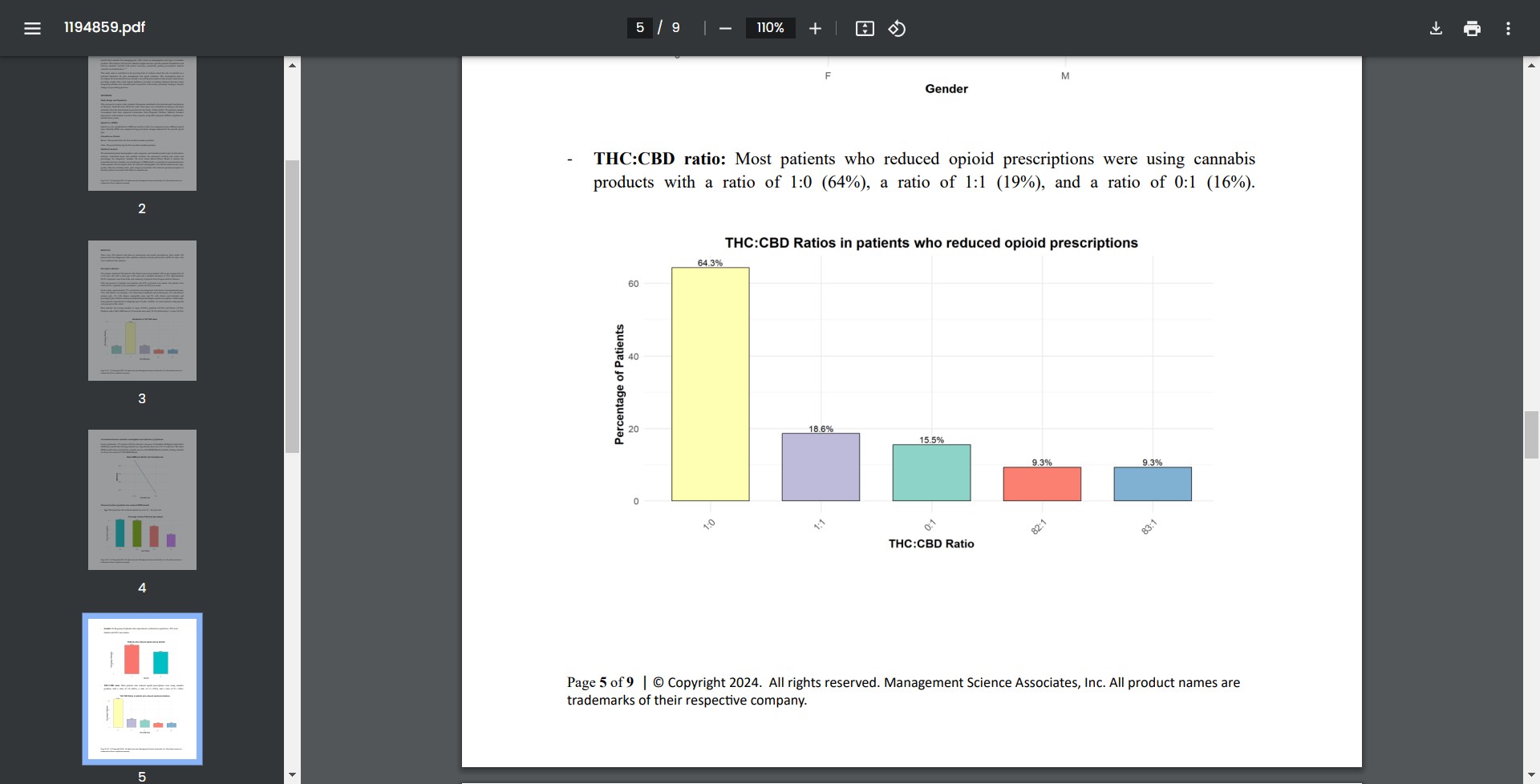
In Utah, most patients who
reduced opioid prescriptions were using cannabis products with a ratio
of 1:0 (64%), a ratio of 1:1 (19%) and 0:1 (16%):
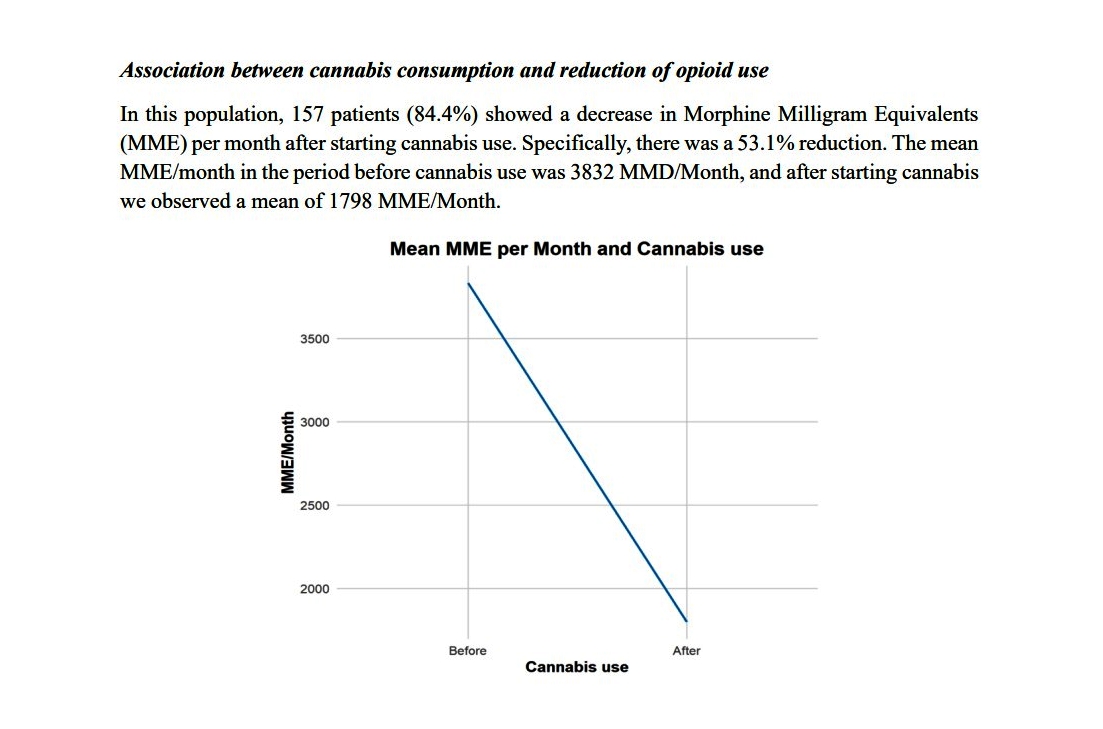
84% showed a decrease in
Morphine Milligram Equivalents (MME) per month after starting cannabis
use.
https://www.utah.gov/pmn/files/1194859.pdf [3742]
In Israel, Feingold et al
examined "Depression and anxiety among chronic pain patients receiving
prescription opioids and medical marijuana"...or both:
"Prevalence of depression among
patients in the OP (opioids), MM (medical marijuana) and OPMM groups
was 57.1%, 22.3% and 51.4%, respectively and rates of anxiety were
48.4%, 21.5% and 38.7%, respectively. Levels of depression and anxiety
are higher among chronic pain patients receiving prescription opioids
compared to those receiving MM. Findings should be taken into
consideration when deciding on the most appropriate treatment modality
for chronic pain, particularly among those at risk for depression and
anxiety."
https://www.ncbi.nlm.nih.gov/pubmed/28453948 [1833]
Hsu and Kovcs (2021) reported an
"Association between county level cannabis dispensary counts and
opioid related mortality rates in the United States: panel data study"
of 812 counties in the United States in the 23 states that allowed
legal forms of cannabis dispensaries to operate by the end of 2017.
"Participants The study used US mortality data from the Centers for
Disease Control and Prevention combined with US census data and data
from Weedmaps.com on storefront dispensary operations. Data were
analyzed at the county level by using panel regression methods.
"Main outcome measure The main outcome measures were the log
transformed, age adjusted mortality rates associated with all opioid
types combined, and with subcategories of prescription opioids,
heroin, and synthetic opioids other than methadone. The associations
of medical dispensary and recreational dispensary counts with age
adjusted mortality rates were also analyzed.
"Results County level dispensary count (natural logarithm) is
negatively related to the log transformed, age adjusted mortality rate
associated with all opioid types (β=−0.17, 95% confidence
interval −0.23 to −0.11). According to this estimate, an
increase from one to two storefront dispensaries in a county is
associated with an estimated 17% reduction in all opioid related
mortality rates. Dispensary count has a particularly strong negative
association with deaths caused by synthetic opioids other than
methadone (β=−0.21, 95% confidence interval −0.27 to
−0.14), with an estimated 21% reduction in mortality rates
associated with an increase from one to two dispensaries. Similar
associations were found for medical versus recreational storefront
dispensary counts on synthetic (non-methadone) opioid related
mortality rates.
"Conclusions Higher medical and recreational storefront dispensary
counts are associated with reduced opioid related death rates,
particularly deaths associated with synthetic opioids such as
fentanyl. While the associations documented cannot be assumed to be
causal, they suggest a potential association between increased
prevalence of medical and recreational cannabis dispensaries and
reduced opioid related mortality rates. This study highlights the
importance of considering the complex supply side of related drug
markets and how this shapes opioid use and misuse.
https://www.bmj.com/content/372/bmj.m4957 [4778]
Looking at cannabis use for pain
management and harm reduction, Kitchen et al (2025) report:
"Between June 2014 and May 2022, 2340 PWUD were initially recruited
and of those 1242 PWUD reported chronic pain, use of unregulated
opioids and completed at least two follow-up visits. Of these 1242
participants, 764 experienced a cessation event over 1038.2
person-years resulting in a cessation rate of 28.5 per 100
person-years (95% confidence interval [CI] 25.4-31.9). Daily cannabis
use was positively associated with opioid cessation (adjusted hazard
ratio 1.40, 95% CI 1.08-1.81; p = 0.011). In the sex-stratified
sub-analyses, daily cannabis use was significantly associated with
increased rates of opioid cessation among males (adjusted hazard ratio
1.50, 95% CI 1.09-2.08; p = 0.014)."
https://pubmed.ncbi.nlm.nih.gov/40011075/ [5174]
Steuart et al (2025) took a long-term look at "Recreational Cannabis
Laws and Fills of Pain Prescriptions in the Privately Insured":
"Using data from a national sample of commercially insured adults, we
examine the effect of recreational cannabis legalization (through two
sequential policies) on prescribing of opioids, NSAIDS, and other pain
medications by implementing synthetic control estimations and
constructing case-study level counterfactuals for the years 2007-2020.
"Results:
Overall, we find recreational cannabis legalization is associated with
a decrease in opioid fills among commercially insured adults in the
U.S., and we find evidence of a compositional change in prescriptions
of pain medications more broadly. Specifically, we find marginally
significant increases in prescribing of non-opioid pain medications
after recreational cannabis becomes legal in some states. Once
recreational cannabis dispensaries open, we find statistically
significant decreases in the rate of opioid prescriptions (13%
reduction from baseline, p < .05) and marginally significant
decreases in the average daily supply of opioids (6.3% decrease, p
< .10) and number of opioid prescriptions per patient (3.5%
decrease, p < .10).
"Conclusions:
These results suggest that substitution of cannabis for traditional
pain medications increases as the availability of recreational
cannabis increases. There appears to be a small shift once
recreational cannabis becomes legal, but we see stronger results once
users can purchase cannabis at recreational dispensaries. The decrease
in opioids and marginal increase in non-opioid pain medication may
reflect patients substituting opioids with cannabis and non-opioid
pain medications, either separately or concomitantly. Reductions in
opioid prescription fills stemming from recreational cannabis
legalization may prevent exposure to opioids in patients with pain and
lead to decreases in the number of new opioid users, rates of opioid
use disorder, and related harms."
https://pmc.ncbi.nlm.nih.gov/articles/PMC11831899/ [4911]
Drake et al of the University
of Pittsburghs School of Public Health found "a significant reduction
in pharmacy-based codeine distribution in states that have legalized
recreational cannabis use. The finding is promising from a public
health policy perspective because misuse of prescription opioids
annually contributes to more than 10,000 overdose deaths."
and
"The study is believed to be
among the first to separately examine the impact of recreational
cannabis laws on shipments of opioids to hospitals, pharmacies and
other endpoint distributors. Previous studies have focused on medical
cannabis laws or use of opioids by subsets of consumers, such as
Medicaid beneficiaries."
and
"Key findings from states that
passed recreational cannabis laws:
"A 26% reduction in
pharmacy-based distribution of codeine and as much as a 37% reduction
after recreational cannabis laws have been in effect for four years.
"Minimal impact on distribution
of other opioids such as oxycodone, hydrocodone and morphine in any
setting.
"Minimal impact on codeine
distribution by hospitals, which often have less permissive policies
than pharmacies."
"'This finding is particularly
meaningful,' said senior author Coleman Drake of the University of
Pittsburghs School of Public Health. 'Where previous studies have
focused on more potent opioids, codeine is a weaker drug with a higher
potential for addiction. It indicates people may be obtaining codeine
from pharmacies for misuse, and that recreational cannabis laws reduce
this illicit demand.'"
https://news.cornell.edu/stories/2023/01/when-recreational-cannabis-legal-codeine-demand-drops
[2037]
B. Karmakar is an Assistant
Professor in the Department of Statistics, University of Florida, G.
Mukherjee is an Associate Professor in the Department of Data Sciences
& Operations, University of Southern California and W. Kar is an
Assistant Professor of Purdue University. Karmakar, Mukherjee and Kar
(2023) studied the "Effect of Marijuana Legalization on Direct
Payments to Physicians by Opioid Manufacturers" and say:
"Our analysis finds a
significant decrease in direct payments from opioid manufacturers to
pain medicine physicians as an effect of MML passage. We provide
evidence that this decrease is due to the availability of medical
marijuana as a substitute. Additionally, physicians in states with an
MML are prescribing fewer opioids. Finally, the substitution effect is
comparatively higher for female physicians and in localities with
higher white, less affluent, and more working-age populations."
As they explain:
"In the wake of this evolving
pain management paradigm, physicians must remain updated on drugs for
appropriate patient care. Without the latest information regarding the
drugs, physicians may be unable to prescribe opioids appropriately for
pain management (Guo et al., 2021). There is significant concern that
a subsequent decrease in opioid prescription could lead to opioid
being a niche product or, in the extreme, could potentially lead to
severely diminished usage of opioids (Feinberg, 2019, Szalavitz,
2023). Further, as a cascading effect, it can negatively affect
research and development on opioids as well as decrease in the number
of opioid manufacturers. Therefore, opioid manufacturers use different
forms of interactions to engage with physicians on a regular basis.
One of the most common conduits to facilitate such interactions is
through direct payments to physicians from opioid manufacturers (Jones
and Ornstein, 2016, Schwartz and Woloshin, 2019). These direct
payments may be in the form of consulting and speaker fees, conference
travel reimbursements, or meal vouchers."
and
"...due to the 'Sunshine Act,'
pharmaceutical manufacturers are now mandated by law to report such
payments (Richardson et al., 2014). The act was a federal response to
concerns of potential conflict of interest in physicians accepting
these payments, the subsequent possibility of bias in treatment, and
rising health-care costs (Carey et al., 2021, DeJong et al., 2016,
Engelberg et al., 2014, Jones and Ornstein, 2016). In September 2014,
the first batch of data was made public. This dataset contains the
dollar value of the gift/payment that transpired between a named
physician and a named pharmaceutical manufacturer, associated products
for their interaction, and payment date."
Using a customised synthetic
control method:
"Our primary analysis considers
all pain medicine physicians from 13 states, of which three (PA, OH,
LA) were treated states that passed an MML in the second quarter of
2016. The method, described in Section 3.4, produces synthetic
controls for each physician in the treated states using physicians in
the control states, and likewise produces synthetic counterparts for
each physician in the control states using physicians in the treated
states."
So
"The results reported in Table
4 show a significant negative correlation between an increase in
marijuana patients in preceding period as well as presence of a
marijuana dispensary with opioid-prescribing physician payment;
however, there is no significant association between physician payment
and change in marijuana patients in the following period. These
results provide us with further support that the substitution effect
of marijuana is indeed the dominating factor in reducing payments to
pain medicine physicians post-passage of MML."
Some tears are necessary for
the "opioids ecosystem":
"Our study finds a significant
decrease in financial interactions between opioid manufacturers and
physicians as an effect of MML passage. The finding that the opioid
manufacturers in states that passed MML are stepping away from this
particular form of interaction is concerning, for such activity can
significantly affect the opioids ecosystem."
But back with the patients
themselves:
"Analyzing the annual
prescription data (mentioned in Section 2), we found that, in 2015,
they prescribed 49% more opioids than non-opioids in 30 days fill and
a similar 49% more days of prescription for opioid vs non-opioid. From
2015 to 2017, in the states not passing an MML, 30 days fill of opioid
vs non-opioid remained flat at a 1.38:1 ratio. However, in the states
passing an MML, from 2015 to 2017, 30 days fill of opioid vs
non-opioid decreased from a 1.57:1 ratio to a 1.52:1 ratio. The ratios
for the number of days of prescription in the MML states also
decreased from a 1.57:1 ratio in 2015 to a 1.52:1 ratio in 2017. In
particular, the pattern of opioid vs non-opioid prescriptions did not
change in the control states, while there was a relative decrease in
opioid prescriptions in the MML states from 2015 to 2017."
https://people.clas.ufl.edu/bkarmakar/files/2023/03/physicians_opioids.pdf
[2328]
In "'I got a bunch of weed to
help me through the withdrawals': Naturalistic cannabis use reported
in online opioid and opioid recovery community discussion forums"
Meachem et al (2022)
"...extracted all posts
mentioning cannabis-related keywords (e.g., 'weed', 'cannabis',
marijuana) from December 2015 through August 2019 from an opioid use
subreddit and an opioid recovery subreddit. The most frequent phrases
from the recovery subreddit referred to time without using opioids and
the possibility of using cannabis as a treatment. The most common
motivations for using cannabis were to manage opioid withdrawal
symptoms in the recovery subreddit, often in conjunction with
anti-anxiety and GI-distress 'comfort meds.' Despite limitations in
generalizability from pseudonymous online posts, this examination of
reports of naturalistic cannabis use in relation to opioid use
identified withdrawal symptom management as a common motivation.
https://journals.plos.org/plosone/article/file?id=10.1371/journal.pone.0263583&type=printable
[1834]
In 2021's "The association
between cannabis use and outcome in pharmacological treatment for
opioid use disorder" Rosic et al in the Harm Reduction Journal
"Participants receiving
pharmacological treatment for OUD (n = 2315) were
recruited from community-based addiction treatment clinics in Ontario,
Canada, and provided information on past-month cannabis use
(self-report). Participants were followed for 3 months with routine
urine drug screens in order to assess opioid use during treatment. We
used logistic regression analysis to explore (1) the association
between any cannabis use and opioid use during treatment, and (2)
amongst cannabis-users, specific cannabis use characteristics
associated with opioid use. We found that amongst cannabis users,
those who use cannabis daily are less likely to have opioid use than
people who use cannabis occasionally. This association was present for
both men and women. Future studies should further examine specific
characteristics and patterns of cannabis use that may be protective or
problematic in MAT [medication-assisted treatment]."
Sex differences were observed:
"Interaction analysis revealed
no significant moderating effect of sex on our cannabis use
characteristics of interest (age of onset of cannabis use by sex:
OR = 0.99, 95% CI 0.94, 1.05, p = 0.725;
daily cannabis use by sex: OR = 0.92, 95% CI 0.53, 1.57,
p 0.748; side effects from cannabis by sex: OR = 1.53,
95% CI 0.93, 2.50, p = 0.092; marijuana cravings score
by sex: OR = 1.01, 95% CI 0.99, 1.03,
p = 0.100). Using subgroup analysis by sex, we found the
association between reporting cannabis-related side effects and lower
odds of opioid use to hold for men (OR = 0.55, 95% CI
0.40, 0.75, p < 0.001), but not for women
(OR = 0.86, 95% CI 0.59, 1.26, p = 0.442).
Additionally, for women, but not men, higher marijuana cravings score
was associated with increased odds of opioid use (scaled for each
10-point increase in score: OR = 1.14, 95% CI 1.01,
1.28, p = 0.034)."
Overall
"For cannabis users, daily
cannabis use was associated with lower odds of opioid use, when
compared with occasional use (OR = 0.61, 95% CI
0.470.79, p < 0.001) as was older age of onset of
cannabis use (OR = 0.97, 95% CI 0.94, 0.99,
p = 0.032), and reporting cannabis-related side effects
(OR = 0.67, 95% CI 0.51, 0.85,
p = 0.001)."
And adopting a rather
melancholy angle, they go on:
"Altogether, 75% of cannabis
users perceived no impact of cannabis on their OUD treatment."
https://harmreductionjournal.biomedcentral.com/articles/10.1186/s12954-021-00468-6
[1835]
For Johns Hopkins University
School of Medicine, Bergeria et al (2020)
"Two hundred individuals
recruited through Amazon Mechanical Turk with past month opioid and
cannabis use and experience of opioid withdrawal completed the survey.
Participants indicated which opioid withdrawal symptoms improved or
worsened with cannabis use and indicated the severity of their opioid
withdrawal on days with and without cannabis. 62.5% of 200
participants had used cannabis to treat withdrawal. Participants most
frequently indicated that cannabis improved: anxiety, tremors, and
trouble sleeping. These results show that cannabis may improve opioid
withdrawal symptoms and that the size of the effect is clinically
meaningful."
https://www.ncbi.nlm.nih.gov/pmc/articles/PMC7212528/ [1836]
Wiese and Wilson-Poe reviewed
the evidence in 2018.
"The endocannabinoid and
opioidergic systems are known to interact in many different ways, from
the distribution of their receptors to cross-sensitization of their
behavioral pharmacology. Cannabinoid-1 (CB1) receptors and mu opioid
receptors (MORs) are distributed in many of the same areas in the
brain, including but not limited to the periaqueductal gray, locus
coeruleus, ventral tegmental area (VTA), nucleus accumbens, prefrontal
cortex (PFC), central amygdala (CeA), bed nucleus of stria terminalis
(BNST), caudate putamen (CP), substantia nigra, dorsal hippocampus,
raphe nuclei, and medial basal hypothalamus. The extent of this
overlapping expression and frequent colocalization of the CB1 and MOR
provide clear morphological underpinnings for interactions between the
opioid and cannabinoid systems in reward and withdrawal."
Besides,
"Interestingly, microinjections
of CB1 agonists into the medial PFC creates an aversion to doses of
morphine that are normally rewarding (CPP), while CB1 antagonism in
this brain region creates a rewarding effect of subthreshold morphine
doses."
"The evidence summarized in
this article demonstrates the potential cannabis has to ease opioid
withdrawal symptoms, reduce opioid consumption, ameliorate opioid
cravings, prevent opioid relapse, improve OUD treatment retention, and
reduce overdose deaths. The compelling nature of these data and the
relative safety profile of cannabis warrant further exploration of
cannabis as an adjunct or alternative treatment for OUD."
https://www.liebertpub.com/doi/10.1089/can.2018.0022 [1837]
In a 2025 paper "Cannabidiol
attenuates heroin seeking in male rats associated with normalization
of discrete neurobiological signatures within the nucleus accumbens
with subregional specificity" from Chisholm et al of the Icahn School
of Medicine at Mount Sinai, Departments of Neuroscience, Psychiatry;
Addiction Institute of Mount Sinai:
"Heroin-trained animals exhibited high levels of cue-induced
heroin-seeking behavior. Importantly, CBD attenuated cue-induced
heroin-seeking behaviors. Postmortem RNA-sequencing of the NAcC and
NAcS revealed shared transcriptomic alterations the NAc subregions in
response to heroin, with a more robust impact of heroin in the NAcS.
Though CBD had minimal impact on the heroin-induced perturbations in
the NAcC, it normalized components of the transcriptomic signature
altered by heroin in both NAc subregions including transcripts that
correlated with heroin-seeking behavior. In contrast, CBD normalized a
particular subset of NAcS genes that correlated to heroin-seeking
behavior. Those genes were specifically linked to the extracellular
matrix, astrocyte function, and their upstream regulators related to
immune function."
https://www.sciencedirect.com/science/article/abs/pii/S0006322325014623
[5449]
Marcus et al (2025) trace the
mechanism underlying this kind of CBD/NAc effect back to a single
eCB-gated synapse, structuring their findings around five results:
"Endogenous cannabinoids are released in the NAc during reward
consumption to inhibit presynaptic glutamate release". Fibre
photometry of the eCB sensor GRAB_eCB2.0 in the NAc shell showed 2-AG
release time-locked to sucrose consumption on day 1 of Pavlovian
conditioning, shifting to anticipate the reward-predictive cue by day
5; the DAGL inhibitor DO34 and the CB1 antagonist SR141716A both
blocked the signal, and both rewarding and aversive (foot-shock)
stimuli evoked it. Of five excitatory inputs to the NAc (mPFC, aPVT,
pPVT, BLA, vHipp), the anterior paraventricular thalamus (aPVT) -
specifically its neurotensin-expressing (NTS+) neurons - carried the
highest density of CB1 receptors, and electrophysiology showed
2-AG/CB1 signalling and depolarisation-induced suppression of
excitation (DSE) selectively at aPVT-NAc synapses onto D1R- neurons.
"aPVT-NAc terminal activity is negatively correlated with engagement
in reward-seeking behaviors". Calcium imaging of aPVT terminals showed
inhibition during behavioural engagement (approach, consumption,
sipper-port engagement) and excitation on disengagement, for both
reward-seeking and conditioned freezing alike. Optogenetically
activating these terminals suppressed licking; inhibiting them
increased sipper engagement. Neither manipulation had any effect in
real-time place-preference or self-stimulation assays - the circuit
carried no valence of its own.
"Endogenous cannabinoid inhibition of aPVT terminals drives engagement
in reward-seeking behaviors". Blocking 2-AG-CB1 signalling,
pharmacologically (SR141716A), by CRISPR/Cas9 deletion of CB1 from
aPVT NTS neurons, or by blocking 2-AG synthesis (DO34), each blunted
terminal inhibition and reduced engagement (shorter licking bouts,
less sipper-port time); JZL184 (blocking 2-AG breakdown) rescued the
deficit in CB1-knockdown mice. Deleting CB1 from aPVT neurons impaired
reward-engagement gating specifically, while conditioned-freezing
gating was untouched.
"Encoding of behavioral engagement by aPVT-NAc Penk neurons". SLEAP
pose-estimation and supervised classification of five behaviours
(sipper engagement, disengagement, walking, rearing, grooming),
combined with 1-photon imaging of NAc Penk neurons that specifically
receive aPVT input, resolved five functionally distinct neuron
clusters (transient-excited, sustained-excited, transient-inhibited,
null, sustained-inhibited); a Generalized Linear Model fit showed the
transient-excited and transient-inhibited clusters carried the
strongest encoding of reward-engagement behaviour.
"Discrete ensembles of NAc-aPVT Penk neurons are entrained to aPVT
terminal activity and endogenous cannabinoid release".
Hilbert/Rayleigh phase analysis found the transient-inhibited cluster
closely entrained to aPVT terminal activity itself, and the
sustained-excited cluster entrained to the eCB (GRAB_eCB2.0) signal
specifically, closing the loop: NAc Penk activity drives 2-AG release,
which retrogradely gates aPVT input during engagement and releases it
on disengagement, and specific Penk ensembles track each half of that
cycle.
What the paper does not do, and says so only implicitly, is
distinguish adaptive from pathological reward-seeking at the level of
this synapse. Every manipulation used to interrogate the circuit -
optogenetic activation/inhibition of aPVT terminals, CB1 deletion,
DO34/JZL184 - moved engagement with a benign reward (10% sucrose), and
none of them carried intrinsic valence in place-preference or
self-stimulation testing. The same inhibition-during-engagement
signature was also recorded during conditioned freezing, an aversive
state which is not desirable. So the mechanism is valence-blind by its
own data: it gates how long an animal stays engaged with whatever it
is currently pursuing, not whether that pursuit is good for it.
The one dissociation the authors do find is CB1 deletion from aPVT
neurons impairs reward engagement but leaves conditioned-freezing
engagement intact.
This shows the eCB-dependent component is specific to appetitive
engagement, not that it discriminates healthy appetite from compulsive
appetite; both would presumably run through the same CB1-dependent
gate.
The paper's own bridge to pathology is the cue-anticipatory drift it
documents within five days of ordinary Pavlovian learning, with the
2-AG signal moving from tracking consumption to anticipating the cue,
and persisting even when the reward is omitted. The same qualitative
signature is invoked in incentive-sensitisation accounts of addiction,
measured here in a non-pathological animal.
That is as far as the data go before the authors state their own
extrapolation directly:
"These results provide a novel framework for understanding the basic
neurobiology of reward-seeking, while also establishing how
neuromodulatory signaling influences unique endophenotypes implicated
in the pathophysiology of substance use disorders."
https://www.biorxiv.org/content/biorxiv/early/2025/01/08/2025.01.06.630792.full.pdf
[6843]
Raman et al examined codeine sales at pharmacies in US states which
had passed recreational cannabis laws as of November 2022.
"We implement two-way
fixed-effects regressions and leverage variation from eleven U.S.
states that adopted a recreational cannabis law (RCL) between 2010 and
2019. We find that RCLs lead to a reduction in codeine dispensed at
retail pharmacies. Among prescription opioids, codeine is particularly
likely to be used non-medically. Thus, the finding that RCLs appear to
reduce codeine dispensing is potentially promising from a public
health perspective."
"We are the first study, to our
knowledge, to leverage ARCOS data which details distribution by
endpointpharmacies, hospitals, specialists, and narcotic treatment
programsto study the effects of" recreational legalization, the
authors wrote.
They further said that the
effect of legalization on codeine prescribing became more pronounced
over years, "increasing from -17.5 percent one year after RCL
implementation to -37.3 percent four years after implementation."
https://onlinelibrary.wiley.com/doi/10.1002/hec.4652 [2057]
A commonplace reason for using
marijuana in Ptuj is as an exit drug. Even without any LSD or
mushrooms, a proportion of the alcoholically-inclined realise at some
point that things are not getting better. When you go drinking, it
starts out good and goes downhill from there. Perhaps if I have some
more it will get even better. It doesn't. In the long run most
fortunately realise that the alcohol sweet spot really only lasts a
very short time, and the older you get the shorter that sweet spot is.
If you want to use marijuana as
an exit drug that's not a medical issue. You didn't need a
prescription to get the drug that caused the problem, but you can't
get one for the cure, because it's illegal. Clearly this interferes
with the desire of the self-aware person in trouble with alcohol who
wants an easy path to harm reduction."
A 2021 paper from Scripps
Research Institute and the University of California report, which only
looked at CBD, reports:
"Cannabidiol reduces craving in
animal models of alcohol and cocaine use."
because...
"CBD prevented rats from
exhibiting somatic signs of withdrawal and hyperalgesia during acute
and protracted abstinence. There was no dose-response observed for
CBD, suggesting a ceiling effect at the doses used and the potential
for lower effective doses of CBD."
https://pubmed.ncbi.nlm.nih.gov/33909102/ [839]
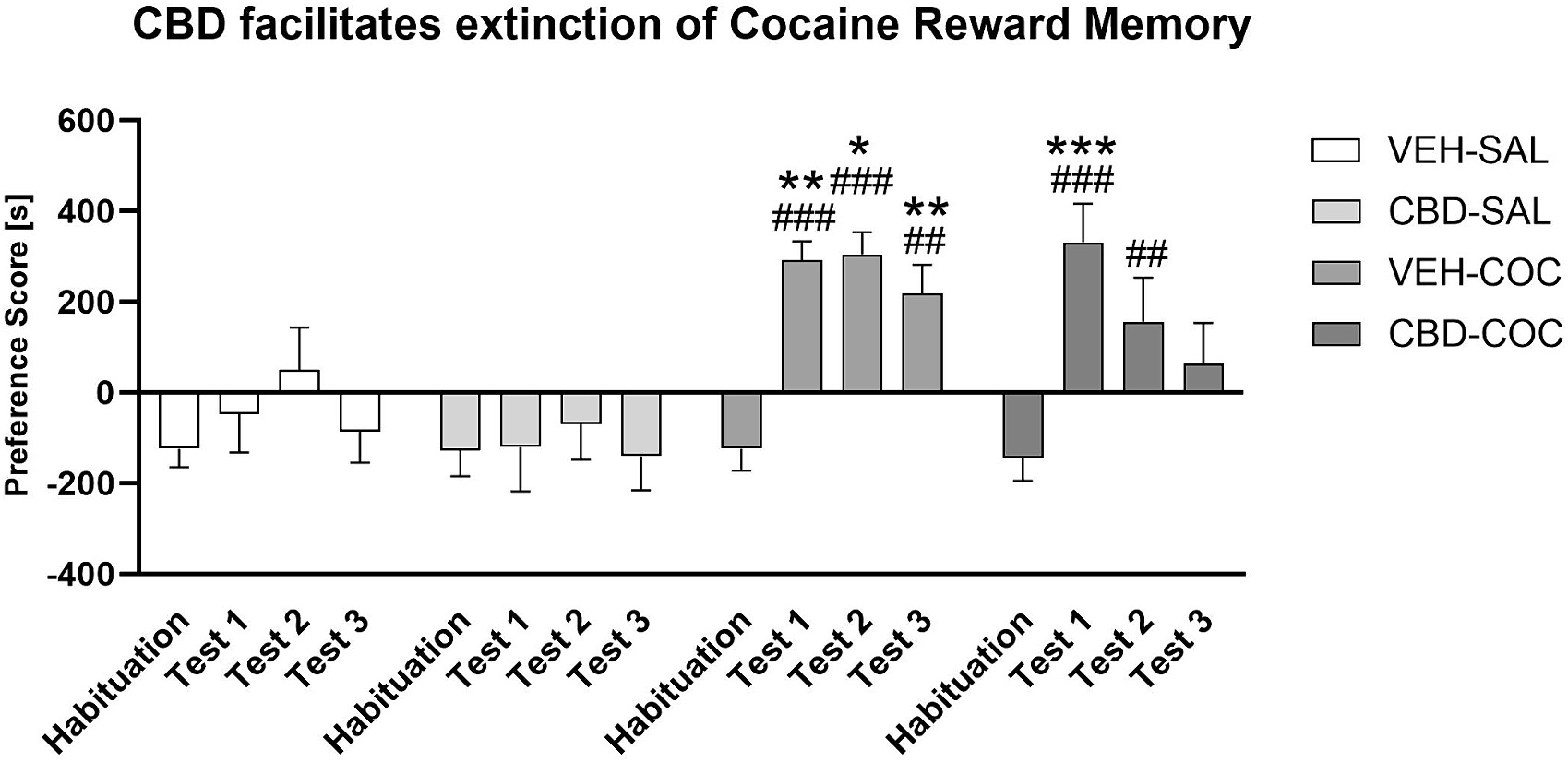
"Cannabidiol (CBD) facilitates
cocaine extinction and ameliorates cocaine-induced changes to the gut
microbiome in male C57BL/6JArc mice" say Chesworth et al (2024).
"Cocaine use disorder (CUD) is
a global health problem with no approved medications. One potential
treatment target is the gut microbiome, but it is unknown if cocaine
induces long-lasting effects on gut microbes. A novel therapeutic
candidate for CUD, cannabidiol (CBD), can improve gut function in
rodent models. It is possible that protective effects of CBD against
cocaine use are mediated by improving gut health. We examined this
question in this experiment. Cocaine conditioned place preference
(CPP) was conducted in adult male C57BL/6JArc mice. Mice were treated
with vehicle or 20 mg/kg CBD prior to all cocaine CPP sessions (N =
1113/group). Mice were tested drug free 1, 14 and 28 days after
cessation of cocaine and CBD treatment. Fecal samples were collected
prior to drug treatment and after each test session. Gut microbiome
analyses were conducted using 16 s rRNA sequencing and correlated with
behavioural parameters. We found a persistent preference for a
cocaine-environment in mice, and long-lasting changes to gut microbe
alpha diversity. Cocaine caused persistent changes to beta diversity
which lasted for 4 weeks. CBD treatment reduced cocaine-environment
preference during abstinence from cocaine and returned gut beta
diversity measures to control levels. CBD treatment increased the
relative abundance of Firmicutes phyla and Oscillospira genus, but
decreased Bacteroidetes phyla and Bacteroides acidifaciens species.
Preference score in cocaine-treated mice was positively correlated
with abundance of Actinobacteria, whereas in mice treated with CBD and
cocaine, the preference score was negatively correlated with
Tenericutes abundance. Here we show that CBD facilitates cocaine
extinction memory and reverses persistent cocaine-induced changes to
gut microbe diversity. Furthermore, CBD increases the abundance of gut
microbes which have anti-inflammatory properties. This suggests that
CBD may act via the gut to reduce the memory of cocaine reward. Our
data suggest that improving gut health and using CBD could limit
cocaine abuse."
https://www.sciencedirect.com/science/article/pii/S0278584624000824?via%3Dihub
[3360]
Prohibition, if observed, makes
it harder for people giving up smoking and cocaine.
The Defence anticipates the
Court will be interested in obsessive craving. As Bnsch et al reveal
in Human Molecular Genetics in 2005,
"Various studies have linked
alcohol dependence phenotypes to chromosome 4. One candidate gene is
NACP (non-amyloid component of plaques), coding for alpha synuclein.
Recently, it has been shown that alpha synuclein mRNA is increased in
alcohol-dependent patients within withdrawal state. This increase is
significantly associated with craving, especially obsessive craving.
On the basis of these observations, the present study analysed two
polymorphic repeats within the NACP gene. We found highly significant
longer alleles of NACP-REP1 in alcohol-dependent patients compared
with healthy controls (KruskalWallis test, χ2=99.5; df=3,
P<0.001). In addition, these lengths significantly correlate with
levels of expressed alpha synuclein mRNA (χ2=8.83; df=2, P=0.012).
The present results point to a novel approach for a genetic
determination of craving, a key factor in the genesis and maintenance
not only of alcoholism but also of addiction in general."
https://academic.oup.com/hmg/article/14/7/967/626665?login=false
[2978]
According to Hallbeck et al (2024) "Accumulation of alpha-synuclein
pathology in the liver exhibits post-translational modifications
associated with Parkinsons disease"
"In previous work, we showed that human hepatocytes can take up
α-syn assemblies via the gap junction protein connexin-32
(Cx32). Furthermore, we found an age-dependent accumulation of human
α-syn pathology within the liver in multiple animal models of PD
(L61, (Thy-1)-h[A30P])), and MSA (MBP29). Importantly, the
accumulation of α-syn within the liver was not due to hepatic
mRNA expression, indicating that α-syn deposits are derived
directly from the brain or indirectly from other peripheral tissues.
Moreover, we corroborated that α-syn pathology in
neuropathologically confirmed PD cases can be found to a higher degree
than in controls with no α-syn pathology in the brain. In the
current report, we investigated the presence of α-syn
post-translational modifications (PTMs) in the liver from aged
(Thy-1)-h[A30P] mice (A30P). We now report the presence of hallmark
PTMs associated with PD, including tyrosine nitration (nY39),
phosphorylation (pY39, pS87 and pS129, Y133) and C-terminal truncation
events (X-122). Ex vivo, we demonstrate that human hepatocytes (HuH-7)
degrade pre-formed fibrils (PFF) more efficiently than oligomeric
assemblies. However, by increasing autophagy using the pharmacological
inhibitor rapamycin, we could enhance oligomeric α-syn
degradation in a concentration-dependent manner. Moreover, ex vivo we
also observe several PTMs that have been demonstrated in vivo. Taken
together, our results demonstrate the presence of key pathological
modifications associated with PD, also present in the liver of a mouse
model of PD. Our findings suggest that α-syn aggregates are
transported from the brain to the liver in a modified state or upon
arrival, they undergo specific PTMs to facilitate their clearance and
detoxification, suggesting a new role for the liver in the clearance
of PD-associated pathology."
https://www.cell.com/iscience/fulltext/S2589-0042(24)02675-0
[3903]
What are the effects of
cannabis on synuclein?
In "The Neuroprotective Effects
of Cannabis-Derived Phytocannabinoids and Resveratrol in Parkinsons
Disease: A Systematic Literature Review of Pre-Clinical Studies"
(2021) by Prakash and Carter:
"A total of 1034 publications
were analyzed, of which 18 met the eligibility criteria for this
review. Collectively, the majority of PD rodent studies demonstrated
that treatment with CDCs or RSV produced a significant improvement in
motor function and mitigated the loss of dopaminergic neurons.
Biochemical analysis of rodent brain tissue suggested that
neuroprotection was mediated by anti-oxidative, anti-inflammatory, and
anti-apoptotic mechanisms. This review highlights the neuroprotective
potential of CDCs and RSV for in vivo models of PD and therefore
suggests their potential translation to human clinical trials to
either ameliorate PD progression and/or be implemented as a
prophylactic means to reduce the risk of development of PD."
and
"Seven studies investigated the
effects of RSV and CDCs on neuroinflammation in rodent brain tissue of
the striatum and SNpc, and included neurotoxin models, a genetic
model, as well as specific induction of neuroinflammation via LPS
treatment. The results of these studies are summarized in Table 6 and
have been divided by their intervention group (BCP
[β-caryophyllene], THCV [tetrahydrocannabivarin], and RSV
[resveratrol]), and then ascending year of study. Five studies showed
increased markers of microglia and astrocytes activation via
quantification of glial fibrillary acidic protein (GFAP) and ionized
calcium-binding adaptor molecule 1 (Iba-1) protein or mRNA levels, and
these were significantly reduced via administration of THCV, BCP, or
RSV. Inflammatory protein markers and their complementary mRNA levels
were significantly increased in the PD model groups and this was
significantly countered with BCP or RSV treatment. The suppressor of
cytokine signaling protein 1 (SOCS-1) was detected in
α-synuclein transgenic mice and was significantly upregulated by
RSV treatment."
https://www.ncbi.nlm.nih.gov/pmc/articles/PMC8699487/ [2979]
In "Neuroprotective effects of
cannabidiol on dopaminergic neurodegeneration and α-synuclein
accumulation in C. elegans models of Parkinson's disease" (2022)
Muhammad et al found that:
"CBD at 0.025 mM (24.66 %),
0.05 mM (52.41 %) and 0.1 mM (71.36 %) diminished DA neuron
degenerations induced by 6-hydroxydopamine (6-OHDA), reduced (0.025,
27.1 %), (0.05, 38.9 %), (0.1, 51.3 %) food-sensing behavioural
disabilities in BZ555, reduced 40.6 %, 56.3 %, 70.2 % the aggregative
toxicity of α-Syn and expanded the nematodes' lifespan up to
11.5 %, 23.1 %, 28.8 %, dose-dependently....these findings supported
CBD as an anti-parkinsonian drug and may exert its effects by raising
lipid depositions to enhance proteasome activity and reduce oxidative
stress via the antioxidative pathway."
https://pubmed.ncbi.nlm.nih.gov/36108815/ [2980]
In Sao Paulo, Erustes et al (2025)
found "Cannabidiol induces autophagy via CB1 receptor and reduces
α-synuclein cytosolic levels":
"To investigate the participation of each cannabinoid receptor in the
induction of autophagy, cells were treated with selective cannabinoid
agonists that interact specifically with receptors of the human
endocannabinoid system. In this way, autophagic flux was evaluated in
cells treated with agonists and antagonists of cannabinoid receptors:
ACEA/AM251 (10 M/10 M, CB1R), GW405833/AM630 (1 M/3 M, CB2R) and
capsaicin/capsazepine (10 M/10 M, TRPV1). Cells were treated with
these compounds for 4 h both in the presence or absence of NH4Cl (10
mM added during the last hour of treatment), which is used as an
inhibitor of lysosomal degradation. In the groups treated with the
agonist and antagonist, the antagonists were added during the first 30
min, followed by the addition of the agonists.
"The evaluation of autophagic flux demonstrated that compared with
control cells and cells treated with ACEA [Arachidonoyl
2-chloroethylamide] in the absence of an inhibitor, cells stimulated
with ACEA in the presence of NH4Cl accumulated LC3-II (Fig. 3a).
Autophagic flux was inhibited when cells were treated with ACEA in the
presence of AM251 (a CB1R antagonist); in this way, the addition of an
antagonist blocked the effect of the agonist on the induction of
autophagy."
https://www.sciencedirect.com/science/article/pii/S0006899324006693?via%3Dihub
[3831]
Wang et al (2022) also found that:
"Cannabidivarin alleviates α-synuclein aggregation via DAF-16 in
Caenorhabditis elegans"
https://faseb.onlinelibrary.wiley.com/doi/abs/10.1096/fj.202200278RR
[2981]
"DAF-16 is the sole ortholog of the FOXO family of transcription
factors in the nematode Caenorhabditis elegans....The gene has played
a large role in research into longevity and the insulin signalling
pathway as it is located in C. elegans, a successful ageing model
organism."
https://en.wikipedia.org/wiki/Daf-16 [2984]
These studies point to the conclusion that cannabinoids inhibit
synuclein. Therefore they reduce cravings as well as inhibiting
neuroinflammatory pathways:
"Glycine receptors are expressed mainly in Purkinje cells. In
hyperammonemic rats, enhanced glycinergic neurotransmission leads to
reduced membrane expression of ADAM17, resulting in increased surface
expression and activation of TNFR1 and of the associated NF-kB
pathway. This increases the expression in Purkinje neurons of TNFa,
IL-1b, HMGB1, and glutaminase. Increased glutaminase activity leads to
increased extracellular glutamate, which increases extracellular GABA.
Increased extracellular glutamate and HMGB1 potentiate microglial
activation. Blocking glycine receptors with strychnine or
extracellular cGMP completely prevents the above pathway in
hyperammonemic rats."
And rats in this condition were used to test this because:
"Rats with chronic hyperammonemia reproduce the cognitive impairment
and motor in-coordination shown by cirrhotic patients with minimal
hepatic encephalopathy and are a good model to identify the underlying
mechanisms and to test treatments to improve them. Chronic
hyperammonemia induces neuroinflammation which alters glutamatergic
and GABAergic neurotransmission in cerebellum and hippocampus leading
to cognitive and motor impairment.
https://jneuroinflammation.biomedcentral.com/articles/10.1186/s12974-020-01941-y
[3832]
Wang et al (2022) also found
that:
"Cannabidivarin alleviates
α-synuclein aggregation via DAF-16 in Caenorhabditis elegans"
https://faseb.onlinelibrary.wiley.com/doi/abs/10.1096/fj.202200278R
[2981]
"DAF-16 is the sole ortholog of
the FOXO family of transcription factors in the nematode
Caenorhabditis elegans....The gene has played a large role in research
into longevity and the insulin signalling pathway as it is located in
C. elegans, a successful ageing model organism."
https://en.wikipedia.org/wiki/Daf-16 [2984]
These studies point to the conclusion
that cannabinoids inhibit synuclein. Therefore they reduce cravings as
well as inhibiting neuroinflammatory pathways. As Arenas et al (2020)
of the Prncipe Felipe Research Center in Valencia explain:
"Glycine receptors are expressed mainly in Purkinje cells. In
hyperammonemic rats, enhanced glycinergic neurotransmission leads to
reduced membrane expression of ADAM17, resulting in increased surface
expression and activation of TNFR1 and of the associated NF-kB
pathway. This increases the expression in Purkinje neurons of TNFa,
IL-1b, HMGB1, and glutaminase. Increased glutaminase activity leads to
increased extracellular glutamate, which increases extracellular GABA.
Increased extracellular glutamate and HMGB1 potentiate microglial
activation. Blocking glycine receptors with strychnine or
extracellular cGMP completely prevents the above pathway in
hyperammonemic rats."
And rats in this condition were used to test this because:
"Rats with chronic hyperammonemia reproduce the cognitive impairment
and motor in-coordination shown by cirrhotic patients with minimal
hepatic encephalopathy and are a good model to identify the underlying
mechanisms and to test treatments to improve them. Chronic
hyperammonemia induces neuroinflammation which alters glutamatergic
and GABAergic neurotransmission in cerebellum and hippocampus leading
to cognitive and motor impairment.
https://jneuroinflammation.biomedcentral.com/articles/10.1186/s12974-020-01941-y
[3832]
In the main, however, study of
alpha-synucleinopathies is focussed on PD. A summary of the findings
around alpha-synuclein can be found in Table 1 (PD), and other
alpha-synucleinopathies in "Peripheral Tissues as a Possible Marker
for Neurological Diseases and Other Medical Conditions" by
Jimnez-Jimnez et al (2023).
https://www.researchgate.net/publication/373232996_Alpha-Synuclein_in_Peripheral_Tissues_as_a_Possible_Marker_for_Neurological_Diseases_and_Other_Medical_Conditions/link/64e191cd14f8d173380c05fe/download[2982]
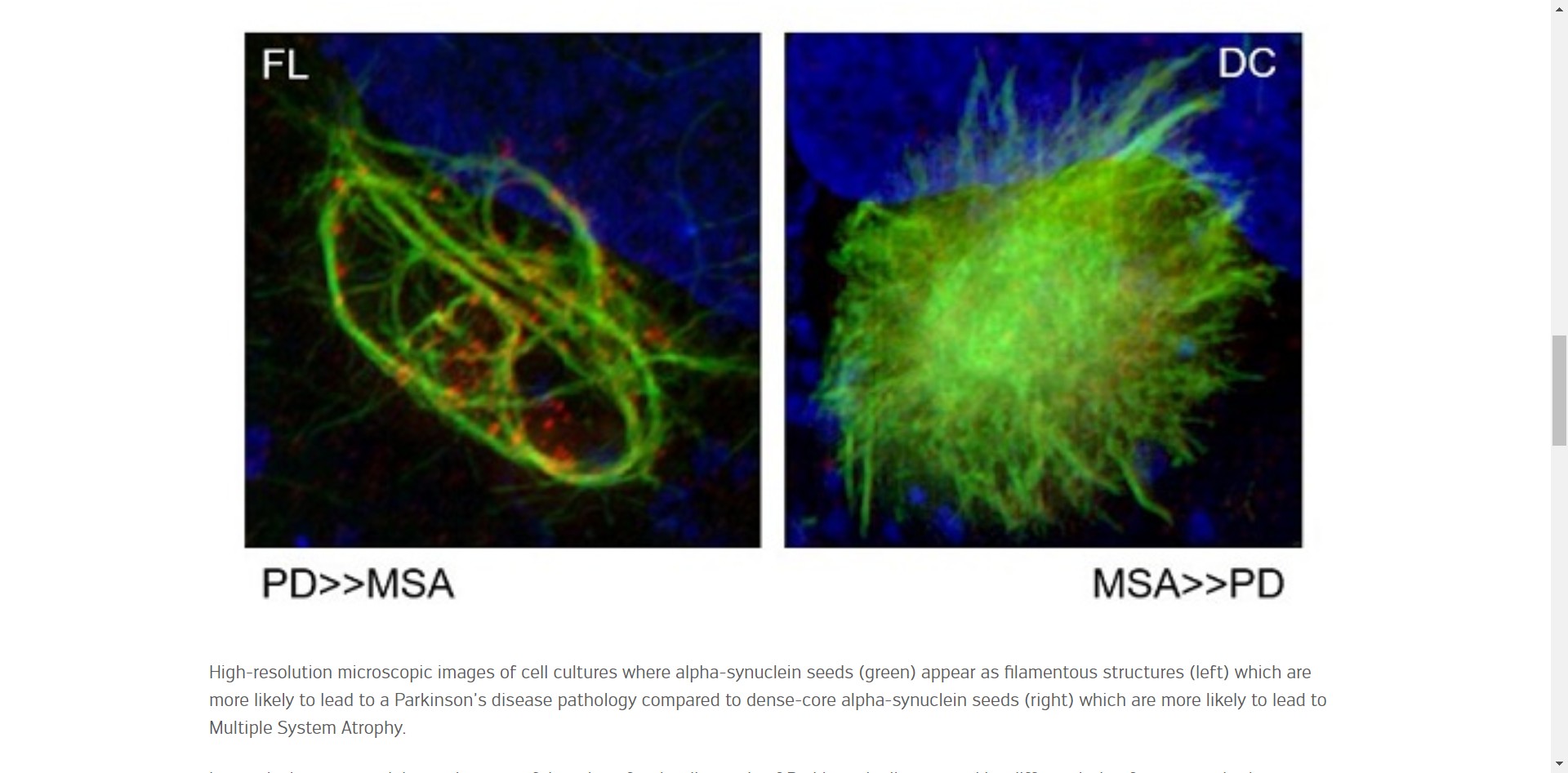
Here we can see the difference
between PD and MSA [multiple system atrophy] filamentous structures
which was found to be significant enough for a distinguishing
diagnosis.
Says Prof. Nobutaka Hattori, at
the Department of Neurology of Juntendo University and current head of
the Neurodegenerative Disorders Collaboration Laboratory at RIKEN
Centre for Brain Science,
"'Our team has also discovered,
for the first time, that these α-synuclein seeds have structures
and properties characteristic of each disease, suggesting that they
shape the pathology of each synucleinopathy.'"
https://www.uni.lu/en/news/ground-breaking-discovery-for-diagnosing-neurodegenerative-diseases/
[2983]
How many person years have been
lost to alpha-synucleinopathies due to cannabis prohibition? The
Defence believes it is lots. More than zero.
In a study published in Drug
Alcohol Dependency by Cano, Oh et al (2022)
"Peer-reviewed studies and
doctoral dissertations published in English between 1990 and July 19,
2022 were identified from PubMed, Web of Science, ProQuest
Dissertations & Theses, PsycINFO, CINAHL, and EconLit. Eligible
studies examined at least one county-level predictor of drug overdose
mortality in US counties."
and
"Of 56 studies included, 42.9%
were subnational, and 53.6% were limited to opioid overdose. In
multiple studies, measures related to opioid prescribing,
illness/disability, economic distress, mining employment,
incarceration, family distress, and single-parent families were
positively associated with drug overdose mortality outcomes, while
measures related to cannabis dispensaries, substance use treatment,
social capital, and family households were negatively associated with
drug overdose mortality outcomes."
https://www.sciencedirect.com/science/article/abs/pii/S0376871622004513?via%3Dihub
[1823]
Patients undergoing primary THA
(total hip arthroplasty) or TKA (total knee arthroplasty) with minimum
6-month follow-up who self-reported cannabis use were retrospectively
reviewed. A total of 210 patients (128 TKAs and 82 THAs) were matched
by age; gender; type of arthroplasty. Self-reported perioperative
cannabis use appeared to significantly reduce the number of patients
that persistently used opioids greater than 90 days after TJA from
9.5% to 1.4%. [P<.001]
With cannabis, three patients
instead of 20 showed persistent opioid use.
https://www.ncbi.nlm.nih.gov/pmc/articles/PMC9493281/ [1824]
In "Use of Cannabis for Harm
Reduction Among People at High Risk for Overdose in Vancouver, Canada
(20162018)" Mok et al (2021) report that it's a common strategy for
people trying to recover:
"We drew data about recent
cannabis use and intentions from 3 prospective cohort studies of
marginalized people who use drugs based in Vancouver, Canada, from
June 2016 to May 2018. The primary outcome was use of cannabis for
harm reduction, defined as using cannabis for substitution for licit
or illicit substances such as heroin or other opioids, cocaine,
methamphetamine, or alcohol; treating withdrawal; or coming down off
other drugs.
"Results. Approximately 1 in 4
participants reported using cannabis for harm reduction at least once
during the study period. The most frequent reasons included
substituting for stimulants (50%) and substituting for illicit opioids
(31%)."
https://www.ncbi.nlm.nih.gov/pmc/articles/PMC8033988/ [3149]
Another meth study "Cannabidiol mechanism of action on modulating
extinction and reinstatement of methamphetamine-seeking behavior:
Targeting D2-like dopamine receptors in the hippocampus" by Omidiani
et al (2025):
"Multiple lines of evidence suggest that CBD exerts its effects by
modulating the mesocorticolimbic dopamine system. D2-like receptors in
the CA1 region of the hippocampus play a significant role in relaying
memory and emotional signals related to the processing of drug-related
cues. Therefore, this study aims to investigate the role of CA1
D2-like receptors in mediating the effects of CBD on METH-seeking
behavior during extinction and reinstatement in the conditioned place
preference (CPP) model. For this purpose, rats were administered
various doses of Sulpiride (0.25,1, or 4 μg/0.5 μl) as a D2-like
receptor antagonist before intracerebroventricular (ICV) injection of
CBD (10 μg/5 μl) during a 10-day extinction period.
Additionally, a separate group of rats received Sulpiride (0.25,1, or
4 μg/0.5 μl) before a single CBD injection (50 μg/5 μl) on
the reinstatement day. The findings indicated that Sulpiride (1 and 4
μg) significantly attenuated CBD's acceleration of METH-CPP
extinction (p < 0.01 and p < 0.05, respectively). Moreover,
Sulpiride (1 and 4 μg) during the reinstatement phase notably
reversed CBD's preventive effects on the reinstatement of
reward-seeking behavior (p < 0.05 and p < 0.001, respectively).
In summary, these results suggest that CBD's ability to shorten the
extinction period and suppress METH reinstatement is partially
mediated through interactions with D2-like dopamine receptors in the
CA1 region of the hippocampus. These findings offering insight into
more precise and effective interventions for METH use disorder."
https://www.sciencedirect.com/science/article/abs/pii/S0022395625004091
[5402]
Danesh et al (2025) conclude that "D1-like dopamine receptors in the
dentate gyrus mediate cannabidiol's facilitation of extinction and
prevention of reinstatement in methamphetamine-induced conditioned
place preference":
"Methamphetamine (METH) is a highly addictive psychostimulant, and
despite its widespread abuse, there are no FDA-approved treatments for
METH use disorder (MUD). Cannabidiol (CBD), a non-psychoactive
cannabinoid, has shown promise in reducing behaviors linked to
psychostimulant use, including METH. However, the underlying
neurobiological mechanisms remain unclear. Emerging evidence suggests
that CBD may act on the dopamine system to influence drug-seeking
behavior. D1-like dopamine receptors (D1Rs) in the hippocampus (HPC)
are involved in memory processes related to rewards, which may
contribute to CBD's effects. This study examined whether D1Rs in the
dentate gyrus (DG) region of the HPC play a role in CBD's modulation
of METH-induced conditioned place preference (CPP) during extinction
and reinstatement. Adult male Wistar rats received the D1Rs antagonist
SCH23390 (0.25, 1, and 4 μg/0.5 μl saline) into the DG region
before intracerebroventricular injection of CBD (10 and 50 μg/5
μl of 12 % DMSO). Results show that the highest dose of SCH23390 (4
μg) significantly blocked CBD's ability to enhance extinction of
METH-CPP. Moreover, SCH23390 (1 and 4 μg) reversed CBD's prevention
of reinstatement of METH-CPP. These findings suggest that D1Rs in the
DG region are involved in mediating CBD's effects and offer insights
into its therapeutic potential for MUD."
https://www.sciencedirect.com/science/article/abs/pii/S0091305725001418
[5403]
Balu et al (2021)
report:
"Overall, the average change in
prescribed opioid use was found to be -12.3 morphine milligram
equivalent (MME) units when including all individuals (p <
0.00001)."
They break it down.
In this study, we examined
individuals who were provided with legal; medical cannabis
certifications in the state of Delaware between June 2018 and October
2019 and were concurrently being treated with opioid medications for
chronic pain at a private pain management practice. For non-outlier
individuals with positive baseline opioid use before receiving medical
marijuana certification (n=63), the average percent change in opioid
use was found to be -31.3 percent. Examining subgroups based upon pain
location, individuals with low back pain (n=58) displayed a 29.4
percent decrease in MME [morphine milligram equivalent] units, while
individuals with neck pain (n=27) were observed to have a 41.5 percent
decrease in opioid use. Similarly, individuals with knee pain (n=14)
reduced their opioid use by 32.6 percent. Since the underlying
pathology and their source of pain in the individuals was unlikely to
significantly change during the period examined, medical marijuana use
could have played a large role in allowing the individuals to decrease
their opioid use."
https://www.cureus.com/articles/77114-medical-cannabis-certification-is-associated-with-decreased-opiate-use-in-patients-with-chronic-pain-a-retrospective-cohort-study-in-delaware
[1825]
In "Ten-year outcomes of
medical cannabis for chronic low back pain: opioid reduction, pain
relief, and functional improvement in 1,000 patients," Khatib et al
(2026), in a single-arm longitudinal registry study (STROBE-reported),
followed 1,000 cannabis-naïve adults with chronic low back pain
(CLBP) confirmed by CT/MRI, all on opioids for a year or more and
unresponsive to physical therapy, NSAIDs and opioid therapy, enrolled
in 2015 and reassessed annually to 2024.
Cannabis (vaporised dried flower or oral/sublingual oil, THC-led
dosing starting at 2.5–5 mg and titrated over 2–4 weeks)
was physician-supervised; other medications continued or tapered as
clinically indicated. Primary outcome was opioid use in morphine
milligram equivalents (MMEQ); secondary outcomes were pain (0–10
Numeric Rating Scale) and disability (Oswestry Disability Index, ODI).
Paired t-tests compared baseline to Year 10 among completers;
mixed-effects models used all 8,089 visit-level observations;
last-observation-carried-forward imputation covered the full cohort.
At baseline (n=1,000): mean age 48.9±15.7, 64.0% male, BMI
27.2±4.3, pain duration 9.8±6.3 years; MMEQ
59.6±36.4 mg/day, NRS 8.64±1.20, ODI 52.7±11.7%.
638 patients (63.8%) completed all 10 years, with no dropouts
attributed to lack of efficacy or intolerable adverse effects after
Year 2.
Among the 638 completers, MMEQ fell 89.8% (62.8±35.7 to
6.4±7.1 mg/day; Cohen's d=2.19; p<.001), with 91.2% reaching
the pre-specified ≥50% MMEQ-reduction threshold and 6.6% ceasing
opioids entirely. NRS pain fell 84.2% (8.71±1.23 to
1.37±1.71; d=4.92), 96.6% meeting the ≥30% reduction
threshold. ODI disability improved more slowly and by less —
30.4% overall (52.9±11.9% to 36.8±14.9%; d=1.19) —
with most of the gain arriving after Year 5. Mixed-effects modelling
of all 8,089 visits confirmed continuous yearly gains (MMEQ −5.3
mg/yr, NRS −0.73 pts/yr, ODI −1.6 pts/yr; all p<.001).
Cannabis intake rose to roughly 40 g/month by Year 2 and stayed flat
thereafter (THC:CBD about 3.8:1), which the authors read as showing no
tolerance developing. Concurrent tramadol/tapentadol use fell from
89.7% to 5.6%, benzodiazepines from 78.8% to 5.3%, SSRIs from 77.7% to
5.8%, and gabapentinoids from 31.3% to 0.6%. Across the 8,089 visits,
tolerability-related adverse events occurred at 11.4% (mostly dry
mouth and gastrointestinal symptoms); serious psychiatric events
occurred at 0.02% of visits, with no hospitalisations, deaths, or
cannabis-use-disorder cases recorded.
https://link.springer.com/article/10.1007/s00586-026-10290-y
[6862]
More than a quarter of U.S. adults suffering from chronic pain have
turned to using cannabis to manage their discomfort, according to a
study published in JAMA Open Network.
Researchers at Michigan
Medicine surveyed 1,661 adults last spring with chronic pain who lived
in one of the 36 states with active medical cannabis programs and
Washington, D.C.
About 26 percent of survey
participants reported using cannabis within the past year to manage
pain, Bicket et al found. Moreover:
"More than half of adults who
used cannabis to manage their chronic pain reported that use of
cannabis led them to decrease use of prescription opioid, prescription
nonopioid, and over-thecounter pain medications, and less than 1%
reported that use of cannabis increased their use of these medications
(Figure 1). Fewer than half of respondents reported that cannabis use
changed their use of nonpharmacologic pain treatments. Among adults
with chronic pain in this study, 38.7% reported that their used of
cannabis led to decreased use of physical therapy (5.9% reported it
led to increased use), 19.1% reported it led to decreased use of
meditation (23.7% reported it led to increased use), and 26.0%
reported it led to decreased used of cognitive behavioral therapy
(17.1% reported it led to increased use) (Figure 2)."
https://jamanetwork.com/journals/jamanetworkopen/articlepdf/2800119/bicket_2023_ld_220293_1671719838.02096.pdf
[2011]
"Δ8-Tetrahydrocannabivarin
has potent anti-nicotine effects in several rodent models of nicotine
dependence" revealed Xi et al in 2019:
"Both types of cannabinoid
receptorsCB1 and CB2 regulate brain functions relating to addictive
drug-induced reward and relapse. CB1 receptor antagonists and CB2
receptor agonists have anti-addiction efficacy, in animal models,
against a broad range of addictive drugs.
Δ9-Tetrahydrocannabivarin (Δ9-THCV)a cannabis
constituentacts as a CB1 antagonist and a CB2 agonist.
Δ8-Tetrahydrocannabivarin (Δ8-THCV) is a Δ9-THCV
analogue with similar combined CB1 antagonist/CB2 agonist properties.
"Experimental Approach: We
tested Δ8-THCV in seven different rodent models relevant to
nicotine dependencenicotine self-administration, cue-triggered
nicotine-seeking behaviour following forced abstinence,
nicotine-triggered reinstatement of nicotine-seeking behaviour,
acquisition of nicotine-induced conditioned place preference,
anxiety-like behaviour induced by nicotine withdrawal, somatic
withdrawal signs induced by nicotine withdrawal, and hyperalgesia
induced by nicotine withdrawal.
"Key Results: Δ8-THCV
significantly attenuated intravenous nicotine self-administration and
both cue-induced and nicotine-induced relapse to nicotine-seeking
behaviour in rats. Δ8-THCV also significantly attenuated
nicotine-induced conditioned place preference and nicotine withdrawal
in mice."
and
"In summary, most studies on
animal models for substance use disorders reported some beneficial
effects for the cannabinoids under investigation, except for CBDA (see
Fig. 3). Δ8-THCV showed anti-nicotine-dependence properties,
while CBN, Δ8-THC, and 11-OH-Δ8-THC appeared to reduce
morphine-withdrawal symptoms. Δ8-THC also seemed to have some
capacity to inhibit the reinstatement of METH-seeking behavior. CBDA
was not effective in reducing METH-induced or cocaine-seeking
behaviors."
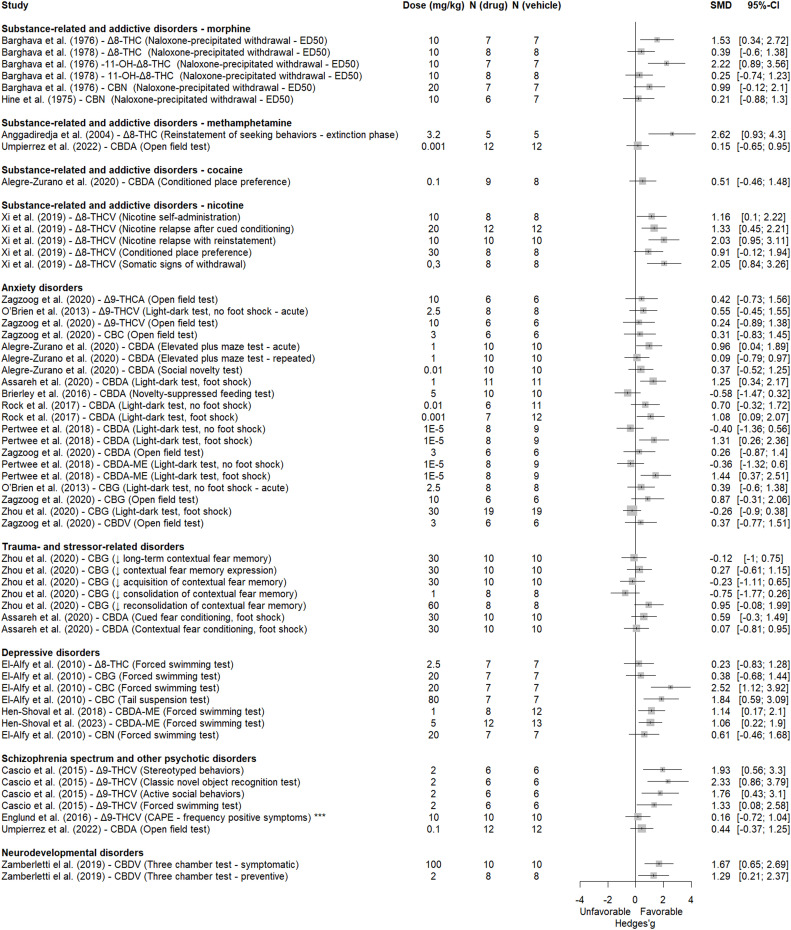
https://bpspubs.onlinelibrary.wiley.com/doi/pdfdirect/10.1111/bph.14844[3808]
Kitchen et al (2025) examined
"Cannabis use and illicit opioid cessation among people who use drugs
living with chronic pain":
"Between June 2014 and May 2022, 2340 PWUD were initially recruited
and of those 1242 PWUD reported chronic pain, use of unregulated
opioids and completed at least two follow-up visits. Of these 1242
participants, 764 experienced a cessation event over 1038.2
person-years resulting in a cessation rate of 28.5 per 100
person-years (95% confidence interval [CI] 25.431.9). Daily cannabis
use was positively associated with opioid cessation (adjusted hazard
ratio 1.40, 95% CI 1.081.81; p = 0.011).
In the sex-stratified sub-analyses, daily cannabis use was
significantly associated with increased rates of opioid cessation
among males (adjusted hazard ratio 1.50, 95%
CI 1.092.08; p = 0.014)."
https://onlinelibrary.wiley.com/doi/abs/10.1111/dar.14014 [4794]
"Efficacy of cannabidiol alone or in
combination with Δ-9-tetrahydrocannabinol for the management of
substance use disorders: An umbrella review of the evidence" from
Bertrand Redonnet et al (2025)
"...searched PubMed, Web of Science and Epistemonikos databases for
SRs, with or without a meta-analysis, of randomized controlled trials
focusing on interventions dispensing CBD, alone or in combination with
THC, to treat SUDs, published from 1 January 2000 to 15 October 2024.
The results supported combined THC and CBD:
"22 SRs were included, 5 of which performed a meta-analysis. We found
mixed evidence regarding the efficacy of CBD to manage and treat SUDs.
Findings were interpreted in light of the quality of the SRs.
Nabiximols, which contains CBD and THC, demonstrated positive effects
on cannabis withdrawal and craving symptoms. Evidence supporting the
efficacy of CBD is limited and inconclusive for abstinence, reduction
or cessation of use of cannabis, tobacco, alcohol, opiates and other
psychoactive substances.
"Conclusion
Cannabidiol (CBD) monotherapy does not appear to be efficacious for
treatment of substance use disorders. CBD primarily exhibits effects
on cannabis withdrawal and craving when combined with
Δ-9-tetrahydrocannabinol (THC). Existing data on the efficacy of
CBD alone with regard to other outcomes related to substance use
disorders are limited."
https://onlinelibrary.wiley.com/doi/10.1111/add.16745 [4755]
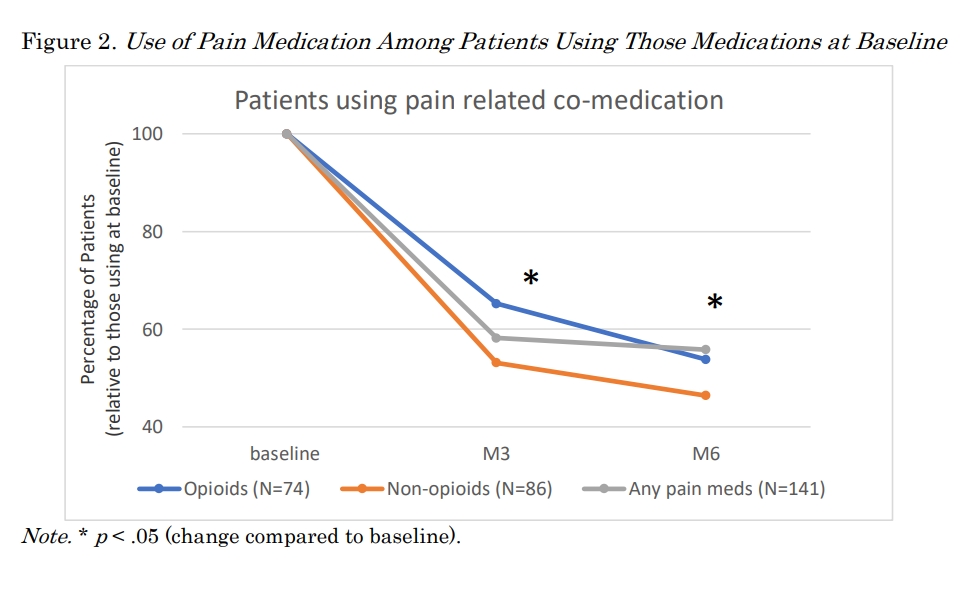
https://publications.sciences.ucf.edu/cannabis/index.php/Cannabis/article/download/239/169
[4767]
Several descriptive commentaries from opoid users fighting addiction
are featured in Ganesh et al (2024) "'Smoking weed it gets you over
the hump': Cannabis co-use as a facilitator of decreased opioid use
among people who inject drugs in Los Angeles, California" including
this one:
"Participants also described using cannabis to mitigate opioid
cravings after they had stopped regular use and were no longer
experiencing withdrawal symptoms. This person reported that it helped
them to 'get over the hump' of craving opioids and continue not to
use.
"'I was really trying to get off of opiates and using weed, really
helps to not have the first urge to use opiates. When you're addicted
and you have a habit, then you have to use opiates. But when you don't
have a habit and you're not getting sick from it every day, when
you're smoking weed it gets you over the hump and that urge to get
high for the first time. And that's what's so special out [sic] weed.'
(5115 26, Male, Housed)"
https://www.sciencedirect.com/science/article/pii/S2772724624000416
[5063]
Looking at "Recreational Cannabis Laws and Fills of Pain Prescriptions
in the Privately Insured" Steuart et al (2025) found no good cheer for
the manufacturers and distributors of opioids:
"Objective: Almost half of U.S. states have passed recreational
cannabis laws as of May 2024. While considerable evidence to date
indicates cannabis may be a substitute for prescription opioids in the
treatment of pain, it remains unclear if patients are treating pain
with cannabis alone or concomitantly with other medications.Method:
Using data from a national sample of commercially insured adults, we
examine the effect of recreational cannabis legalization (through two
sequential policies) on prescribing of opioids, NSAIDS, and other pain
medications by implementing synthetic control estimations and
constructing case-study level counterfactuals for the years 2007-2020.
Results: Overall, we find recreational cannabis legalization is
associated with a decrease in opioid fills among commercially insured
adults in the U.S., and we find evidence of a compositional change in
prescriptions of pain medications more broadly. Specifically, we find
marginally significant increases in prescribing of non-opioid pain
medications after recreational cannabis becomes legal in some states.
Once recreational cannabis dispensaries open, we find statistically
significant decreases in the rate of opioid prescriptions (13%
reduction from baseline, p<.05) and marginally significant
decreases in the average daily supply of opioids (6.3% decrease,
p<.10) and number of opioid prescriptions per patient (3.5%
decrease, p<.10). Conclusions: These results suggest that
substitution of cannabis for traditional pain medications increases as
the availability of recreational cannabis increases. There appears to
be a small shift once recreational cannabis becomes legal, but we see
stronger results once users can purchase cannabis at recreational
dispensaries.The decrease in opioids and marginal increase in
non-opioid pain medication may reflect patients substituting opioids
with cannabis and non-opioid pain medications, either separately or
concomitantly. Reductions in opioid prescription fills stemming from
recreational cannabis legalization may prevent exposure to opioids in
patients with pain and lead to decreases in the number of new opioid
users, rates of opioid use disorder, and related harms."
https://publications.sciences.ucf.edu/cannabis/index.php/Cannabis/article/view/268/181
[5073]
Carey et al (2025) created some
junkie monkeys to test the "Effects of Δ9-tetrahydrocannabinol
(THC), cannabidiol (CBD), and THC:CBD mixtures on behavioral and
physiological signs of morphine withdrawal in rhesus monkeys":
"Monkeys received escalating doses of morphine up to 3.2 mg/kg twice
daily. After at least 2 weeks of morphine treatment, saline was
substituted for morphine for 2 days. Behavioral and physiological
signs of opioid withdrawal, including blood pressure, heart rate, body
temperature, and activity were measured before and after
administration of THC (0.321.0 mg/kg), CBD (1017.8 mg/kg), mixtures of
THC (0.32 mg/kg) and CBD (1017.8 mg/kg), lofexidine (0.0320.32 mg/kg),
or vehicle. Discontinuing morphine treatment markedly increased
unusual tongue movements, a characteristic behavioral sign of opioid
withdrawal in monkeys, and all physiological signs. The largest THC
dose (1.0 mg/kg) decreased unusual tongue movements and heart rate,
and the largest lofexidine dose (0.32 mg/kg) decreased unusual tongue
movements, blood pressure, heart rate, and activity. CBD alone or with
THC had no significant effect. These data demonstrate that THC
attenuates some signs of opioid withdrawal; however, THC was not more
effective than the currently available medication lofexidine."
https://www.sciencedirect.com/science/article/abs/pii/S0022356525398848
[5326]
In "Cannabis Use,
Problem-Gambling Severity, and Psychiatric Disorders: Data from the
National Epidemiological Survey on Alcohol and Related Conditions"
(2019) Hammond et al
"... examined data from the
first wave (20012002) of the National Epidemiological Survey on
Alcohol and Related Conditions (NESARC), a large, national survey of
non-institutionalized U.S. adults, to examine relationships between
problem-gambling severity and psychopathology in individuals with and
without cannabis use. At the time of data collection of the first wave
of the NESARC, medical cannabis use had been legalized in eight
states; however, its recreational or non-medical use had not been
legalized in any state. In addition, prevalence estimates of past-year
use during this time period has ranged from 4.1% (Hasin et al., 2015)
to 11% (Azofeifa, Mattson, Schauer, McAfee, Grant, & Lyerla,
2016). "In all cases, associations between problem-gambling severity
and psychopathologies were weaker among the lifetime-cannabis-using
group as compared to the never-using group.. Cannabis use moderates
the relationships between problem-gambling severity and psychiatric
disorders, with cannabis use appearing to account for some of the
variance in the associations between greater problem-gambling severity
and specific forms of psychopathology."
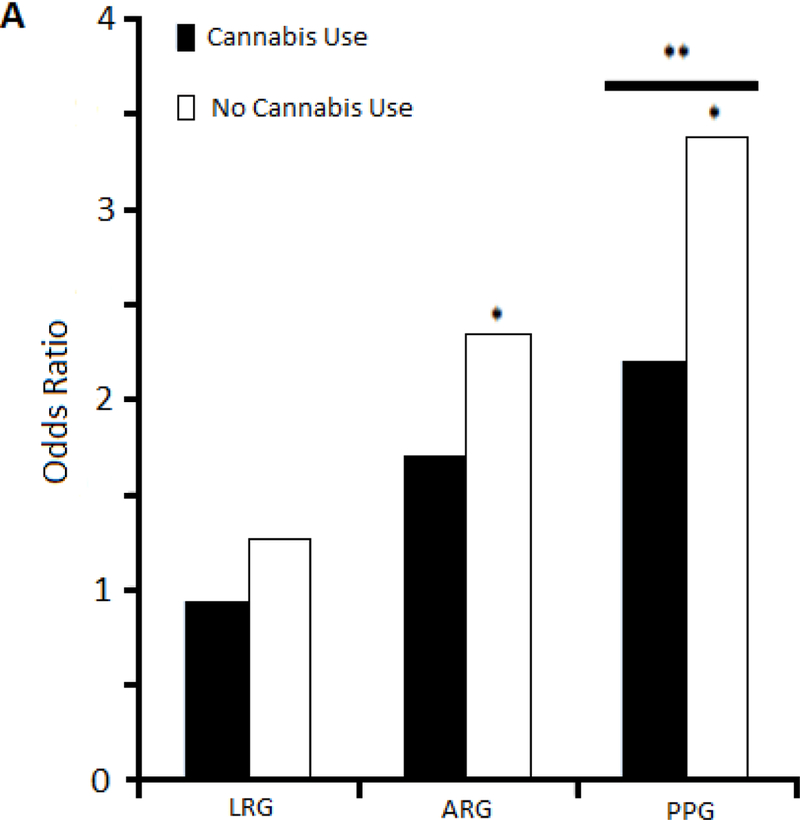
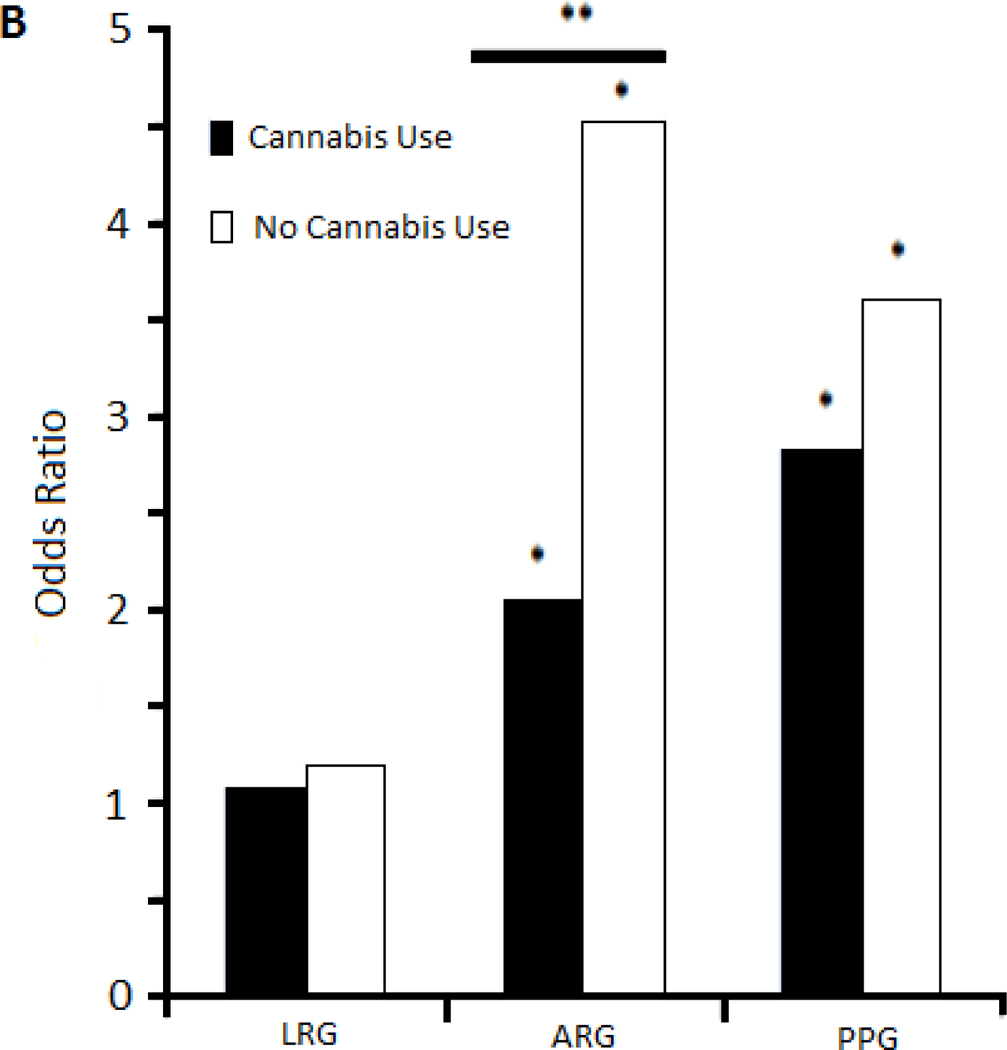
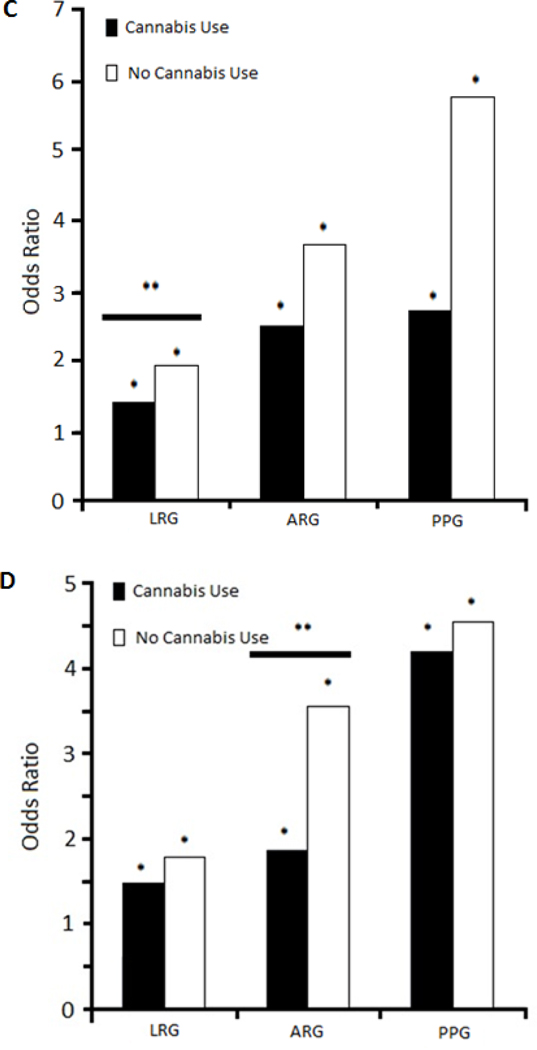
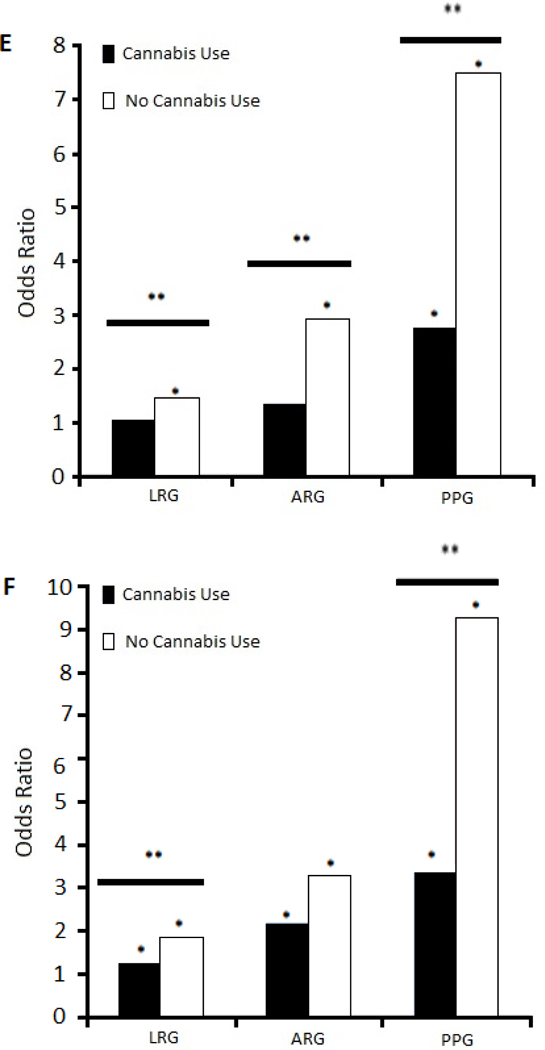
"Associations between
problem-gambling severity and psychopathology among
lifetime-cannabis-using and never-using groups. Figures compare odds
ratios for specific disorders in association with low-risk gambling
(LRG), at-risk gambling (ARG), and problem/pathological gambling
(PPG), using of non-gambling/low frequency gambling as a reference
group. Specific disorders are those as follows: A. Interactions with
cannabis use in the associations between major depression and
problem-gambling severity. B. Interactions with cannabis use in the
associations between panic disorder and problem-gambling severity. C.
Interactions with cannabis use in the associations between alcohol
abuse/dependence and problem-gambling severity. D. Interactions with
cannabis use in the associations between nicotine dependence and
problem-gambling severity. E. Interactions with cannabis use in the
associations between cluster A personality disorder and gambling
severity. F. Interactions with cannabis use in the associations
between cluster B personality disorders and problem-gambling severity.
* Indicates statistically significant odds ratios at p<0.05. **
Indicates statistically significant interactions at p<0.05."
and
"Furthermore, cannabis-use
status moderated the relationships problem-gambling severity and
specific psychiatric disorders including major depression, panic
disorder, alcohol-use disorders, nicotine dependence, cluster A PDs
(especially paranoid PD), and cluster B PDs (especially antisocial
PD)."
However Dr Hammond, who has
"...received support from the
American Psychiatric Association Child & Adolescent Fellowship, an
unrestricted education grant supported by Shire Pharmaceuticals and
the American Academy of Child & Adolescent Psychiatry Pilot
Research Award for Junior Investigators supported by Lilly USA, LLC.
Dr. Marc Potenza has received financial support or compensation for
the following: Dr. Potenza has consulted for and advised Shire, INSYS,
RiverMend Health, Opiant/Lakelight Therapeutics, and Jazz
Pharmaceuticals; has received unrestricted research support from
Mohegan Sun Casino and grant support from the National Center for
Responsible Gaming"
...tries to highlight cannabis
in problem gambling, his own Figure 1 tells the real story. Even under
prohibition conditions, it was another blow for NECUD/SPUK sufferers,
who were worse at gambling and at being crazy too.
I've used my incredible
graphics skills to show how the anti-cannabis woowoo is favoured by
the layout of the histograms in Figure 1.
Please compare
...which charts interactions
with cannabis use in the associations between major depression and
problem-gambling severity for low-risk gambling (LRG), at-risk
gambling (ARG), and problem/pathological gambling (PPG groups), with
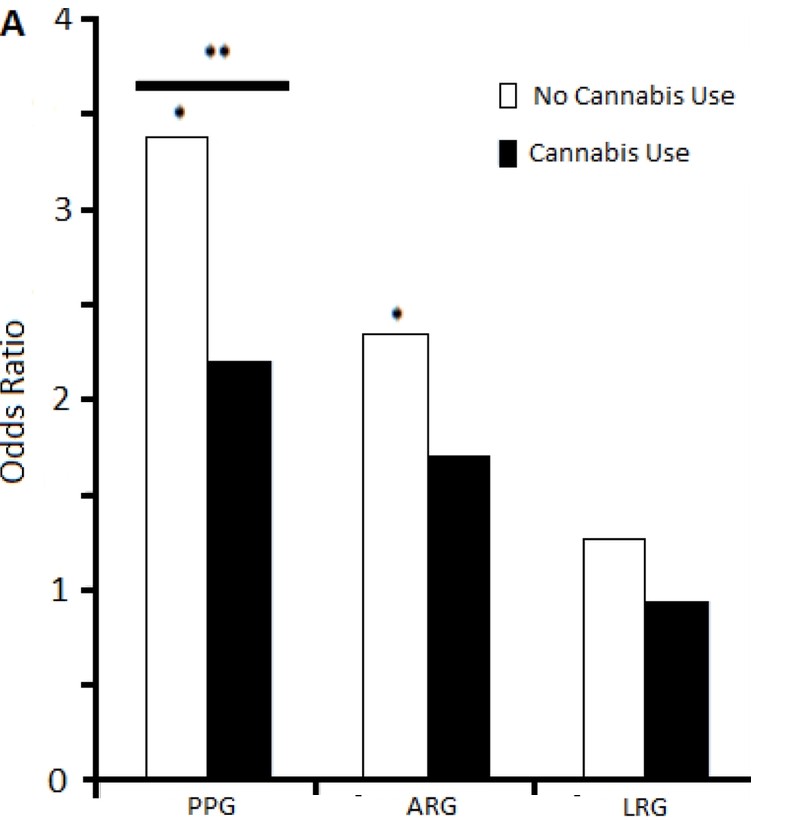
...a left to right mirror image
of 1A. You can see cannabis looks much better now, and we have begun
with the most serious problem gamblers and worked our way downwards. I
have not done mirror images for charts B-F, I'm sure the Court can
imagine that for itself.
https://www.ncbi.nlm.nih.gov/pmc/articles/PMC6933114 [2711]
Another survey, published in
JAMA Psychiatry by Grubbs and Kraus in 2024, found a relationship
between problem drinking and problem gambling:
"A total of 4363 respondents
were included (51.4% men, 46.4% women, and 2.2% nonbinary or other;
mean [SD] age, 49.6 [16.2] years) (Table 1). The national
census-matched survey consisted of 2806 participants (mean [SD] age,
48.9 [17.2] years; 1365 [48.6%] men and 1441 [51.4%] women; response
rate, 2806 of 3203 [87.6%]). The oversample of sports gamblers
consisted of 1557 participants (mean [SD] age, 41.7 [15.3] years; 1043
[67.0%] men and 514 [33.0%] women; response rate, 1557 of 1978
[78.7%]), of whom 1474 reported past year sports betting.
Additionally, in the national sample, 338 respondents (12.0%)
indicated they had gambled on sports in the past 12 months, resulting
in a total of 1812 sports gamblers (Table 1). Sports gamblers were
disproportionally likely to be men and younger. In these combined
samples, 3267 respondents (74.9%) reported past year alcohol use.
Sports wagerers were disproportionately more likely to report binge
drinking at monthly or greater frequency over the past 12 months and
were also disproportionately less likely to report no binge drinking
episodes in the past 12 months (Table 1). Multinomial logistic
regressions adjusted for age and race and ethnicity showed that sports
gamblers were substantially more likely to report higher levels of
binge drinking (Table 2), suggesting that elevated risky drinking
episodes among sports gamblers are not due to demographic
differences."
https://jamanetwork.com/journals/jamanetworkopen/articlepdf/2816784/grubbs_2024_ld_240031_1710953595.81812.pdf
[3483]
In view of the foregoing, we
should not be surprised if "Expectancy of impairment attenuates
marijuana-induced risk taking" (2017):
"Participants (N=136) were
regular marijuana users. A balanced placebo design (BPD) was used
crossing marijuana administration (i.e., 0% Tetrahydrocannabinol (THC)
vs. 2.8% THC) with stimulus expectancy (i.e., Told Placebo vs. Told
THC). Marijuana outcome expectancies were measured by self-report and
dependent measures including a number of behavioral impulsivity tasks
and the balloon analogue risk task (BART). ResultsAmong participants
who received THC, higher expectancies for cognitive-behavioral
impairment (CBI) were related to lower risk-taking on the BART. Among
those who received placebo, there was no association between CBI
expectancies and BART performance. CBI expectancies did not moderate
drug effect on the BART and drug or stimulus expectancy effects on
impulsivity measures."
https://europepmc.org/backend/ptpmcrender.fcgi?accid=PMC5796549&blobtype=pdf
[2712]
"Treating alcoholism by cannabis substitution creates a different
doctor-patient relationship," says Mikuriya.
"Patients seek out the physician to confer legitimacy on what they are
doing or are about to do. My most important service is to end their
criminal status, Aeschalapian protection from the criminal justice
system, which often brings an expression of relief. An alliance is
created that promotes candor and trust. The physician is permitted to
act as a coach or an enabler in a positive sense." [3822]
Summarising the criteria for any substitution "treatment"...
"1. It should reduce alcohol use and related harms.
"2. It should ideally be free of harms, or at least less harmful than
alcohol.
"3. Misuse should be less than that of alcohol.
"4. It should be shown that it can substitute for alcohol and not be
used along with alcohol.
"5. It should be safer in overdose than alcohol.
"6. It should ideally not potentiate the effects of alcohol especially
if either drug is taken in overdose.
"7. It should offer significant health economic benefits."
...Chick and Nutt (2012) found six criteria wholly satisfied by
cannabis, while one (number 6) was partially satisfied, due to
disagreement on whether it potentiates alcohol. The answer to that is,
only if you drink alcohol. For details see Subbaraman's Table 1.
https://pmc.ncbi.nlm.nih.gov/articles/PMC3992908/ [3823]
Cannabis legalisation in Slovenia can be expected to reduce morbidity,
mortality and costs related to tobacco use. According to a survey of
9003 subjects by Pravosud et al (2024)
"In this longitudinal study, a web-based survey was administered to a
nationally representative, population-based panel of US adults in
2017, 2020, and 2021. We used weighted unadjusted binomial logistic
GEE models to assess changes in prevalence of cannabis,
tobacco/nicotine use and co-use and weighted, adjusted binary logistic
GEE models to assess associations of cannabis legalization with
cannabis, tobacco/nicotine use and co-use."
"Between 2017 and 2021 current cannabis use increased +3.3 % and was
higher in states with medical and recreational cannabis.
"Recreational cannabis legalization increased the odds of current
cannabis use by 1.13 times above the effect of medical legalization.
"Current tobacco use declined −1.9 %, but this change was not
associated with legalization."
https://www.sciencedirect.com/science/article/pii/S0955395924003025?via%3Dihub
[4810]
----------------------------------------------------------------------------
The Englishman
stands for the rights of everyone disadvantaged, discriminated
against, persecuted, and prosecuted on the false or absent bases of
prohibition, and also believes the victims of these
officially-sanctioned prejudices have been appallingly treated and
should be pardoned and compensated.
The Englishman
requests the return of his CaPs and other
rightful property, for whose distraint Slovenia has proffered no
credible excuse or cause.
The Benedictions represent both empirical
entities as well as beliefs. Beliefs which the Defence evidence
shows may be reasonably and earnestly held about the positive
benefits of CaPs at the population level, in which the good
overwhelmingly outweighs the bad. Below, the latest version of this
dynamic list.
THE BENEDICTIONS
REFERENCES
TIMELINE OF DRUG LAW v. SCIENCE