***PSYCHEDELICS AND MENTAL HEALTH
The New Establishment swears it
has got it all right this time after a complete reversal - The
desirability of brains explained - Your brain is not capable of
absorbing all of neurology - Ways to lose your brain faster in
Slovenia and the UK - Preventing population stupidity as an example of
psychedelics-inspired cognition in action - Stigma and the psychedelic
mums - Short-lived but long-lasting effects in pork chops - Portrait
of the anti-euthanasia party as a pro-suicidal
young man - "Sentence first, verdict afterwards" - Devastating
effect on patriotic pastime - Resilience to stress - Aspects of the
ZPPPD's criminalization of self-maintenance - Battlefield uses -
Triangulation of organised mendacity, criminalized cures and
justifiable motives for illegality
Research into psychedelics and mental
health has waxed and waned inversely with the war on mental
health...sorry, drugs...but recently it has only waxed:
Original:
https://onlinelibrary.wiley.com/doi/10.1111/jnc.16017 [3364]
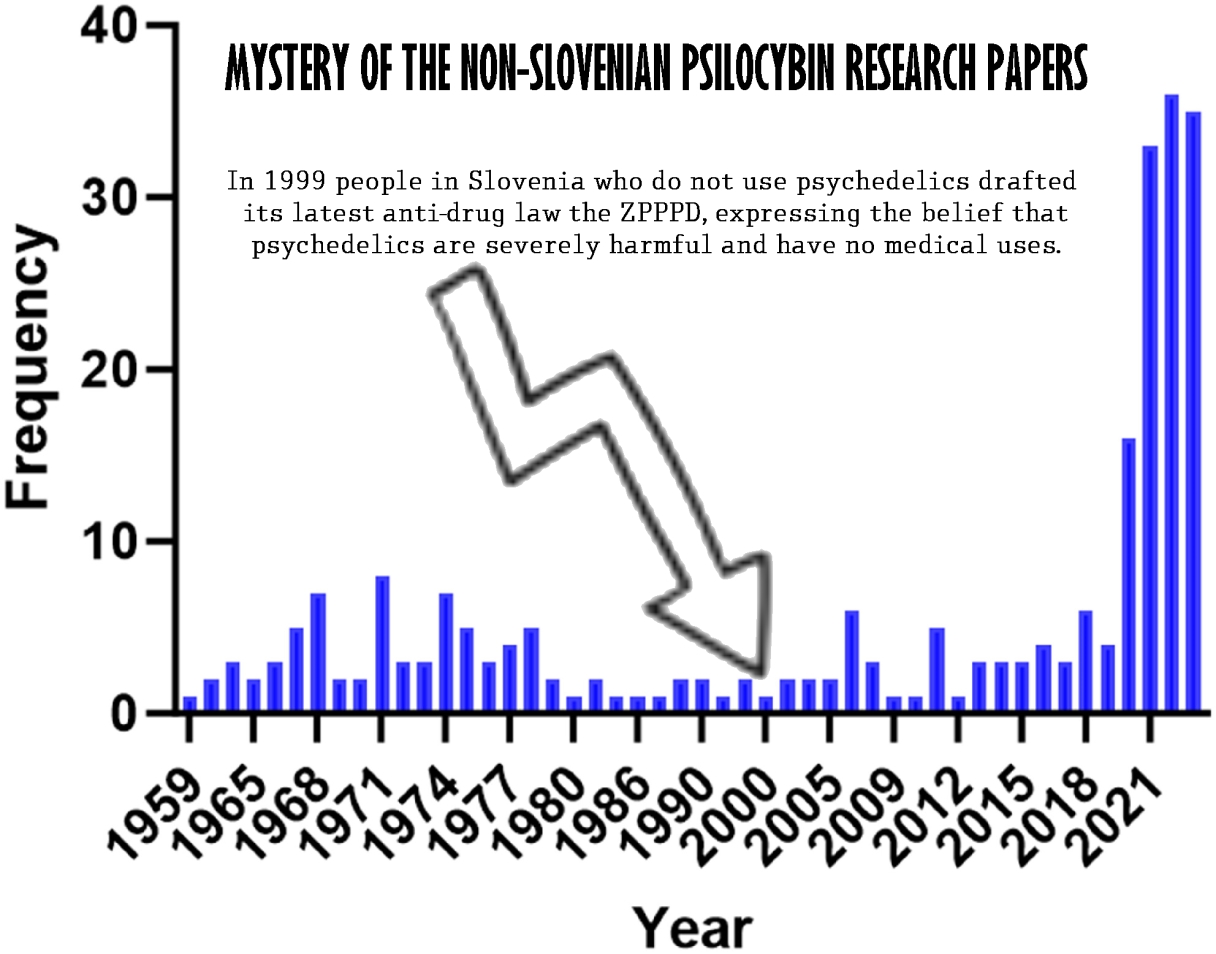
During the psychedelic sixties
and on until 1983 it was believed brain cells only died, and that no
new cells were made. This was challenged in 1962 by Jozef Altman but
it was not until 1983 that improved techniques made adult neurogenesis
credible, and it was finally confirmed in humans in 1998. So adult
neurogenesis is younger than Slovenia and only one year older than the
drafting of the ZPPPD.
From being part of the
Nixon-era boogaloo, when shock horror stories circulated that LSD
"kills your brain cells", psychedelics have become key to the study of
adult neurogenesis and consciousness. Unfortunately this research was
impeded by legal obstacles as well as technical ones. Nevertheless it
turned out that psychedelics stimulate adult neurogenesis, and this
includes CCx.
Writing in 2020, Abdissa et al
in "Review Article on adult neurogenesis in humans" say:
"It is now widely accepted that
new neurons are continually generated in specific regions in the adult
brain. This occurs primarily in the subventricular zone of the lateral
ventricles and the subgranular zone of the dentate gyrus in the
hippocampus. Neuroblasts from the subventricular zone migrate along
the rostral migratory stream into the olfactory bulb, whereas
neuroblasts from the subgranular zone show relatively little migratory
behavior, and differentiate into dentate gyrus granule cells. Growth
factors, neurotrophins, cytokines, and hormones are also major
regulators of adult neurogenesis."
https://www.sciencedirect.com/science/article/pii/S2214854X20300133
[3821]
A literature search in January
2023 using the PubMed and ScienceDirect databases, combining the
keywords psychedelics and neurogenesis along with their respective
MeSH [medical subject heading] terms.
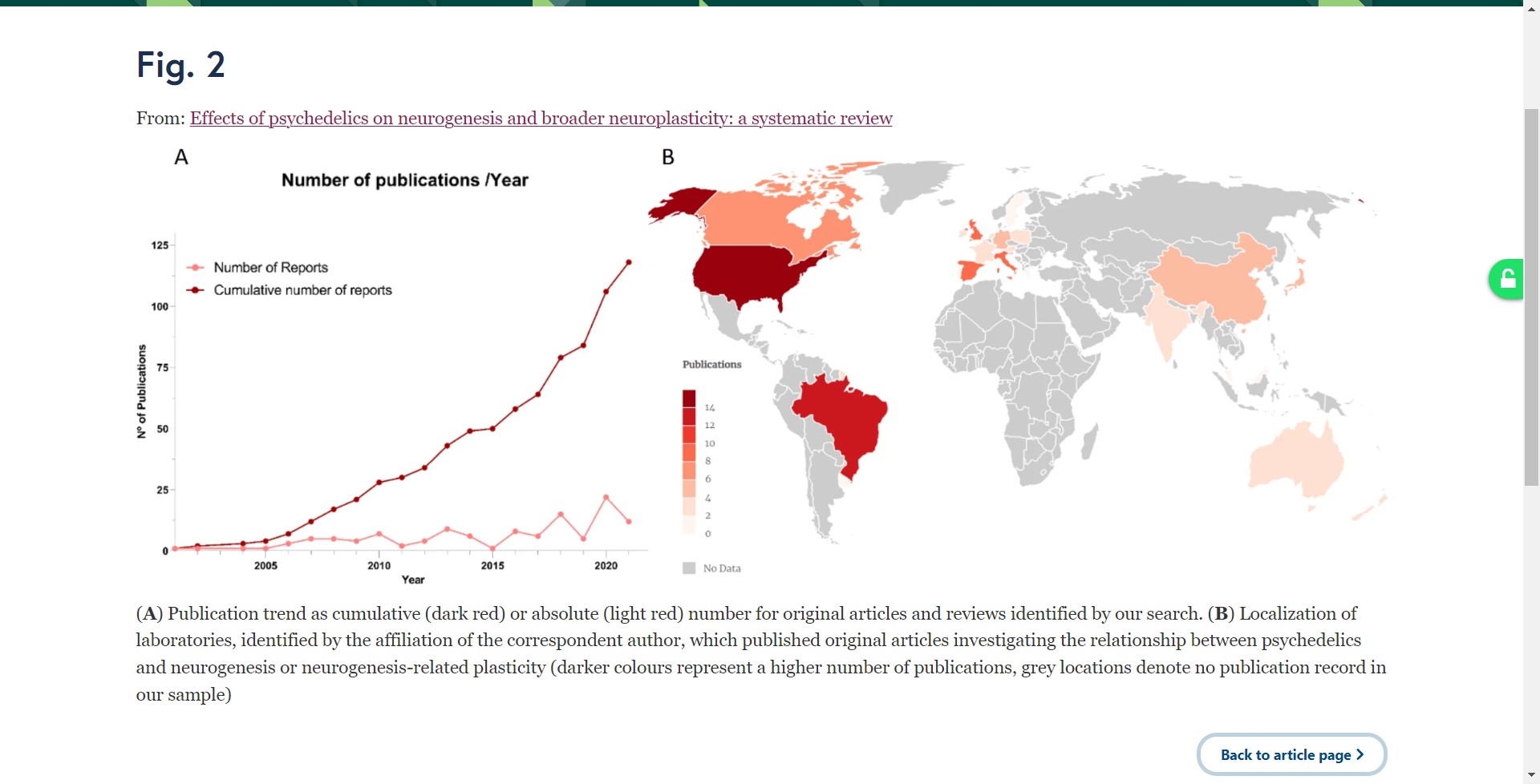
https://molmed.biomedcentral.com/articles/10.1186/s10020-024-01013-4
[3820]
Tudorancea et al (2025) have some tips on "Psychedelic interventions
for major depressive disorder in the elderly: Exploring novel
therapies, promise and potential":
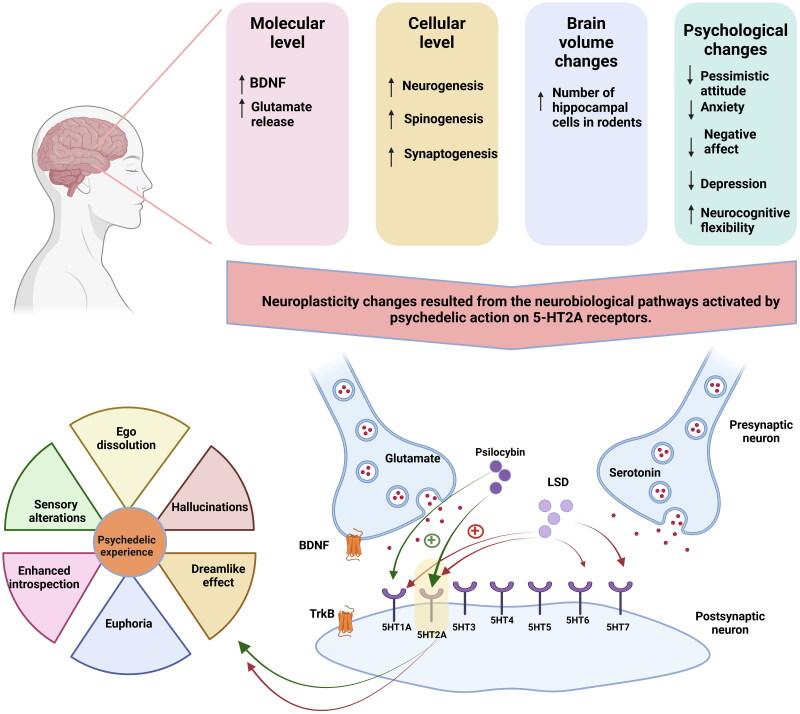
https://pmc.ncbi.nlm.nih.gov/articles/PMC12057789/ [5112]
Why might we seek to boost
neurogenesis? According to Patel et al (2024) its enemy is monotony:
not all of us end up performing novel tasks each day:
"Among 443 occupations studied,
percentage of deaths attributed to Alzheimers disease for taxi drivers
and ambulance drivers and each of the remaining 441 occupations,
adjusting for age at death and other sociodemographic factors."
And...
"Of 8 972 221
people who had died with occupational information, 3.88%
(348 328) had Alzheimers disease listed as a cause of death.
Among taxi drivers, 1.03% (171/16 658) died from Alzheimers
disease, while among ambulance drivers, the rate was 0.74% (10/1348).
After adjustment, ambulance drivers (0.91% (95% confidence interval
0.35% to 1.48%)) and taxi drivers (1.03% (0.87% to 1.18%)) had the
lowest proportion of deaths due to Alzheimers disease of all
occupations examined. This trend was not observed in other
transportation related jobs that are less reliant on real time spatial
and navigational processing or for other types of dementia. Results
were consistent whether Alzheimers disease was recorded as an
underlying or contributing cause of death.
"Conclusions Taxi drivers and
ambulance drivers, occupations involving frequent navigational and
spatial processing, had the lowest proportions of deaths attributed to
Alzheimers disease of all occupations."
https://www.bmj.com/content/387/bmj-2024-082194 [4782]
As Li and Wang (2026) explain:
"Many neuropsychiatric and neurodegenerative disorders share common
pathological features, notably cortical atrophy, synaptic loss, and
maladaptive neural circuit connections. Conditions ranging from major
depression to Alzheimer's disease (AD) involve the regression of
neural structure, shrinkage of dendritic arbors, loss of dendritic
spines, and elimination of synapses in critical regions that mediate
cognition and emotion. Chronic neuroinflammation often accompanies
these structural changes, further exacerbating neural damage. Given
this convergence, compounds capable of both promoting neuronal growth
and modulating inflammation have enormous therapeutic potential across
a spectrum of brain disorders. Psychedelics meet these criteria: they
stimulate growth-factor signaling, activate cell-survival pathways,
and can have immunomodulatory effects."
https://genomicpress.kglmeridian.com/view/journals/psychedelics/aop/article-10.61373-pp026w.0006/article-10.61373-pp026w.0006.xml
[6868]
A quick intro to the brain:
"Prefrontal cortex,
hippocampus, striatum and cerebellum are key brain structures due to
their function. The prefrontal cortex is involved in the development
of working memory, executive functions like planning of movement and
regulation of emotion. The hippocampus is important for memory
consolidationtransferring information from short-term memory into
long-term memory. The striatum is part of the reward system and is
necessary for voluntary motor control. The cerebellum is responsible
for motor functions, maintaining balance and control of accurate
multi-joint movements; it is strongly activated when learning new
activities.
"Both physiological processes,
such as the development of cognitive functions, and pathological
processes, such as neurodegenerative changes, are accompanied by
modifications of synapse structure and function. One of the key
components of those processes is proteolysis of the extracellular
matrix (ECM), which constitutes the environment for surrounding
neurons and glial cells, at the same time serving as a specific
modifier of those cells. ECM enzymes, including matrix
metalloproteinases (MMPs), are involved in degrading certain ECM
proteins, modulating cellular integrity and neuroplasticity. MMPs are
also involved in regulating such processes as cell differentiation and
migration, regulating growth factor activity, angiogenesis and
inflammation by proteolytic degradation of growth factors and cell
adhesion molecules. MMP2 and MMP9, belonging to the gelatinase
subgroup, play the most crucial role in synaptic plasticity.
"Enzymatic remodeling of
synaptic connections involving MMP9 and MMP2 is associated with such
mechanisms as late-phase of long-term potentiation (LTP) impairment
within hippocampal synapses, changes in dendritic spine morphology in
hippocampal neurons, regeneration of nerve fibers as a result of
digestion of damaged ECM components, as well as axon regeneration and
elongation. Those enzymes are also implicated in morphological changes
and maturation of dendritic spines.
"MMP activity and expression
are strictly controlled on several levels. One of such control
mechanisms is the activity of tissue inhibitors of matrix
metalloproteinasesTIMPs, among which TIMP2 is the specific inhibitor
of MMP2, while TIMP3 exerts a broad-spectrum inhibitory effect against
several subgroups of metalloproteinases (including MMP2 and MMP9) and
adamalysins (ADAMs). TIMP2 and TIMP3 are also involved in regulating
cellular processes, such as cell proliferation, apoptosis and
angiogenesis through different mechanisms, not related to MMP
inhibition."
The article discusses the role
of TIMPs in fluorosis, a condition I witnessed in my former place of
residence. Fluoride is bad for TIMP2, which is bad for inflammation
and bad for cognitive function.
https://www.ncbi.nlm.nih.gov/pmc/articles/PMC7796218/ [1572]
Before we get going on some of
the aspects of psychedelics and cognitive impairment, we need some
more background about matrix metalloproteinase 9 (MMP-9):
"The MMPs constitute a large
group of zinc-dependent endopeptidases which have the capability of
cleaving protein constituents of the extracellular matrix; MMPs may
also activate or inactivate particular signaling molecules including
adhesion molecules, receptors and growth factors. MMP family members
are broadly categorized into the following groups of enzymes:
collagenases, stromelysins, gelatinases, and membrane-type
metalloproteinases. They normally exist in an inactive pro-form and
require conversion to their active forms. The activity of MMPs is also
controlled by endogenous inhibitors, the tissue inhibitors of MMPs
(TIMPs), and an endogenous stimulator, extracellular matrix
metalloproteinase inducer (EMMPRIN). In addition, plasmin can activate
MMPs to degrade a range of extracellular matrix molecules. Reactive
oxygen species (ROS) also contribute to MMP activity by activating the
preforms of MMPs, or inducing expression of their mRNA through
signaling via NF-κB.
"Activated MMPs are implicated
in many processes such as cell survival, signaling, angiogenesis,
inflammation, and cell motility. They may directly injure brain cells
by means of processing death molecules, disrupting myelin, and
perpetuating neuroinflammation.
"Among MMP members, the most
important may be MMP−9. It is implicated in the remodeling and
stabilization of dendritic spines, pre and post-synaptic receptor
dynamics, consolidation of long term potentiation, synaptic pruning
and myelin formation. MMP-9 is also involved in the sprouting,
pathfinding and regeneration of axons. MMP-9 is normally expressed in
barely detectable level in the brain but after an injury, it is
strongly detected in many cell types including endothelial cells and
infiltrated neutrophils. MMP-9 (Gelatinase B) is induced after injury
through factors such as the c-fos and c-june, immediate early genes
and by the cytokines, TNF-α and interleukin-1β."
https://www.ncbi.nlm.nih.gov/pmc/articles/PMC8971905/ [1574]
A 2017 article in Scientific
American summarises some other findings about TIMPs concerning
reversal of cognitive decline and longevity:
"The researchers used
radioactive labeling to show TIMP2 injected intravenously crosses the
bloodbrain barrier. They then injected the protein into elderly mice
with normal immune systems, and found this reproduced the beneficial
effects of cord plasma on both memory performance and LTP in the
hippocampus whereas mice engineered to lack TIMP2 showed reduced LTP.
These results show TIMP2 is sufficient to produce beneficial effects.
So to also demonstrate TIMP2 is necessary for memory function, they
injected regular young mice with TIMP2-neutralizing antibodies. This
made young mice perform very poorly in a spatial memory task. Finally
they showed old (immunodeficient) mice treated with cord plasma from
which TIMP2 had been removed presented none of the improvements in
memory performance seen using normal plasma. 'We were surprised by
this,' Wyss-Coray says. 'I didn't expect it would be that clear-cut.'
https://www.scientificamerican.com/article/fountain-of-youth-young-blood-infusions-ldquo-rejuvenate-rdquo-old-mice/
[1571]
As an example of the effects drugs
can have upon on cognitive function at the population level, a
drink-spiking gang who had succumbed to peer pressure began a scheme
to do the opposite of these things - that is, lower TNF-α and
IL-1β and raise IL-6 and COX-2 concentrations in their victims.
Their plans were finalised in
1968 and in 1970 the drink-spiking began. Only one of the twenty
members of this drug gang had any medical training, and was one of a
couple of notorious psychiatrists at a notorious local mental hospital
which, then, was a sort of dumping ground for awkward relatives and
oversexed ladies.
The drink spikers were
generally rather pompous but unremarkable provincial people who had
risen to positions of political influence in this historic city
through party structures.
After this population had been
spiked on and off for a decade, someone who took mushrooms arrived.
Initially he believed in fluoride just like the spikers and their
victims. But he was curious about all the missing information, and the
answers to the questions the fluoridated people had failed to ask.
What was this drug? Who were the dealers? Was what they claimed
reliable? What about the quality of the drug? And many more. This
curiosity he couldn't help - it was an odd and novel situation for
him, the first spiked population he had lived among. And the more he
looked around him, the more it became clear it was a rough place. The
victims and perpetrators were both suffering from delusions. Many
thought they were water. They believed the only part of them
influenced by water was their teeth. The cause was American pro-drug
propaganda.
Within a short period this user
of psychedelics and marijuana became the first member of the public to
discover the origin of the
fluoride being put in them, question their dosage
regimen, and create a sort of early database
of information where they could find out what it does. Nowadays you
can just find it on the internet. But it was not so easy or cheap
then. Opponents of being spiked were scattered, with no email or
Twitter, only printed newsletters and letters to the Editor which, if
they were any use, would not get printed.
All of which information was
and forever will be enthusiastically denied by the people who had put
the fluoride in the population. The revelations were hardly trusted by
many observers for various psychological reasons, while any detailed
evidence of the credibility of these assertions was completely
censored by the press.
Now, with the advent of such
studies as [1570]
and the legal outcome of Food & Water Watch Inc. et al v. United
States Environmental Protection Agency in the Northern District Court
of California Case No. 17-cv-02162-EMC, this Court is invited to
observe that that mushroom guy was just more clued-up about what was
going on around him. And that those who thought he was nuts were just
typecasting him in a way they had been taught to do, like mice, Trump
supporters, Brexiteers and Slovenian drug prohibition experts.
The Defence avers the unifying
characteristic of these groups is that the simplistic beliefs with
which followers of these have been misled, or have misled themselves
out of fear or inexperience, are rather easily apparent to those
outside the cult.
We cannot force these adherents
to leave the cult. We do not believe in forcing them to ingest
psychedelics, that our reality will be revealed to them. Many, after
all, manage to be perfectly smart and balanced in their opinions
without them.
Instead CaPs users have to
watch them squirming around with what skewed information they have,
trying to understand the ineffable in the inadequate terminologies of
their various professions.
And thanks to that psychedelic
guy, the Defendant, those wishing to delay the cognitive decline of
their children were able to avoid being fluoridated, somewhat, and
keep their marbles, somewhat, albeit at great expense and
inconvenience.
And that's my little service to
the world thanks to the benefits of psychedelic drugs. The Defendant
is no genius nor highly qualified so there must be another explanation
for his prescience, beating the California court on the topic of
fluoride and brain damage by some forty years.
www.nfl.si/fi [1573]
https://childrenshealthdefense.org/wp-content/uploads/Court-Ruling.pdf
[3627]
Whilst waiting for the
unpsychedelic world to catch up, and in the hope of eluding
unavoidable adventitious fluoridatedness, the Defendant came to Ptuj,
where he was the first person to notice the Town Smell and decide to
do something about it. And the rest is history.
Some of that history has been
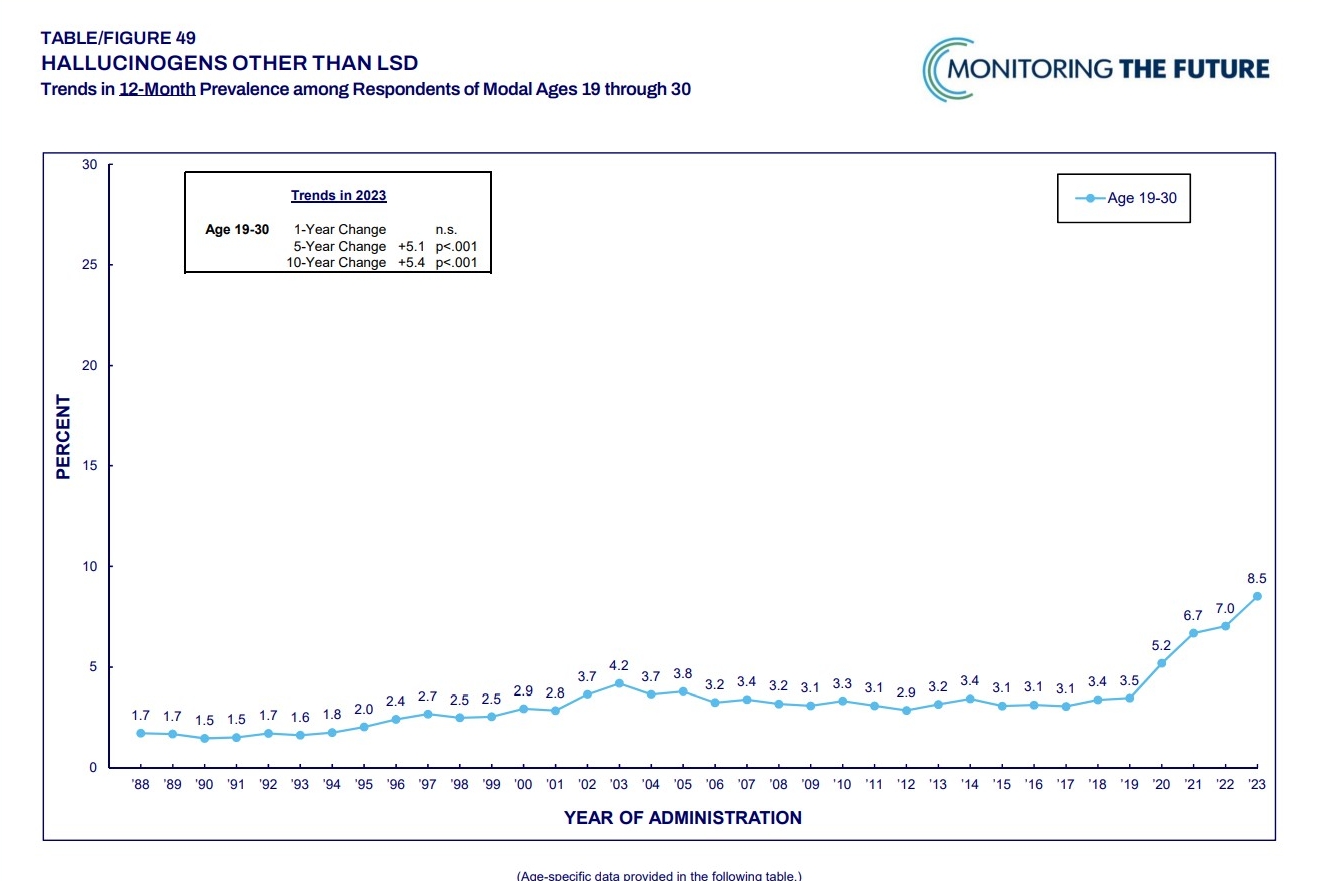
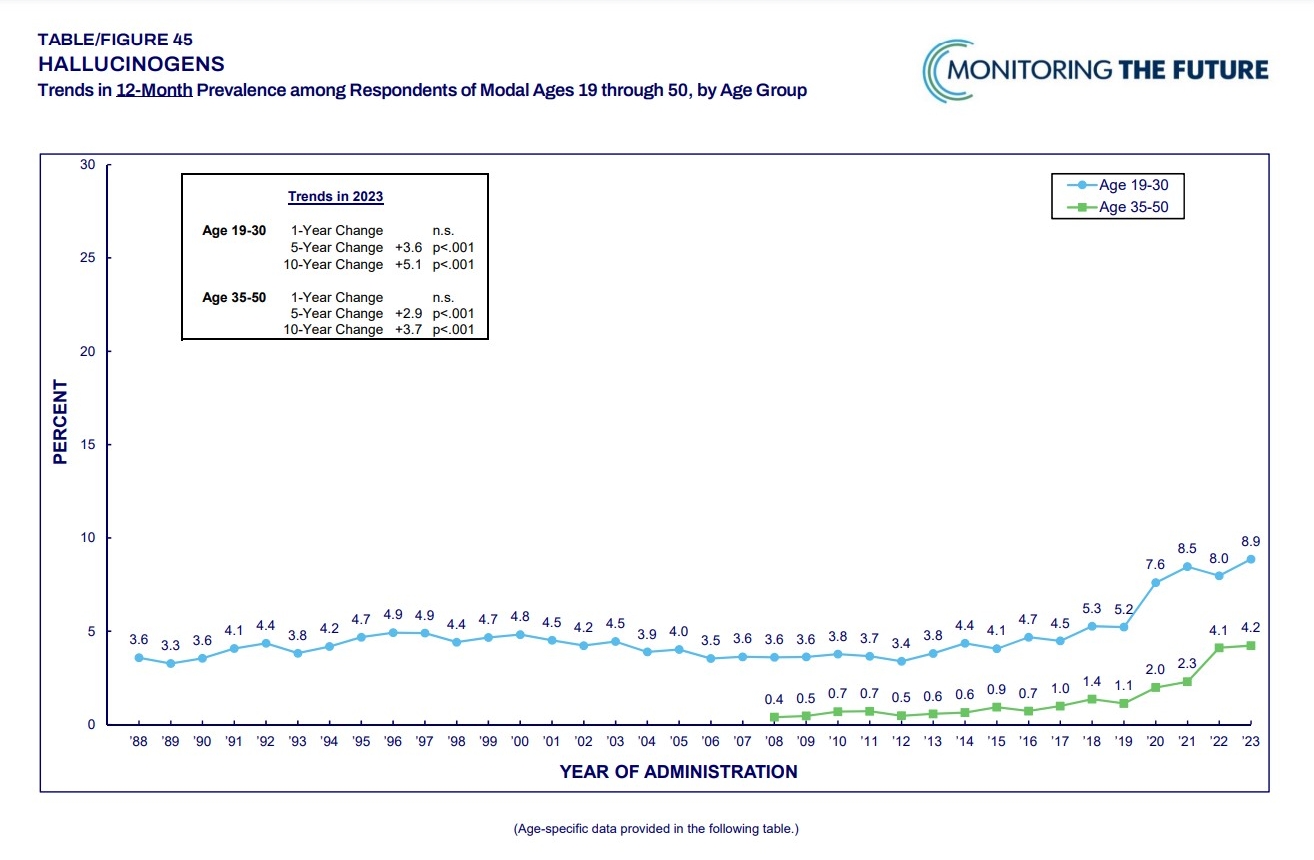
captured by Monitoring the Future Panel Study Annual Report 2024:
"Hallucinogen use in the past
12 months was reported by 4.2% of early midlife adults ages 35 to 50
in 2023, which is the highest level recorded since it was first
available for the full age range in 2008 (Table/Figure 45). There have
been significant increases over the past 5 years and 10 years (from
0.6% in 2013, and 1.4% in 2018; Table/Figure 45). Use ranged from 2.8%
at age 50 to 9.6% at age 35 (Table/Figure 46)."
These are US trends.
What is attracting people of
all ages to psychedelics? A pattern of self-reliance and a turn away
from the risks of pharma is suggested. Culture writer Kat Rosenfield
asked them:
"I spoke to a dozen women who
use psychedelics regularly, and found them to be a diverse bunch: They
come from different generations and socioeconomic backgrounds; they do
drugs of different types, on different schedules, for different
reasons. And despite the Goop-y vibes, none were taking psychedelics
in search of a woo-woo wellness experience; indeed, many of them began
experimenting with MDMA, LSD, mushrooms, or ketamine only after
struggling for years within the confines of a medical system that
continually failed them. Some suffered from treatment-resistant
depression, or from severe anxiety, or from post-traumatic stress
disorder brought on by serious trauma.
"What they all have in common
is a passionate belief in psychedelics as a source of healing and a
force for good, one that can sometimes verge on the evangelical. They
are, however, keenly aware that their zeal is shared neither by the
federal government nor the average HR department which is why
everybody featured in this story has been given a pseudonym to protect
their privacy. As Rachel put it: 'I like having custody of my kids.'
"The stigma surrounding these
substances is a source of frustration, but also something many of
these women understandparticularly the ones who came of age at the
height of the 1990s-era War on Drugs and the accompanying government
program D.A.R.E., a valiant but ill-fated attempt to transform the
countrys middle schoolers into an army of tiny narcs. Rachel fully
realized how much of the 'just say no' messaging was based on fear
rather than facts when she read How to Change Your Mind, Michael
Pollans book about the science of psychedelics.
"'I feel like we were just so
lied to,' Rachel said. 'Mushrooms or LSD or MDMA, the way that they
were sold as gateway drugs. "Youre going to end up on the street and
youre going to get raped." But these are really impactful
experiences.'"
https://www.thefp.com/p/female-psychedelic-users-ketamine-mushroom-mommies?utm_source=substack&utm_medium=email
[3626]
America might be lagging
behind. In "Psychedelics and Mental Health: A Population Study" (2013)
by the Department of Neuroscience, Faculty of Medicine, Norwegian
University of Science and Technology (NTNU), Trondheim, Norway:
21,967 respondents (13.4%
weighted) reported lifetime psychedelic use. There were no significant
associations between lifetime use of any psychedelics, lifetime use of
specific psychedelics (LSD, psilocybin, mescaline, peyote), or past
year use of LSD and increased rate of any of the mental health
outcomes. Rather, in several cases psychedelic use was associated with
lower rate of mental health problems. Conclusion: We did not find use
of psychedelics to be an independent risk factor for mental health
problems.
https://www.ncbi.nlm.nih.gov/pmc/articles/PMC3747247/ [313]
Classic psychedelic use is
associated with reduced psychological distress and suicidality in the
United States adult population, says the Department of Psychiatry and
Behavioral Neurobiology, University of Alabama at Birmingham, AL:
"Lifetime classic psychedelic
use was associated with a significantly reduced odds of past month
psychological distress (weighted odds ratio (OR)=0.81 (0.720.91)),
past year suicidal thinking (weighted OR=0.86 (0.780.94)), past year
suicidal planning (weighted OR=0.71 (0.540.94)), and past year suicide
attempt (weighted OR=0.64 (0.460.89)), whereas lifetime illicit use of
other drugs was largely associated with an increased likelihood of
these outcomes."
https://pubmed.ncbi.nlm.nih.gov/25586402/ [1028]
Supportively, in psychedelic
pigs with brains like ours, but which unlike ourselves can be made
into pork chops any time:
"An analysis of prefrontal
cortex tissue revealed that 19 genes were differentially expressed one
day after psilocybin administration. But only 3 genes were
differentially expressed in the brain tissue one week later.
"'This observation was
unexpected, given the profound and lasting effects that have been
observed after a single dose of psilocybin,' the researchers said.
"Knudsen told PsyPost that
there were 'surprisingly few changes to be observed in the brain 24
hours and 7 days after a single dose of psilocybin.'
"Immune-related genes
constituted the largest group of genes impacted one week after
psilocybin administration, suggesting that the long-lasting effects of
the psychedelic substance might be related to neuroinflammation.
"'Neuroinflammation is now recognised
as key player in psychiatric diseases, such as depression, with
positive outcomes of treatment with anti-inflammatory compounds,' the
researchers wrote.
https://www.psypost.org/2021/01/psilocybin-produces-an-immunology-related-genetic-response-in-the-prefrontal-cortex-of-pig-brains-59115
[1623]
It seems President Nixon, the
Prosecution and its witnesses, the Ptuj Police, and the ZPPPD are in
favour of NEPUD-related suicidality, as according to Zhang et al
(2025):
"Psilocybin is among the most extensively studied psychedelics, with
previous research suggesting its potential therapeutic role in suicide
prevention. However, the precise mechanisms through which psilocybin
may aid in suicide prevention remain unclear. This study thus employed
network pharmacology and molecular docking tools to explore the
mechanisms by which psilocybin may contribute to suicide prevention.
Relevant drug- and disease-related targets were identified.
Overlapping drug- and disease-related targets were extracted from the
bioinformatics platform and imported into the STRING database to
construct a protein-protein interaction (PPI) network. Key targets
were selected based on topological parameters derived from network
analyses conducted using Cytoscape 3.10.1. These key targets were
further analyzed using GO and KEGG enrichment approaches conducted
with the DAVID tool. A drug-disease-target-pathway network was
subsequently constructed in Cytoscape 3.10.1. Finally, molecular
docking analyses were performed to assess psilocybins potential to
interact with key targets using AutoDock Vina and the PyMOL software.
A total of 46 potential targets associated with psilocybin and
relevant to suicide treatment were identified, of which 13 were
imported into the DAVID tool for enrichment analyses. Network analyses
identified four targetsHTR2A, HTR2C, HTR7, and PRKACAthat may serve as
therapeutic targets for psilocybin in suicide prevention. Enrichment
analysis outcomes suggested that psilocybin may prevent suicide by
modulating the serotonergic synapse and calcium signaling pathways.
Molecular docking analyses revealed that HTR2A, HTR2C, HTR7, and
PRKACA strongly bind to psilocybin. This study provides insights into
the molecular mechanisms underlying the potential role of psilocybin
in suicide prevention, offering a novel basis for further research."
Finally, in a ritual incantation
required by RDTGH, the authors express concern about
people's "abuse" of and "addiction" to anti-suicidality, though they
immediately and rightly point to the anti-addictive effects of
psychedelics.
https://www.nature.com/articles/s41398-025-03410-7 [5086]
Now research into psilocybin therapy
and suicide is dogged by small numbers. According to "Effect of
psilocybin therapy on suicidal ideation, attempts, and deaths in
people with psychiatric diagnoses: a systematic review and
meta-analysis" by Wong et al (2025):
"Nine studies involved 593 adults, comparing those who received PT
(335 people) to those who did not and were in a control group (258
people).
"3. PT led to a small but significant reduction in suicidal ideation.
There were no instances of suicide attempts or completed suicides
reported. However, most studies did not report on suicide attempts or
completed suicides."
https://pmc.ncbi.nlm.nih.gov/articles/PMC12417673 [5519]
"The Multifaceted
Empathy Test (MET) was used to assess the effects of LSD on emotional
empathy" by a psychopharmacological team at the University of Basel.
Oxytocin plays a role in social
bonding, reproduction, childbirth, and the period after childbirth.
Prohibition must be against this sort of thing, as when plasma
oxytocin levels were measured,
"LSD dose-dependently increased
implicit and explicit emotional empathy, with the highest 200 g LSD
dose having a significant effect compared with placebo. The 200 g dose
of LSD also moderately increased plasma oxytocin levels compared with
placebo."
In general:
"LSD has been shown to produce
empathogenic and prosocial effects (Dolder et al., 2016; Schmid et
al., 2015). Specifically, LSD acutely increased feelings of subjective
well-being, happiness, closeness to others, openness, and trust
(Dolder et al., 2016; Schmid et al., 2015), impaired the recognition
of sad and fearful faces in the Face Emotion Recognition Task,
enhanced emotional empathy in the Multifaceted Empathy Test (MET), and
increased prosocial behavior in the Social Value Orientation Test."
https://www.frontiersin.org/articles/10.3389/fphar.2021.711255/full
[314]
In "The entropic brain: a
theory of conscious states informed by neuroimaging research with
psychedelic drugs" (2014) Carhart-Harris et al note:
"Many psychiatrists working
with psychedelics in the 1950s and 60s expressed great enthusiasm
about their therapeutic potential (Crocket et al., 1963; Abramson,
1967; Grinspoon and Bakalar, 1979; Grof, 1980) but there was an
unfortunate failure to substantiate these beliefs with properly
controlled studies. Subsequent reviews and meta-analyses have
suggested an impressive efficacy, especially in relation to the use of
LSD in the treatment of alcohol dependence (Mangini, 1998; Dyck, 2005;
Krebs and Johansen, 2012) and modern trials have lent some support to
this sentiment (Moreno et al., 2006; Grob et al., 2011). For example,
a single high dose of psilocybin produced profound existential
experiences in healthy volunteers that had a lasting beneficial impact
on subjective well-being (Griffiths et al., 2006, 2008) and a moderate
single dose of psilocybin administered to patients with advanced-stage
cancer significantly reduced anxiety and depression scores for months
after the acute experience (Grob et al., 2011). In another study,
symptoms of obsessive compulsive disorder (OCD) were significantly
reduced after psilocybin (Moreno et al., 2006). Supplementing these
controlled studies, we surveyed over 500 recreational drug users, and
found that 67% of LSD users and 60% of psilocybin users claimed that
use of these drugs had produced long-term positive effects on their
sense of well-being (Carhart-Harris and Nutt, 2010), consistent with
the results of the aforementioned controlled studies (Griffiths et
al., 2006, 2011). To place this in a context, only 6% of alcohol users
claimed such improvements from alcohol use (Carhart-Harris and Nutt,
2010). One of the most remarkable properties of psychedelics is their
potential to have a lasting impact on personality and outlook
(McGlothlin and Arnold, 1971; Studerus et al., 2011). Personality
traits are known to be relatively fixed by adulthood (Costa and
McCrae, 1997; McCrae and Costa, 1997), however, the personality trait
'openness' was found to be significantly increased over 14 months
after a single controlled administration of psilocybin (MacLean et
al., 2011). Moreover, neuroimaging studies (Carhart-Harris et al.,
2012a) have found decreased activity and connectivity after psilocybin
in brain regions (e.g., the mPFC) and networks (e.g., the DMN) that
are over-engaged in depression (Greicius et al., 2007; Berman et al.,
2011) but normalized by a range of effective treatments (Goldapple et
al., 2004; Mayberg et al., 2005; Kennedy et al., 2007; Deakin et al.,
2008)."
https://www.frontiersin.org/articles/10.3389/fnhum.2014.00020/full
[4437]
Griffiths et al (2006)
reported:
"Psilocybin produced a range of
acute perceptual changes, subjective experiences, and labile moods
including anxiety. Psilocybin also increased measures of mystical
experience. At 2 months, the volunteers rated the psilocybin
experience as having substantial personal meaning and spiritual
significance and attributed to the experience sustained positive
changes in attitudes and behavior consistent with changes rated by
community observers."
https://link.springer.com/article/10.1007/s00213-006-0457-5
[3937]
According to 2020's
"Serotonergic psychedelics LSD & psilocybin increase the fractal
dimension of cortical brain activity in spatial and temporal domains":
"Psychedelic drugs, such as
psilocybin and LSD, represent unique tools for researchers
investigating the neural origins of consciousness."
I must add this interests me
and no one else is going to investigate my consciousness for me...and
anyone can have a go at this...you don't have to be qualified...
"Currently, the most compelling
theories of how psychedelics exert their effects is by increasing the
complexity of brain activity and moving the system towards a critical
point between order and disorder, creating more dynamic and complex
patterns of neural activity."
and
"Lempel-Ziv complexity (LZC),
is a commonly-used measure of signal complexity in consciousness
studies (Schartner et al., 2015, 2017a; Schaefer et al., 2017).
Lempel-Ziv complexity can be best thought of as a measure of the
entropy rate of a signal, giving an estimate of the
information-density per unit time (Amig et al., 2004). Alternately, it
can be understood as an upper-bound on the algorithmic complexity of a
time-series based on how compressible it is (Ruffini, 2017a)."
so
"20 healthy volunteers
underwent two scans, 14 days apart. On one day they were given a
placebo (10-mL saline) and on the other they were given an active dose
of LSD (75 μg of LSD in 10-mL saline)."
producing this result
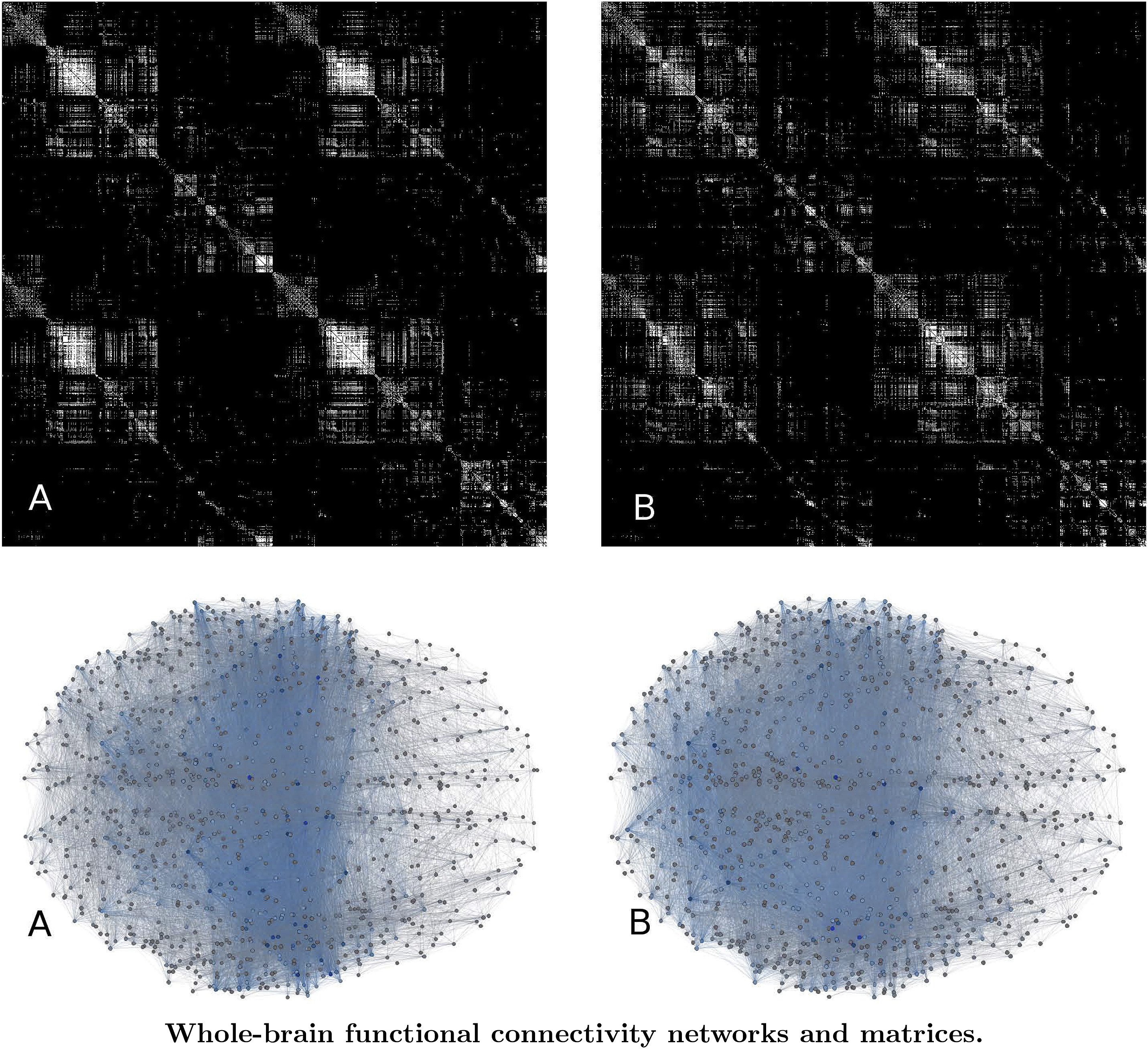
in which we see, from the
description
"Two binarized, 1000-ROI
[regions of interest, according to Yeo and Schaefer's scheme of
Local/Global parcellation] adjacency matrices from a single, randomly
chosen subject, and their associated functional connectivity graphs (A
A, etc). In the adjacency matrices, every pixel represents an edge
between two nodes: if the pixel is white, the edge exists, if black,
the edge does not exist. A is the functional connectivity matrix from
the placebo condition, B is the matrix from the LSD condition. While
the differences in fractal character are not intuitively obvious upon
visual inspection, subtle differences in the distribution of
connections can be seen."
https://www.sciencedirect.com/science/article/pii/S1053811920305358
[1172]
The Schaefer Local/Global
parcellation methodology is laid out at
https://www.ncbi.nlm.nih.gov/pmc/articles/PMC6095216/ [1173]
"Lempel-Ziv (LZ) complexity is
a relatively simple method that has been robustly applied to cognitive
neuroscientific work on consciousness (Casali et al., 2013; Mediano et
al., 2024; Pascovich et al., 2022; Schartner et al., 2015, 2017). LZ
complexity is computed through the binarisation of the signal around
its median, where all values above the median are 1, and all values
below the median are 0. The binarised signal is then algorithmically
scanned sequentially for novel patterns within the signal (Kaspar and
Schuster, 1987), creating a dictionary of binary sequences for each
timeseries. The length of this dictionary is a standardised measure of
the complexity of the signal."
The research use of
psychedelics to try to rationalise fun, revelation and mental
stability continues - however it was decided prior to these
investigations were conceived that doing your own research is illegal.
Illegality influences the experience.
Quantifying every aspect of
human beings being themselves has no useful outcome for the typical
user. Understanding Lempel-Ziv will not make the shortcomings of your
apartment more tolerable, or increase empathy between neighbours with
different drug use profiles.
In terms of everyday reality
the researchers are somewhat lost.
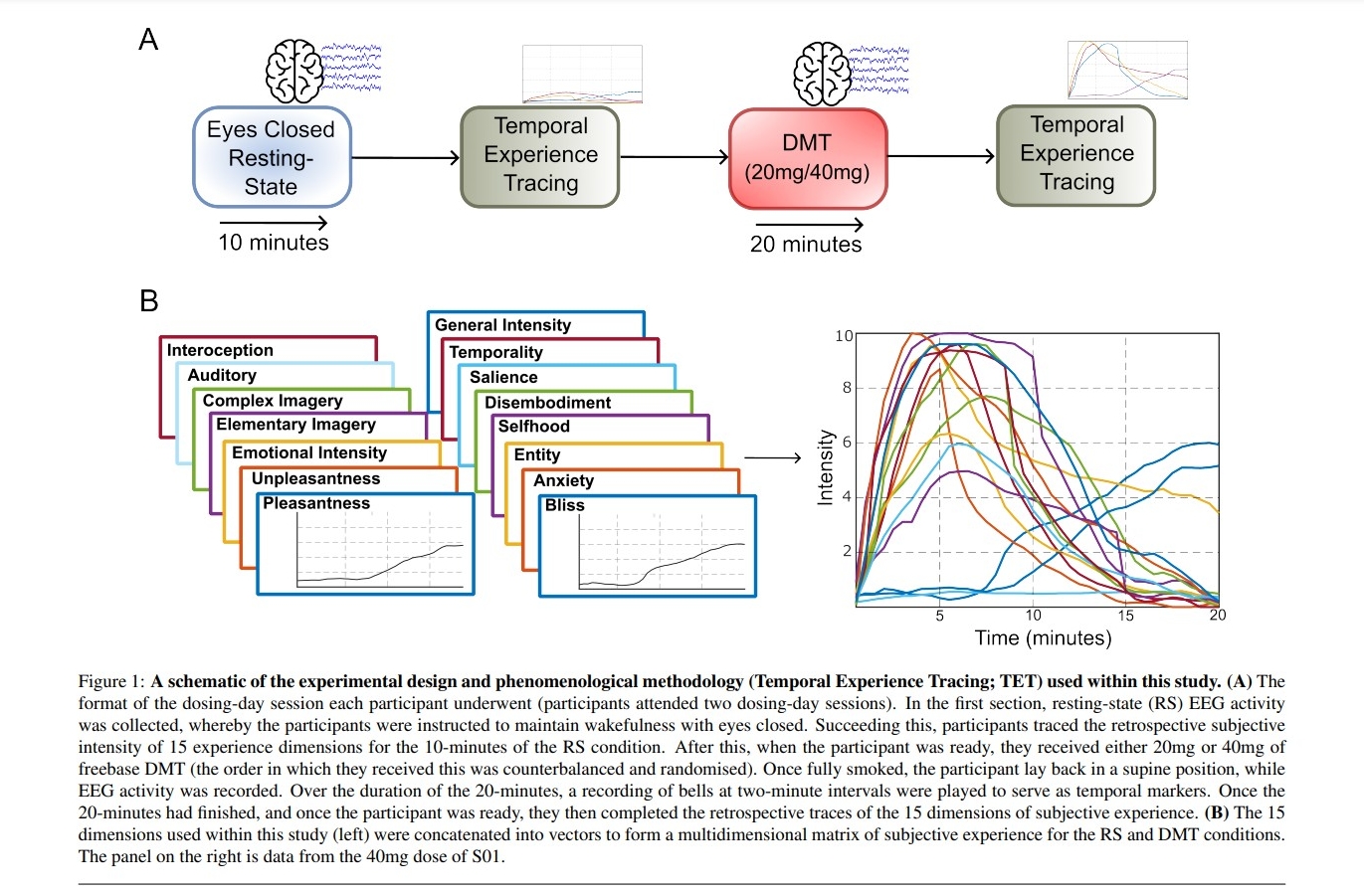
But it has to be done, and
Lewis-Healey et al (2024) actually found Lempel-Ziv to be the least
significant association in a study of "Time-resolved neural and
experience dynamics of medium and high-dose DMT" among a dizzying
array of neural markers:
"We computed a variety of
neural features broadly associated with the psychedelic-state, using a
similar approach to Engemann et al. (2018) and Sitt et al. (2014). On
the EEG data, we computed Lempel-Ziv complexity, permutation entropy,
oscillatory power (delta, theta, alpha, beta), aperiodic spectral
features (offset and exponent), weighted phase lag information, and
weighted symbolic mutual information. Broadly, the neural markers
computed fell into three families of markers: information theory,
spectral, and connectivity. Spectral and information theory markers
were summarised by computing the median average from each electrode in
frontal (FP1, FP2, F3, F4, F7, F8, FZ, FC1, FC2, FC5, FC6), central
(C3, C4, CZ), parietal (P3, P4, P7, P8, PZ, CP1, CP2, CP5, CP6),
occipital (O1, O2), temporal (T7, T8, TP9, TP10, FT9, FT10), and
global (all channels) regions. For connectivity measures, the median
average was taken for pairings both within and between channels
contained in the defined regions above (frontal, central, parietal,
occipital, temporal). Global connectivity was computed as the median
connectivity value for all channel pairings."
Among the findings:
"Our targeted analyses revealed
that oscillatory alpha power was significantly more associated with
TET [Temporal Experience Tracing] dimensions than permutation entropy
(D = 0.69, p<0.001), permutation entropy was significantly more
associated with TET dimensions than LZ complexity (D = 0.25,
p<0.001), and wSMI was significantly more associated with TET
dimensions than wPLI (D = 0.76, p<0.001). See Figure 4D for
distributions of the effect sizes across all neural markers. For all
neurophenomenological associations, positive valence dimensions (i.e.,
Bliss and Pleasantness) yielded the opposite trends to the rest of the
TET dimensions. For example, both Pleasantness and Bliss were
positively associated with oscillatory alpha power, while the rest of
the phenomenological dimensions were negatively associated with
oscillatory alpha power. Interestingly, this is in contrast to a
previous study with TET and breathwork (Lewis-Healey et al., 2024),
which found positive and significant associations between both neural
LZ complexity and the aperiodic exponent - but not alpha oscillatory
power - and the phenomenological dimension of Bliss."
https://www.biorxiv.org/content/biorxiv/early/2024/12/20/2024.12.19.629418.full.pdf
[3827]
The Defendant doesn't
understand all of the content of these papers. It's not necessary to
enjoy the benefits of the experience.
Slightly more approachable is
the related finding that
"brain complexity may offer a
proficuous way of indexing the psychological effects of mind-altering
substances via their neurobiological effects."
https://www.sciencedirect.com/science/article/pii/S1053811920311381
[1174]
and the temporal dimension of
consciousness interests consciousness fans because it is apparently
unvarying:
"Time-dimension, unlike other
three dimensions of our physical universe, is never perceived as a
novelty, but only reported as the flow of time."
https://www.ncbi.nlm.nih.gov/pmc/articles/PMC5322218/ [1175]
The Defence doesn't necessarily
agree with this value judgement. Who hasn't experienced a moment when
"time stood still", or felt that "time has flown"? Are these due to
not noticing time, or to seeing it in a different way?
Considering how a perception of
time distortion might affect emotions, we mention the case of Lola, a
13-year-old, 13-kilogram mixed-breed dog, with a history of severe
anxiety according to the canine anxiety assessment scales used.
Following administration of 5 g
of 1cp-LSD:
"...specific symptoms of
anxiety related to separation from her owner were mitigated, such as
reduced barking, crying, and overall distress."
https://link.springer.com/article/10.1007/s11259-024-10542-6
[3570]
At any rate Lola's owner seemed
satisfied with the result. In another doggy adventure from Ren et al,
"Disrupted HumanDog Interbrain Neural Coupling in Autism-Associated
Shank3 Mutant Dogs" (2024) we learn that:
"Dogs interact with humans
effectively and intimately. However, the neural underpinnings for such
interspecies social communication are not understood. It is known that
interbrain activity coupling, i.e., the synchronization of neural
activity between individuals, represents the neural basis of social
interactions. Here, previously unknown cross-species interbrain
activity coupling in interacting humandog dyads is reported. By
analyzing electroencephalography signals from both dogs and humans, it
is found that mutual gaze and petting induce interbrain
synchronization in the frontal and parietal regions of the humandog
dyads, respectively. The strength of the synchronization increases
with growing familiarity of the humandog dyad over five days, and the
information flow analysis suggests that the human is the leader while
the dog is the follower during humandog interactions. Furthermore,
dogs with Shank3 mutations, which represent a promising complementary
animal model of autism spectrum disorders (ASD), show a loss of
interbrain coupling and reduced attention during humandog
interactions. Such abnormalities are rescued by the psychedelic
lysergic acid diethylamide (LSD). The results reveal previously
unknown interbrain synchronizations within an interacting humandog
dyad which may underlie the interspecies communication, and suggest a
potential of LSD for the amelioration of social impairment in patients
with ASD."
https://onlinelibrary.wiley.com/doi/10.1002/advs.202402493
[3571]
Back at Imperial College they
are making up for lost time and marching on with "Increased global
integration in the brain after psilocybin therapy for depression":
"Response to psilocybin
correlates with network flexibility. The specific changes in network
recruitment observed 1 d after psilocybin therapy in the open-label
trial were not replicated at 3 weeks in this DB-RCT [double blind
random controlled trial](Supplementary Information). However, the
faster fMRI scanning protocol adopted in the DB-RCT generated twice as
much temporal data per scanning session (Methods). This provided the
rare opportunity to examine changes in the dynamic flexibility of
brain networks following psilocybin therapy.
"The metric known as 'dynamic
flexibility' indexes how often brain regions change their community
allegiance over time, during the course of an fMRI scan....Reduced
functional dynamics have been previously associated with depression
symptomology. In an exploratory analysis, post-psilocybin therapy
changes in network flexibility were correlated with changes in BDI
[Beck Depression Inventory] score (Fig. 5c). After FDR [false
discovery rate] correction, increased EN [executive network] dynamic
flexibility strongly correlated with greater symptom improvement at
the 6-week primary end point for the psilocybin arm (r20=−0.76,
95% CI −0.90 to −0.50, P=0.001)."
https://www.nature.com/articles/s41591-022-01744-z.pdf [1176]
In 2023 Dunlop et al showed in
the American Journal of Psychiatry that cognitive behavioural therapy
(in common with psychedelics) increases functional connectivity, while
antidepressants reduce it:
"Objective:
The authors sought to determine
the shared and unique changes in brain resting-state functional
connectivity (rsFC) between patients with major depressive disorder
who achieved remission with cognitive-behavioral therapy (CBT) or with
antidepressant medication.
"Methods:
The Predictors of Remission in
Depression to Individual and Combined Treatments (PReDICT) trial
randomized adults with treatment-naive major depressive disorder to 12
weeks of treatment with CBT (16 1-hour sessions) or medication
(duloxetine 3060 mg/day or escitalopram 1020 mg/day). Resting-state
functional MRI scans were performed at baseline and at week 12. The
primary outcome was change in the whole-brain rsFC of four seeded
brain networks among participants who achieved remission.
"Results:
Of the 131 completers with
usable MRI data (74 female; mean age, 39.8 years), remission was
achieved by 19 of 40 CBT-treated and 45 of 91 medication-treated
patients. Three patterns of connectivity changes were observed. First,
those who remitted with either treatment shared a pattern of reduction
in rsFC between the subcallosal cingulate cortex and the motor cortex.
Second, reciprocal rsFC changes were observed across multiple
networks, primarily increases in CBT remitters and decreases in
medication remitters. And third, in CBT remitters only, rsFC increased
within the executive control network and between the executive control
network and parietal attention regions.
"Conclusions:
Remission from major depression
via treatment with CBT or medication is associated with changes in
rsFC that are mostly specific to the treatment modality, providing
biological support for the clinical practice of switching between or
combining these treatment approaches. Medication is associated with
broadly inhibitory effects. In CBT remitters, the increase in rsFC
strength between networks involved in cognitive control and attention
provides biological support for the theorized mechanism of CBT.
Reducing affective network connectivity with motor systems is a shared
process important for remission with both CBT and medication."
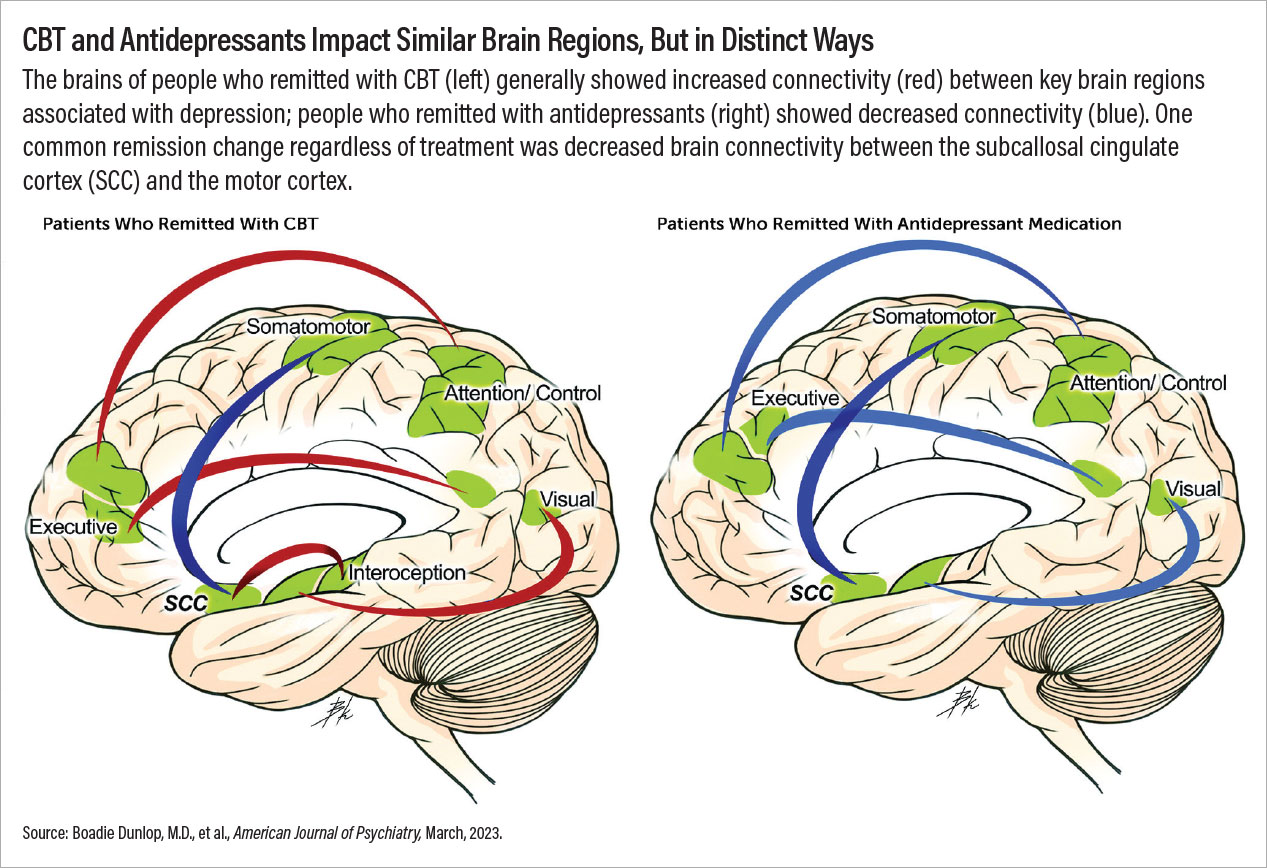
https://ajp.psychiatryonline.org/doi/abs/10.1176/appi.ajp.21070727
[4317]
Godfrey et al (2025) consider "Effects of psychedelics on human
oscillatory brain activity" to be a sound measure of trippiness, which
"...reviews the effects of classic psychedelics on human oscillatory
brain activity, as measured by resting-state electroencephalography
(EEG) and magnetoencephalography (MEG). Across moderate to high doses
of LSD, psilocybin, ayahuasca, and DMT, a consistent reduction in
alpha power (8-13 Hz) emerges, particularly in occipital regions.
Below 30 Hz, desynchronization is typical, although DMT can preserve
or even increase delta/theta activity, possibly reflecting its
immersive, immersive visual phenomenology. Complementing these
spectral findings, measures of signal diversity (e.g., Lempel-Ziv
complexity) reliably increase during psychedelic states, indicating a
more variable and unpredictable pattern of neural firing.
Retrospective subjective ratings of the psychedelic experience often
fail to align consistently with M/EEG changes, possibly because
fleeting, key experiences are obscured by data averaging or recording
short segments of a long experience. In contrast, real-time
evaluations of subjective intensity and plasma levels robustly covary
with changes in spectral power and complexity, highlighting the
potential for objective, real-time EEG biomarkers of drug activity.
Limited research on functional connectivity and cortical travelling
waves suggest that directed, top-down control may decrease while
bottom-up signaling increases, indicating a transient reversal of
typical hierarchical organization, though replications are warrented.
Future work should implement more unified methodological approaches,
alongside high-resolution behavioral sampling, to further our
understanding of how these altered brain dynamics give rise to the
distinctive qualities of the psychedelic experience. Notably, EEG has
yet to be evaluated in clinical studies, and future work should aim to
explore the relationship between acute EEG changes and clinical
responses to psychedelic therapy."
https://pubmed.ncbi.nlm.nih.gov/40541309/ [5253]
Szafoni et al (2024) in
"Unlocking the healing power of psilocybin: an overview of the role of
psilocybin therapy in major depressive disorder, obsessive-compulsive
disorder and substance use disorder" explain that:
"In relation to depression, the
role of the glutamatergic system and modulators of glutamate receptors
has been discussed extensively in the literature as potential
treatments. One such substance is esketamine, an antagonist of one of
the glutamate receptors N-Methyl-D-Aspartate (NMDA). It has shown
rapid and sustained antidepressant effects in patients with
treatment-resistant depression and major depressive disorder, raising
high therapeutic hopes for other modulators of the glutamatergic
system, including psilocybin. With regard to the serotonergic system
itself, which probably plays a central role in the effects observed
after psilocybin ingestion, the structural and chemical similarity
between its metabolite psilocin and serotonin should be emphasized. In
other words, this implies the possibility of binding to serotonergic
receptors, which are densely localized in numerous brain regions,
including those closely associated with the manifestation of
depression and anxiety symptoms. Interestingly, this aspect should be
of interest not only in the context of research on MDD and OCD, but
also with regard to the addictions currently under discussion. It is
not uncommon for individuals with substance use disorders (SUD) to
experience depression and anxiety-like symptoms, especially during
abrupt withdrawal. In addition, all of the patient groups we have
mentioned suffer from chronic stress. This has been documented in the
literature and is associated with changes in hormone levels and
dysregulated function of the hypothalamic-pituitary-adrenal (HPA)
axis. The HPA axis is a neuroendocrine system responsible for
regulating the stress response and maintaining internal balance in the
face of changing environmental conditions. The potential effect of
psilocybin on this axis would be via the activation of serotonergic
receptors in the hypothalamus, which trigger the secretion of
corticotropin-releasing factor (CRF) and thus cause the activation of
the HPA axis. Interestingly, this is consistent with reports that
psilocybin can transiently increase cortisol and ACTH levels even
without a stress test, with levels returning to baseline after a few
hours.
"Given the important role of
cortisol in the proper functioning of learning and memory processes,
an increase in cortisol may be particularly relevant in a therapeutic
context. First of all, it should be mentioned that all of the
above-mentioned patient groups struggle with deficits in various
memory components. The temporary increase in cortisol levels can
support the patients formation of new crucial beliefs by promoting
learning and memory processes and change their attitude towards
various past life experiences. In this context, it is crucial to
emphasize that non-adaptive and inflexible beliefs interfere with
therapy and affect emotions and behavior in patients with depression,
obsessive-compulsive disorder and drug addiction. For example, an
alcohol-dependent person may have a fixed behavioral pattern of
automatically resorting to alcohol consumption when faced with a
strong stressful stimulus in order to relieve emotional tension or
distance themselves from the problem at hand. A similar problem can
occur in people suffering from obsessive-compulsive disorder, in which
certain situations trigger cognitive or behavioral automatisms.
Similarly, people with depression often have a self-propelling cycle
of negative thoughts that can lead to a lack of specific, required
action for the individual. Breaking these patterns requires the
formation of new neural pathways that gradually become dominant over
time in a given situation. These changes, supported by mechanisms that
promote neuroplasticity, are among the most important in the context
of psilocybin-assisted psychotherapy. The phenomenon of
neuroplasticity, which characterizes the brains ability to adapt and
change in response to a range of experiences, reflecting the dynamic
adaptability of neural circuits, is closely related to the
psychoplastogens model. This model assumes that various substances
known as psychoplastogens, e.g. classical psychedelics, influence the
nervous system through a kind of autoregulatory feedback loop, thus
promoting neuroplasticity. In short, these substances have been shown
to increase synaptic growth and dendritic complexity and increase
connections between neurons. This enhanced neuroplasticity is
attributed to their postsynaptic effects in the medial prefrontal
cortex, specifically in the fifth layer, where they stimulate
glutamate release and activate
α-amino-3-hydroxy-5-methyl-4-isoxazolepropionic acid (AMPA)
receptors. As a result, this process triggers the Brain-Derived
Neurotrophic Factor - Tropomyosin Receptor Kinase B (BDNF-TrkB) and
mTOR signaling pathways, leading to upregulation of genes associated
with neuroplasticity and synaptic protein synthesis."
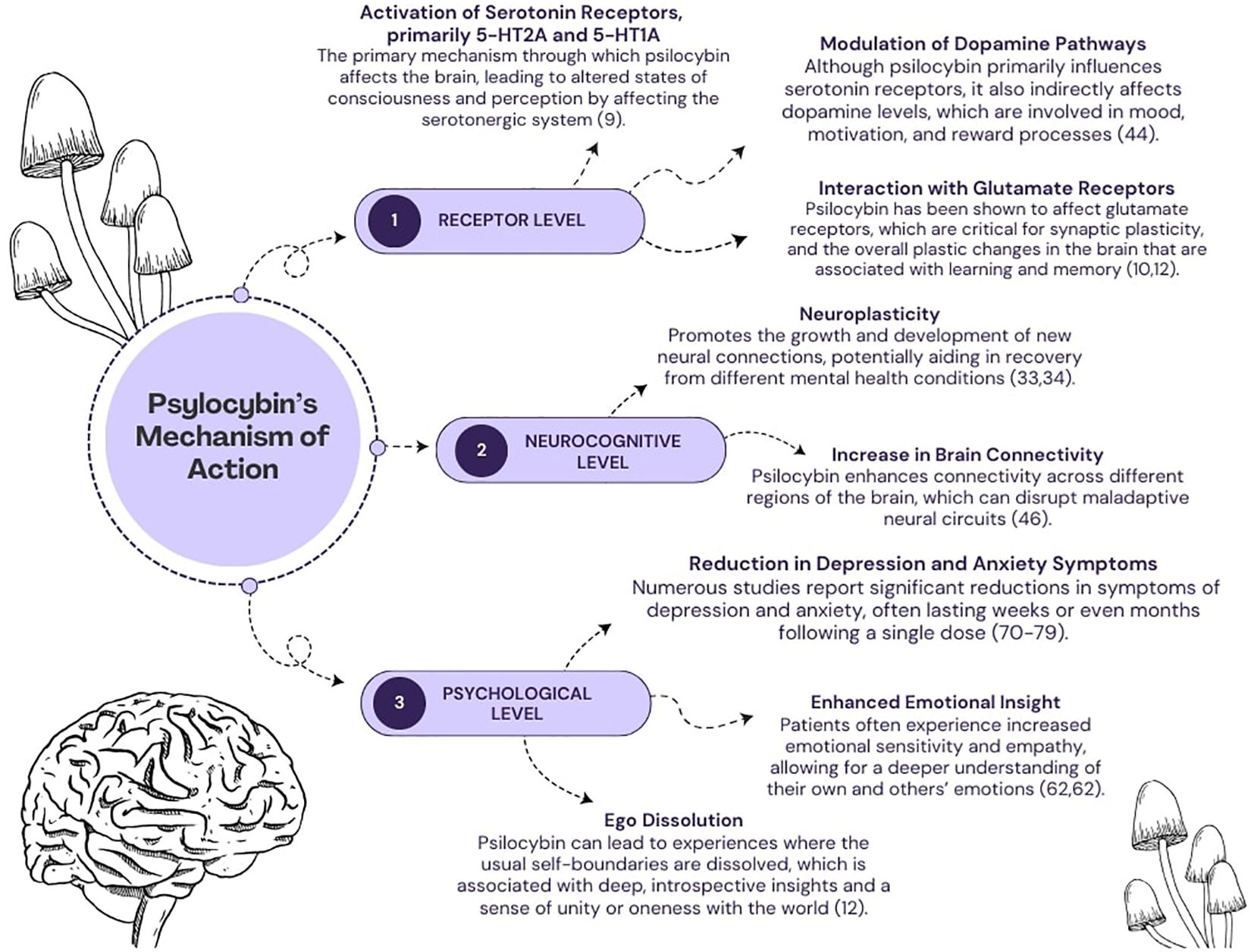
https://www.frontiersin.org/journals/psychiatry/articles/10.3389/fpsyt.2024.1406888/full
[3137]
Johnson and Rosenblat (2024)
examine "Psilocybin-assisted psychotherapy as an anti-distressant with
multidimensional properties".
https://www.nature.com/articles/s44220-024-00332-z [3694]
"Psilocybin mitigates
behavioral despair and cognitive impairment in treatment-resistant
depression model using wistar kyoto rats" say Wang et al (2025):
"Behavioral assessments
demonstrated a significant and sustained beneficial effect of
psilocybin on behavioral despair and cognitive impairment. Biochemical
analyses revealed psilocybin-induced increases in thyroid-stimulating
hormone (TSH) levels without significant changes in the
hypothalamic-pituitary-adrenal (HPA) axis. The ability of psilocybin
to counter stress-induced TSH reductions suggested that TSH may serve
as a proxy marker of therapeutic response, although its causal role in
mood regulation remains unclear. Additionally, following psilocybin
administration, changes in cannabinoid receptor type I (CB1R) suggest
a potential modulation of psilocybin intervention on the component of
the endocannabinoid system (ECS), though causal links remain
unconfirmed without antagonist studies. These findings highlight the
potential of psilocybin to treat TRD through the targeting of
previously unexplored biological pathways."
And of particular note:
"The present study demonstrates
that early intervention with low-dose psilocybin effectively mitigates
behavioral despair and recognition impairment in a diathesis-related
stress model of TRD in WKY rats. WKY rats are known for their limited
responsiveness to conventional antidepressants, their exposure to the
chronic SIS paradigm incorporates biological, psychological, and
social stressors to create a more comprehensive and accurate TRD model
involving diathesis-stress interaction. Stressed WKY rats exhibit
behavioral changes including increased locomotion in the OFT,
increased risk assessment behavior in the EPM, and increased
immobility during the FST. Early psilocybin intervention attenuates
some of these behavioral responses. Namely, psilocybin intervention
significantly reduces immobility in the FST, suggesting improved
passive coping strategies typically observed in depressive-like
states. Furthermore, our findings corroborate previous studies that
demonstrated improvements in familiarity recognition and memory
retention in NOR test, along with reduced time spent on cognitively
driven risk assessment behaviors in the EPM, suggesting psilocybins
cognitive benefits.
"While the serotonin 2 A (5-HT2
A) receptor is commonly believed to be the primary mediator for
psilocybins psychoactive effects, recent research indicates that the
antidepressant effects of psilocybin may occur independently of its
psychedelic properties and, therefore, may not rely on the activation
of 5-HT2 A receptor. Previous research has suggested that
antidepressants targeting norepinephrine (NE) typically promote
climbing in the FST, whereas those affecting serotonin (5-HT) enhance
swimming. In this study, psilocybin intervention decreased immobility
and enhanced both swimming and climbing behaviors, suggesting that
psilocybin may target NE in addition to 5-HT. Although not
significant, increased general activity and open-arm exploration in
SIS-PSI rats within EPM support the hypothesis that psilocybin may act
through non-serotonergic pathways. These behaviors are associated with
NE and dopamine (DA) signaling. Moreover, the modest increase in
sucrose preference suggests psilocybin may alleviate anhedonia, a core
symptom of reward deficits primarily driven by the DA system, possibly
through modulation of both DA and 5-HT. Given the absence of CTL data
in the SPT, the interpretation of SPT findings is constrained to
stressed conditions. Incorporating CTL comparisons in future studies
will benefit the full assessment of the extent of restoration. In
summary, these findings highlight that psilocybin may influence the DA
and NE systems in addition to its primary action on 5-HT."
Regarding thyroid stimulating
hormone:
"The observed restoration of
thyroid-stimulating hormone (TSH) levels following psilocybin
intervention highlights a previously underexplored physiological
response in the context of TRD. Previous depression studies have
focused mainly on investigating disruptions to the HPA axis.
Persistent elevation of CORT levels can disrupt the normal functioning
of the HPA axis, leading to gradual resistance to CORTs in target
tissues, including the pituitary gland and HYP. The
hypothalamic-pituitary-thyroid (HPT) axis, like the HPA axis,
originates in HYP and aids in regulating stress-related hormones. TSH
plays a crucial role in regulating the metabolism necessary for
growth, and lower TSH levels have been linked to the onset of several
mental health disorders. Extensive research has demonstrated that
prolonged stress and resulting hyperactivity of the HPA axis can
suppress TSH production, suggesting an inverse relationship between
CORTs and TSH levels. In the present study, even with heightened HPA
axis resilience, psilocybin can mitigate stress-induced behavioral
changes, which appear to lead to the restoration of TSH levels. This
is evident from the significant reduction and subsequent restoration
of TSH levels in the SIS-Sham and SIS-PSI subgroups, respectively,
highlighting the potential compensatory role of TSH in mood regulation
and cognitive processes, especially when HPA-axis alterations are not
prominent. Future studies examining a full panel of thyroid hormones
(such as triiodothyronine (T3), thyroxine (T4), and
thyrotropin-releasing hormone (TRH)) will be able to provide more
mechanistic insight into the direct causal modulation of psilocybin on
the HPT-axis.
"Furthermore, a recent study
suggested that TSH may have neuroprotective effects by increasing
brain-derived neurotrophic factor (BDNF) concentrations, which aligns
with our findings. Our data revealed that early psilocybin
intervention restored circulating BDNF levels relative to CTL animals.
In addition, Western blot analyses showed increased BDNF expression in
psilocybin-treated rats compared to SIS-Sham animals within all four
brain regions, although the change was not significant in the AMG.
Currently, the molecular mechanism by which psilocybin acts is
predominantly centered on its engagement with the 5-HT2 A receptor,
which is believed to be mainly responsible for the psychedelic
experience associated with psilocybin. However, recent evidence also
implicates direct interaction with receptor tyrosine kinase B (TrkB),
a high-affinity BDNF receptor and mediator of antidepressant response.
In our study, early psilocybin intervention increased TrkB expression
across all brain regions relative to the SIS-Sham group, though modest
in the PFC and HYP, suggesting a potential promotive effect of
psilocybin on neurotrophic TrkB signaling."
More bad news for supporters of
neurological decline:
"mTOR, a serine/threonine
protein kinase vital for neural development and synaptic plasticity,
is activated downstream of the extracellular signal-regulated kinase
(ERK) and protein kinase B (Akt) cascades, which are activated
following TrkB stimulation. Increasing evidence has emphasized the
importance of mTOR as a core regulator in treating neurological
disorders."
https://pmc.ncbi.nlm.nih.gov/articles/PMC12106756/ [5037]
In psychedelia's version of RDTGH the holy grail is patentable
psychedelic-like antidepressives which are not hallucinogens. To this
end Sekssaoui et al (2024) compared the hedonic effects of psilocybin
with 2,5-Dimethoxy-4-iodoamphetamine (DOI), an unpopular psychedelic
which is reportedly less safe than LSD, and seldom found in
recreational use, and with lisuride, a mixed agonist and antagonist of
dopamine, serotonin, and adrenergic receptors. A shadow is cast over
the semantics of the research as Wikipedia reveals that "Although
lisuride has widely been said to be non-hallucinogenic, this may not
actually be true."
https://en.wikipedia.org/wiki/2,5-Dimethoxy-4-iodoamphetamine
[5259]
https://en.wikipedia.org/wiki/Lisuride [5260]
Sekssaoui et al managed to end up showing trippy mushrooms are a
rather more resilient medicine than their lab-born rivals.
"Major depressive disorder (MDD) is one of the most disabling
psychiatric disorders in the world. First-line treatments such as
selective serotonin reuptake inhibitors (SSRIs) still have many
limitations, including a resistance to treatment in 30% of patients
and a delayed clinical benefit that is observed only after several
weeks of treatment. Increasing clinical evidence indicates that the
acute administration of psychedelic agonists of the serotonin 5-HT2A
receptor (5-HT2AR), such as psilocybin, to patients with MDD induce
fast antidepressant effects, which persist up to five weeks after the
treatment. However, the involvement of the 5-HT2AR in these
antidepressant effects remains controversial. Furthermore, whether the
hallucinogenic properties of 5-HT2AR agonists are mandatory to their
antidepressant activity is still an open question. Here, we addressed
these issues by investigating the effect of two psychedelics of
different chemical families, DOI and psilocybin, and a
non-hallucinogenic 5-HT2AR agonist, lisuride, in a chronic despair
mouse model exhibiting a robust depressive-like phenotype. We show
that a single injection of each drug to wild type mice induces
anxiolytic- and antidepressant-like effects in the novelty-suppressed
feeding, sucrose preference and forced swim tests, which last up to 15
days. DOI and lisuride administration did not produce
antidepressant-like effects in 5-HT2A−/− mice, whereas
psilocybin was still effective. Moreover, neither 5-HT1AR blockade nor
dopamine D1 or D2 receptor blockade affected the antidepressant-like
effects of psilocybin in 5-HT2A−/− mice. Collectively,
these findings indicate that 5-HT2AR agonists can produce
antidepressant-like effects independently of hallucinogenic properties
through mechanisms involving or not involving the receptor."
https://www.nature.com/articles/s41386-024-01794-6.pdf [5261]
In "Reimagining Neuropsychiatric and Neurological Disorders through
the Lens of Brain Network Dynamics: Psychedelics as Catalysts for
System-Level Plasticity" Zhang, Wang and Wang (2025) reframe
psychiatric diagnoses along an "ordercomplexitychaos" continuum.
They would Rather Incorporate Than Hallucinate (RITH):
"To maximize the therapeutic potential of psychedelics, research
should also focus on developing next-generation psychedelic analogues
with reduced hallucinatory effects but preserved plasticity-promoting
properties."
Zhang et al simply do not understand the uselessness to a free
individual freedom of the confinement of psychedelics use to
controlled conditions. Neuroplasticity is for coping with real life,
uncontrolled conditions, so non-naturalistic settings are entirely for
the benefit of the researchers, as it turns out. But ordinary people
with ordinary problems do not need to learn how to cope with being
part of a research program.
Despite this somewhat inevitable blindness to researcher-effect, the
authors conclude encouragingly that
"...psychedelics represent a promising shift in the treatment of
neuropsychiatric and neurological disorders, offering a novel approach
that transcends the limitations of traditional target-based
pharmacologies. By modulating brain network dynamics and facilitating
neural reorganization, psychedelics have the potential to create
lasting changes that improve cognition, emotion, and behavior.
However, to fully realize their therapeutic potential, future research
must address remaining gaps in our understanding of how psychedelics
work at the network level, and how their effects can be optimized for
different patient populations. This integrative, network-based
approach may catalyze the next era of brain medicine, offering
transformative treatments for a range of complex conditions that have
long defied conventional therapies."
https://pubs.acs.org/doi/full/10.1021/acsptsci.5c00379 [5262]
To this end, Purple et al (2025) examined "Short- and long-term
modulation of rat prefrontal cortical activity following single doses
of psilocybin"
"We quantify cellular- and circuit-resolution neural network dynamics
following therapeutically relevant doses of the psychedelic
psilocybin. Using chronically implanted Neuropixels probes, we
recorded local field potentials (LFP) alongside action potentials from
hundreds of neurons spanning infralimbic, prelimbic and cingulate
subregions of the medial prefrontal cortex of freelybehaving adult
rats. Psilocybin (0.3 mg/kg or 1 mg/kg i.p.) unmasked 100 Hz high
frequency oscillations that were most pronounced within the
infralimbic cortex, persisted for approximately 1 h post-injection and
were accompanied by decreased net neuronalfiring rates and reduced
spike-train complexity. These acute effects were more prominent during
resting behaviour than during performance of a sustained attention
task. LFP 1-, 2- and 6-days post-psilocybin showed gradually-emerging
increases in beta and low-gamma (2060 Hz) power, specific to the
infralimbic cortex. These findings reveal features of psychedelic
action not readily detectable in human brain imaging, implicating
infralimbic network oscillations as potential biomarkers of
psychedelic-induced network plasticity over multi-day timescales."
https://www.nature.com/articles/s41380-025-03182-y.pdf [5360]
Despite finding, in "Evaluation of
behavioural and neurochemical effects of psilocybin in mice subjected
to chronic unpredictable mild stress", that the psychedelic "reversed
impairments in anhedonia and behavioural despair dimensions of
depressive phenotype but not in apathy-related behaviour" and that
"psilocybin administration was also able to exert an anxiolytic-like
effect on treated animals," Erkizia-Santamara et al (2025) did not
find BDNF or SV2A increased. This they explain thus:
"In the present study, no effect of psilocybin was observed on
cortical expression of BDNF. Previous studies have also reported
transient increases of BDNF following psychedelic administration in
plasma of healthy subjects or in rodent brain. Although the
predominant mode of BDNF secretion is from presynaptic sites, BDNF can
be synthesized and secreted from different components of the synapse
including astrocytes, microglia and post-synaptic dendrites. Thus, it
is feasible to speculate that psychedelic-induced neuroplastic effect
could be mediated by the selective increase of BDNF from precise
subcellular localizations, and a more specific look into local
production of BDNF in the dendritic compartment may shed light into
their mechanism of action. Moreover, discrepancy between different
studies could be due to the desynchronised timing between tissue
harvest (14 days after the last dose in the present work) and the
'window of neuroplasticity' opened by psilocybin.
"Additionally, we measured the 12-transmembrane domain glycoprotein
SV2A. This protein is expressed in synaptic vesicles throughout the
brain and is considered to reflect presynaptic density. One study
performed in pigs has reported increases in cortical SV2A seven days
after one single intravenous administration of psilocybin. Kiilerich
et al., have also measured increases in SV2A levels in the
paraventricular thalamic nucleus after repeated low doses of
psilocybin in mice. Unfortunately, the present work was not able to
replicate such results, which could be due to differences in the
methodological approach, species, region-specificity or experiment
timing."
https://www.nature.com/articles/s41398-025-03421-4.pdf [5080]
SV2A in pigs: "A Single Dose of Psilocybin Increases Synaptic Density
and Decreases 5-HT2A Receptor Density in the Pig Brain" by Raval et al
(2021).
https://www.mdpi.com/1422-0067/22/2/835 [5328]
The origins of consciousness in
evolution are not understood, but it is very old. The octopus, an
invertebrate with which we appear to have very little in common, is a
better performer at visual tasks than the pigeon, respond to rewards,
can recognise people, like to play, and play tricks. They are adapted
to be both cunning and scary.
https://www.bbc.co.uk/programmes/articles/2KzKVBXNXFtz4bYDWGNkqxS/10-incredible-facts-about-octopuses
[1249]
Perhaps it is time to
recognise, legally, to whom people's consciousness belongs, as Lord
Donaldson describes [966].
And time to recognise that doctors don't possess any automatic rights
over it or them. The right to reject a medical or psychiatric dogma is
fundamental to the right to treatment when desired.
Causing hyperinsulinemia now or
in the future, by prohibiting anti-obesogenic cannabis now, is the
functional equal of taking away a diabetic's insulin later, when their
own internal supply is depleted.
The criminalisation of
self-maintenance, and the perception which supports it, is
functionally equivalent to the denial of treatment.
And of course ruinous to the
mental health of the criminalised individual, who is literally "guilty
of health".
In case you're wondering if
people can tell LSD and psilocybin apart...they can't.
"In terms of blinding, no
participant could distinguish between doses of psilocybin/LSD but the
placebo was easily identified by participants. When asked to identify
the doses, 15 mg psilocybin was mostly mistaken for 30 mg psilocybin,
30 mg psilocybin was mostly mistaken for 100 g LSD, 100 g LSD was
mostly mistaken for 15 mg psilocybin, and 200 g LSD was mostly
mistaken for 100 g LSD. Nonetheless, this study indicates that any
differences between LSD and psilocybin are dose-dependent rather than
substance-dependent and is another significant contribution to
psychedelic medicine by them at the University of Basel."
https://blossomanalysis.com/papers/direct-comparison-of-the-acute-effects-of-lysergic-acid-diethylamide-and-psilocybin-in-a-double-blind-placebo-controlled-study-in-healthy-subjects/
[1029]
https://pmc.ncbi.nlm.nih.gov/articles/PMC10517157/ [3877]
These findings were reinforced
when in 2026 Nature Medicine published "An international mega-analysis
of psychedelic drug effects on brain circuit function" combining data
from 11 brain-imaging studies, which in turn include more than 500
brain scans of 267 people. Girn et al report the consensus that
"...psychedelics decrease FC within and increase FC between most
large-scale cortical networks - a finding first observed by Roseman
and colleagues with psilocybin, and which has since been reported for
additional drugs and datasets."
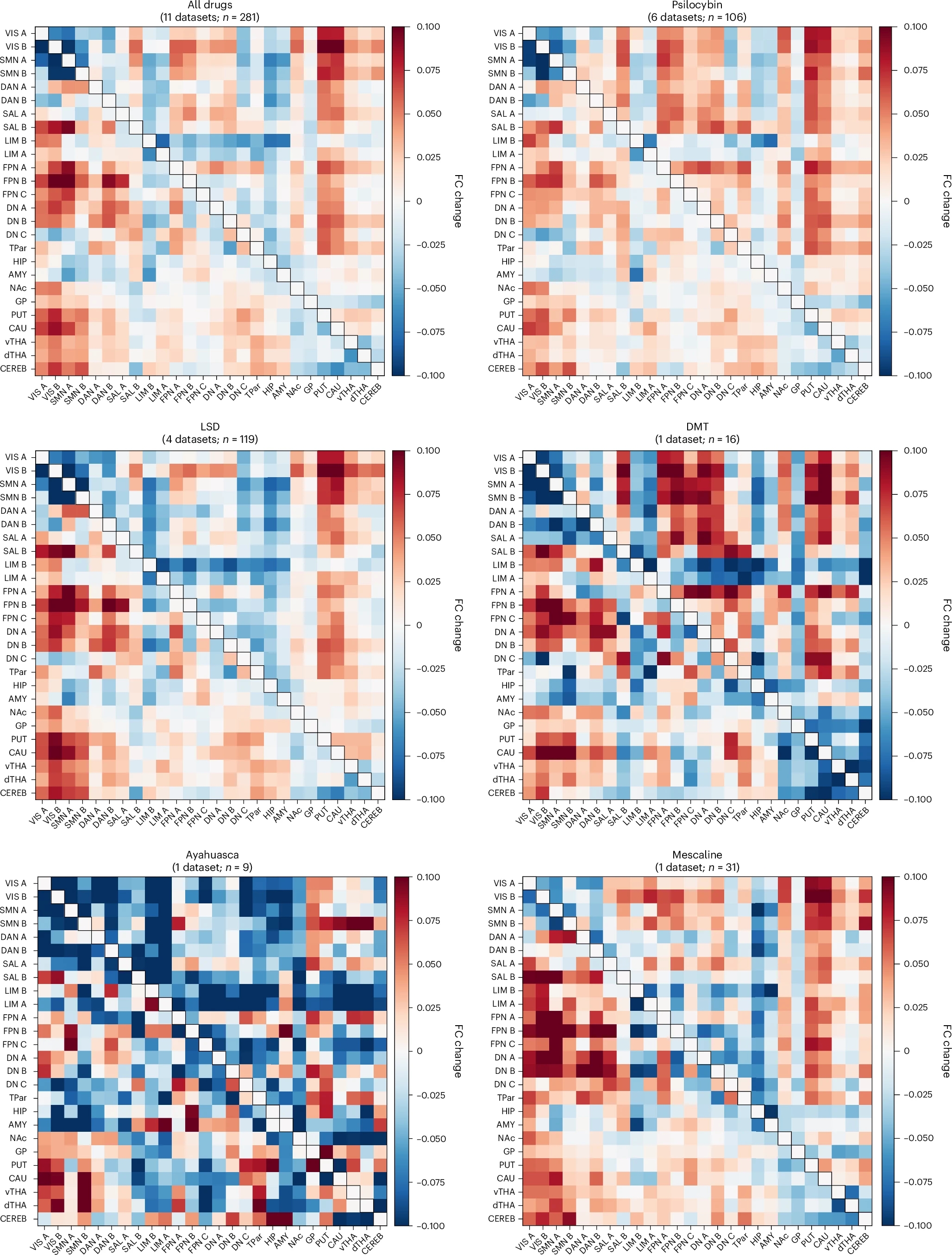
https://www.nature.com/articles/s41591-026-04287-9
[6139]
In "Synergistic, multi-level understanding of psychedelics: three
systematic reviews and meta-analyses of their pharmacology,
neuroimaging and phenomenology" Shinozuka et al (2024) notes:
"Pharmacologically, LSD induces
significantly more inositol phosphate formation at the 5-HT2A receptor
than DMT and psilocin, yet there are no significant between-drug
differences in the selectivity of psychedelics for the 5-HT2A, 5-HT2C,
or D2 receptors, relative to the 5-HT1A receptor."
https://www.nature.com/articles/s41398-024-03187-1 [3757]
However, in another study,
subjects were able to distinguish between natural psilocybin mushrooms
and lab-made pure psilocybin without the usual natural congeners. The
artificial stuff was ok, and considered therapeutically better than
nothing, but in "'The mushroom was more alive and vibrant': Patient
reports of synthetic versus organic forms of psilocybin". Kryskow et
al (2024), the non-blinded comparison was based on subjective reports
of the participants.
"There was consensus among
participants that the preferred form was the whole mushroom. The
reasons given for this include the feeling that the whole mushroom is
sacred, alive, unmanipulated by humans and natural. Individuals found
the whole mushroom and mycological extract forms to have a gentler
onset and comedown, and cited this as a factor that made the forms
superior to the synthetic variant. At the same time, the experience of
synthetic psilocybin in pill form was described as feeling more like
medicine and being a dummied-down experience that was generally viewed
as inferior to the organic forms. Despite not being the first choice,
participants agreed that synthetic psilocybin was still therapeutic.
Some explained that during the peak of the experience, the different
forms of psilocybin had the same effect.
"Emotional and psychological
effects
Emotional and psychological
effects were reported by participants. During and following their
psilocybin experiences, participants reported feeling heightened
emotions, and empathy and compassion with all three forms. Overall,
emotions experienced during the sessions were described as positive
and empowering. Some spoke about the empowering feeling of joining
generations of people who had taken psilocybin before them. In
addition, participants spoke of breakthroughs in their emotional
processing in their day-to-day lives following dosing sessions with
both synthetic and whole mushrooms. There were reports of participants
feeling more comfortable with death and using their psilocybin
experiences as a touchstone to alleviate anxiety in moments of
dysregulation. However, while synthetic psilocybin was described as
therapeutic, this form was also reported as inducing less emotion and
less euphoria compared to the whole mushroom.
"Spiritual and mystical
experiences
Another central theme that
emerged was spiritual and mystical experiences with all three forms of
psilocybin. Participants spoke of non-ordinary experiences of
consciousness which included feelings of rebirth, feelings of unity
with the universe, and feeling as if they ceased to exist. They also
described feeling more spiritual, both during and following the
session. Psilocybin delivered in pill form (mycological extract and
synthetic) was perceived as less spiritual because participants felt
it was manmade and less traditional. The texture of the synthetic
experience was further described as mechanical rather than alive as
with other forms. In contrast, while taking psilocybin in whole
mushroom form, some felt connected to the cycle of life or felt as if
they were participating in a ceremony. Experiences that were longer in
duration (mycological extract and the whole mushroom) were also
perceived as more spiritual in part because there was more time to go
deeper. There was agreement among participants that the whole mushroom
felt more sacred and spiritual than other forms.
"Onset and comedown
Participants discussed the
onset and comedown phases of their psychedelic dosing experiences.
Their discussion revealed significant variation among participants'
perceptions of each forms' respective onset and comedown phases.
Synthetic, mycological extract and whole mushroom were all described
as having a rapid and sharp onset by some, as well as a gentle and
slow onset by others. For some participants, the transitional periods
at the beginning and end of the experience were identical for both of
the naturally derived forms when the whole mushroom was consumed with
citrus juice. It was noted that a gentle transition period is more
comfortable, can facilitate integration and allows for the ability to
meditate into the experience. On the other hand, it was pointed out
that too long of an onset can lead to anxiety if the participant
doesn't have anything to occupy themselves with. Thus, there was also
no consensus as to whether a sharp or gentle onset was superior. Some
mentioned that beside the onset and comedown, the three forms are very
similar to each other.
"Mild and transient side
effects
Transient side effects during
the various dosing experiences were brought up at points during the
interviews. Physical symptoms were scarcely mentioned and included
mild nausea, which resolved on their own without intervention. In
terms of emotional distress, participants cited external factors such
as group dynamics as being influential. This included being affected
by others' panic and feeling worried about people in the session who
were crying out for help. Some complaints also included how the
prolonged onset of the whole mushroom caused anxiety. A lack of
response following the session was also associated with the feeling of
failure for not having an experience that was as profound as everyone
else."
https://akjournals.com/view/journals/2054/aop/article-10.1556-2054.2024.00379/article-10.1556-2054.2024.00379.xml
[3652]
Martin-Guerrero et al (2025)
found differences between psychedelic and non-psychedelic compounds
with a similar structure:
"Of note, phosphorylation of FOXK2 at S360 was among the sites showing
the largest differences between compound classes (Fig. 4a and 4b).
FOXK2 is a transcription factor implicated in the regulation of
glucose homeostasis and aerobic glycolysis, consistent with the
ontology analysis revealing an enrichment of these processes within
the hallucinogenic signature (Fig. 3c). These observations led us to
hypothesize that phosphorylation-dependent activation of FOXK2 may
enhance glycolytic flux. To test this possibility, we performed
lactate production assays to determine whether FOXK2 phosphorylation
was associated with increased glycolytic activity. Treatment with
hallucinogenic compounds elevated lactate levels by approximately 2-
to 4.5-fold relative to vehicle, whereas their non-hallucinogenic
counterparts produced no effect (Fig. 4c). Together, the results shown
in Fig. 4 demonstrate a clear association between the hallucinogenic
potential of the compounds, phosphorylation of FOXK2 S360, and lactate
production. This finding is in line with recent proteomic studies in
human cerebral organoids treated with LSD, which revealed significant
alterations in proteins involved in glycolysis and oxidative
phosphorylation. However, our phosphoproteomic data reveal for the
first time that enhanced glycolytic activity is a distinctive feature
of psychedelics with hallucinogenic properties, and that this property
is not shared by their non-hallucinogenic analogs. This discovery has
potential physiological significance as it links, at the intracellular
signaling level, the altered states of consciousness produced by
hallucinogenic psychedelics with those induced by physiological
anoxia. Indeed, our study suggests that these two interventions
converge on enhancing glycolytic metabolism and result in transiently
modified states of awareness, which in both cases may ultimately
contribute to their restorative or therapeutic effects."
https://www.biorxiv.org/content/biorxiv/early/2025/11/26/2025.11.24.690190.full.pdf
[5729]
The rather shocking claim that LSD increases aggression...
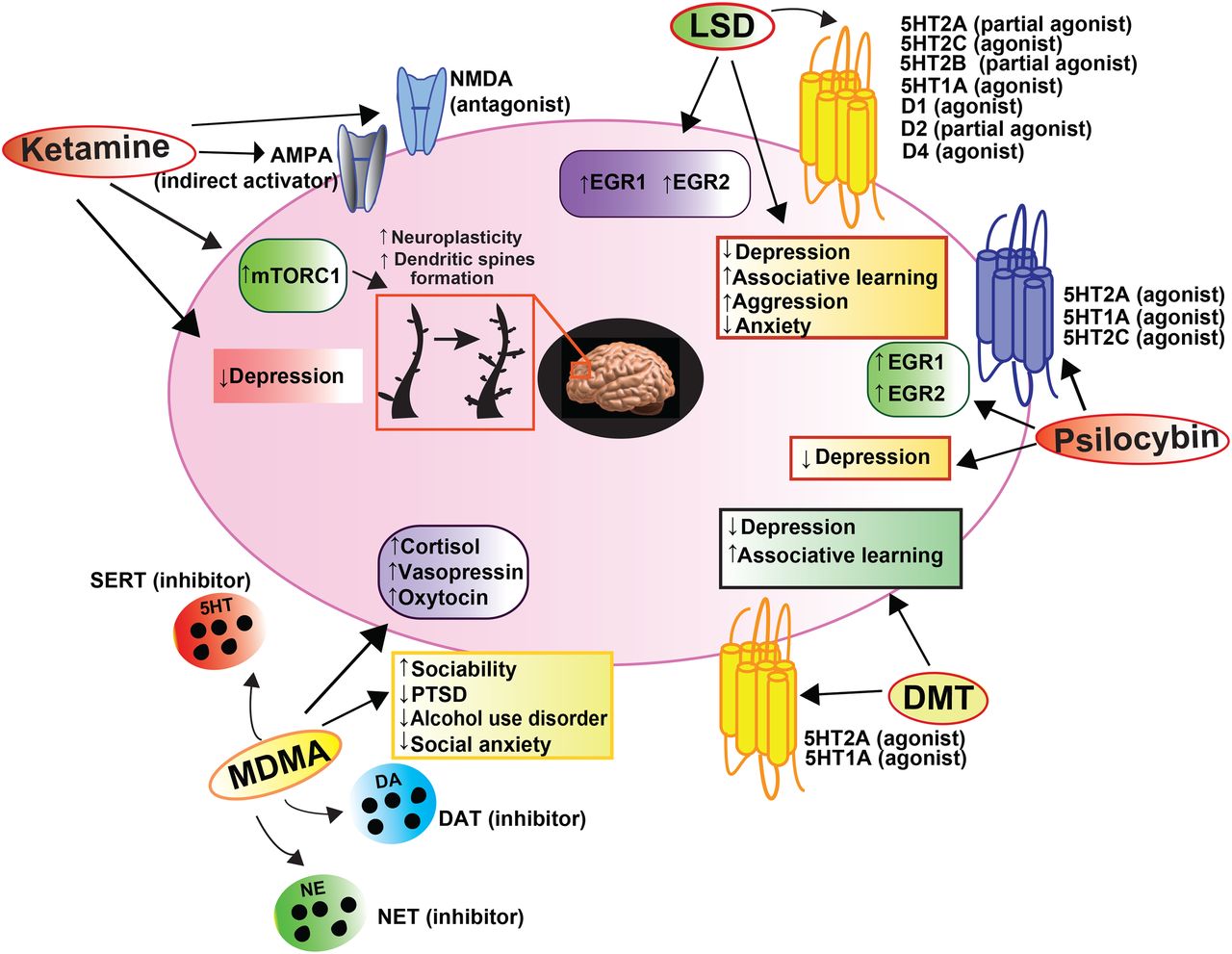
...turns out to be based on
experiments involving giving a dozen rats LSD every other day,
presumably without any therapy or counselling.
https://www.jneurosci.org/content/41/5/891 [998]
Contrast this with the results
of the British Army's Operation Moneybags: as the intro notes, "This
drug has been widely used in hospitals for the treatment of mental
disorder." One day one, without drugs, the troops are alert and
properly paranoid. On day two, they relax, stop taking cover, become
insurbordinate, stroll and around and giggle. One can't aim his rocket
launcher. The troops huddle together instead of spreading out.
Defensive positions are not adopted and the soldiers quickly lose
interest when not stimulated by mission objectives, "relapsing into
laughter and inconsequential behaviour." One nearly chops down a
substantial tree with only a spade. Another climbs a tree, and after
70 minutes the commander gives up and rolls around on the ground
laughing. Apart from the tree-chopping incident, the problem is
undoubtedly not aggression, but the impossibility of mustering any
aggression. On Day 3 they are back to their usual efficient selves,
achieving all their objectives in three hours.
https://www.youtube.com/watch?v=ziqpwkhqTRs [999]
The Czechoslovak army also had
a trial, with similar results.
https://youtu.be/5HXMHdhQL_8?t=102
[1003]
"The protagonists of Experiment
(1968) are four genuine officers of the Czechoslovak army who
voluntarily take a dose of LSD. They are then tasked with drawing up a
warfare plan, which of course they fail to do while the camera
carefully records the complete mental disengagement of the military.
The officers, however, appear quite satisfied. They take off their
uniforms, giggle, and apparently have great fun. The narrator
declares: 'Hallucinogens give us hope for an imminent end to deadly
wars.'"
https://przekroj.pl/en/society/a-communist-lsd-trip-aleksander-kaczorowski
[1004]
An interesting anecdotal use of
LSD to cure post-Covid anosmia
https://sashachapin.substack.com/p/covid-19-took-my-sense-of-smell-then
[315]
Why DMT works all the time and
LSD won't - Tobias Buchborn
https://www.youtube.com/watch?v=fng6ODKvJdU [316]
"N, N-Dimethyltryptamine, a
natural hallucinogen, ameliorates Alzheimers disease by restoring
neuronal Sigma-1 receptor-mediated endoplasmic reticulum-mitochondria
crosstalk" say Cheng et al (2024):
"The current study demonstrated
that the anti-AD effects of DMT are associated with its restoration of
neuronal ER-mitochondria crosstalk via the Sig-1r activation. DMT
modulates the mitochondrial calcium uptake and ER-mitochondrial
contacts in the in vivo and in vitro models, facilitates the TCA
cycle, and protects against mitochondrial dysfunction in Alzheimer
disease."
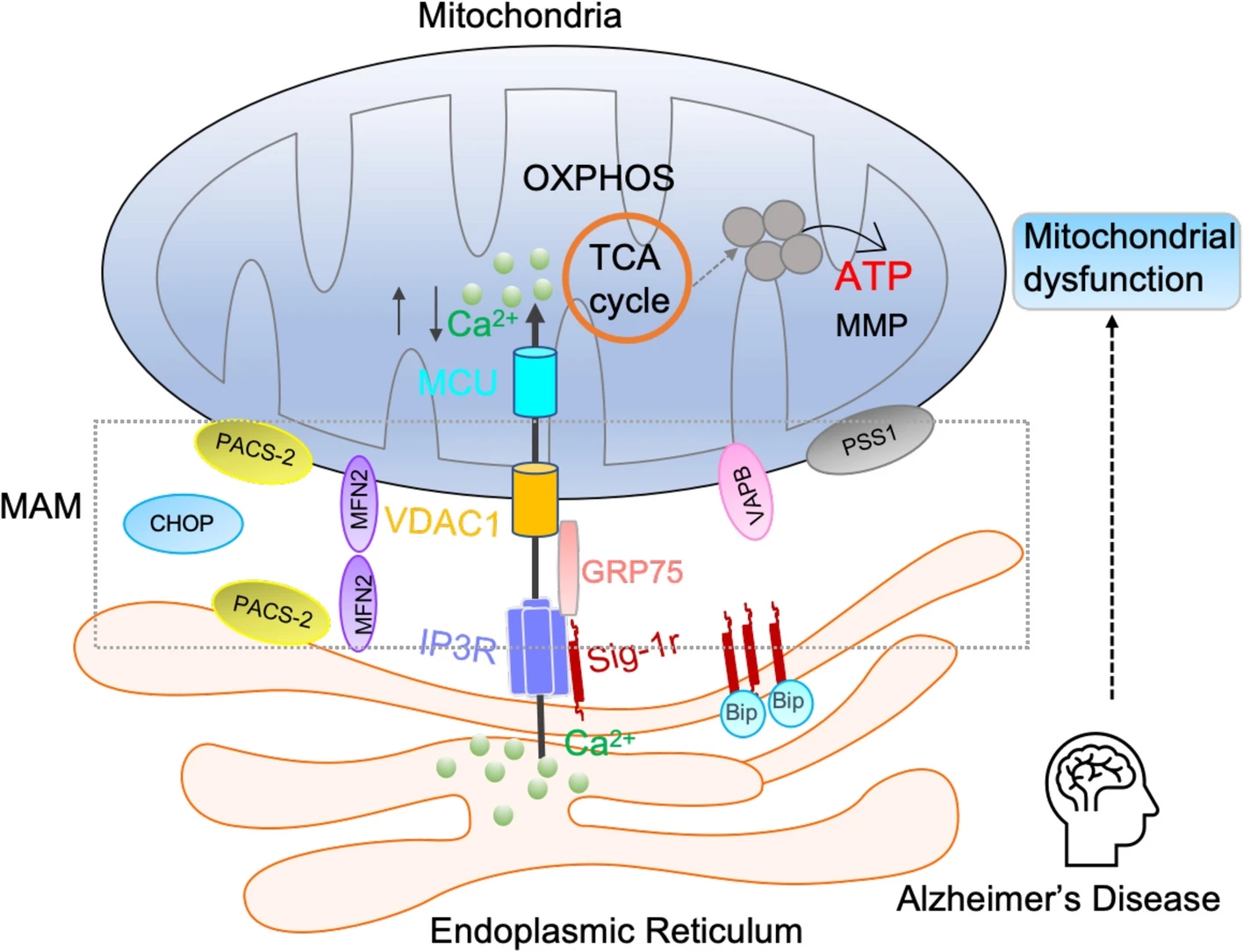
https://alzres.biomedcentral.com/articles/10.1186/s13195-024-01462-3
[4627]
Gendra et al (2026) are interested in
restoring oscillatory dynamics in Alzheimer's disease:
"By modulating the excitability of layer 5 pyramidal neurons, our
models reproduce hallmark changes in EEG power spectra observed under
psychedelics, including alpha power suppression and gamma power
enhancement. These spectral shifts are shown to correlate strongly
with the regional distribution of serotonin 2A receptors. Furthermore,
simulated EEG reveals increased complexity and entropy, suggesting
restored network function. These findings underscore the potential of
serotonergic psychedelics to reestablish healthy oscillatory dynamics
in the prodromal and early phases of Alzheimer's disease and offer
mechanistic insights into their potential therapeutic effects in
neurodegenerative disorders."
https://pmc.ncbi.nlm.nih.gov/articles/PMC13108508/
[6153]
In the Journal of Psychopharmacology, a ten-person team at Palo Alto
University reported in a follow-up study using psilocybin for
depression. At the four-and-a-half year follow-up, 71 to 100 percent
of participants credited improvements in levels of anxiety and
depression to the single-dose psilocybin and therapy combination of
the study. The participants further "rated it among the most
personally meaningful and spiritually significant experiences of their
lives."
Actually millions of people
knew that already, but didn't know that would have to wait to become
part of a statistically significant sample to transform this fact into
official fact. And there are plenty more depressed people who
shouldn't need to wait another 70 years for the government and judges
to find out. And they aren't going to wait. The biggest fear they have
in confronting their mental situation is the fear placed in their mind
by the prohibitionists in advance of taking the plunge, i.e. people
who are causing them anxiety, who haven't taken the plunge themselves
but think they have the right to stop others.
https://journals.sagepub.com/doi/10.1177/0269881119897615 [319]
In 2021 University of Pretoria
researchers Sanah Malomile Nkadimeng, Christiaan ML Steinmann, and
Jacobus N Eloff finally got round to making some mushroom tea, in
"Anti-Inflammatory Effects of Four Psilocybin-Containing Magic
Mushroom Water Extracts in vitro on 15-Lipoxygenase Activity and on
Lipopolysaccharide-Induced Cyclooxygenase-2 and Inflammatory Cytokines
in Human U937 Macrophage Cells"
Using four species, Panaeolus
cyanescens, Psilocybe natalensis, Psilocybe cubensis, Psilocybe
cubensis A+ strain, they found
"TNF-α and IL-1β
significantly and lowered IL-6 and COX-2 concentrations in treated
human U937 macrophage cells. Water extracts also increased percentage
viability of treated cells and levels of anti-inflammatory IL-10
non-significantly. Conclusion: The study suggested that the hot-water
extracts of the four psilocybin-containing magic mushrooms have
potential anti-inflammatory effects executed by downregulating
pro-inflammatory mediators."
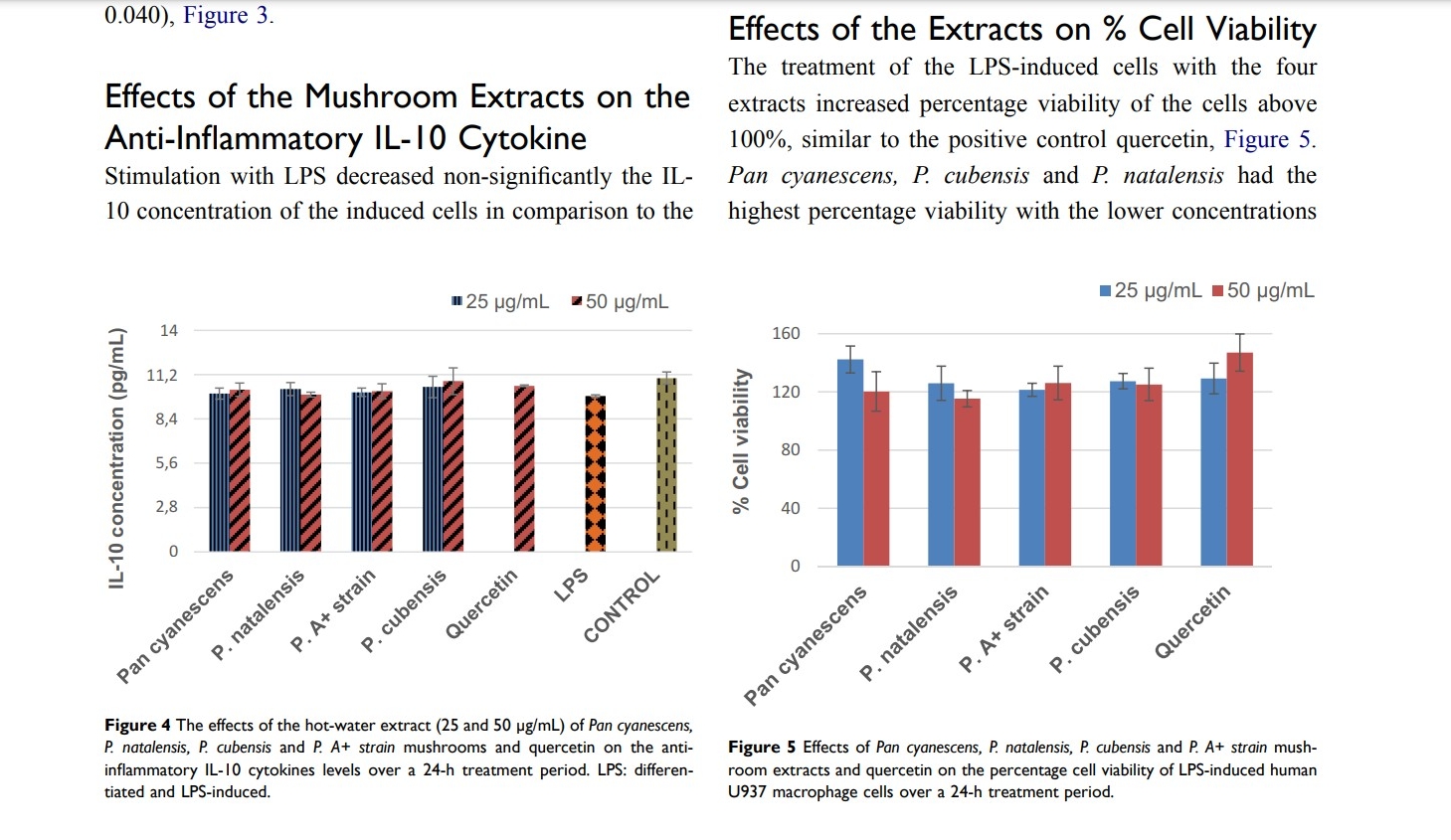
In "Moderating factors in
psilocybin-assisted treatment affecting mood and personality: A
naturalistic, open-label investigation" by Irrmischer et al (2025):
"At baseline, 1 week and 3 months after the psilocybin program
participants completed the Generalized Anxiety Disorder Assessment
(GAD-7), Patient Health Questionnaire (PHQ-9), PTSD Checklist for
DSM-5 (PCL-5) and NEO Five-Factor Inventory-3 (NEO-FFI-3). In
addition, after the dosing the Mystical Experiences Questionnaire
(MEQ-30), Posttraumatic Growth Inventory (PTGI) and Emotional
Breakthrough Inventory (EBI) were administered. Moderation effects
were established using linear mixed-model analysis."
https://link.springer.com/article/10.1007/s00213-024-06733-3
[5333]
See KZ-1 Article 32 on when the
benefits of an allegedly criminal act outweigh harms. The Defence,
separately, does not detect the elements of a crime in the prevention
of suicide, violence, or depression, or the enhancement of empathy and
meaning in life.
A different Article 32 refers to public benefit. The benefits
described here are demonstrated in mass populations, relevant cohorts,
and case studies.
"The decisions referring to the public benefit tend to be more general
in nature. In most cases, the Constitutional Court uses the term
public benefit as a general term, without providing specific and
detailed content (e.g., Decision Up-2501/08, 19 February 2009, in
which the Constitutional Court only refers to provisions as set in
Administrative Dispute Act, second paragraph of Article 32 (Official
Gazette of the Republic of Slovenia, no. 105/06 and amendments), which
define thatif an applicant demonstrates that enforcing a decision
(act) would cause irreparable harm, the court will temporarily halt
the measure until a decision becomes final. The court must consider
the balance between the applicants potential damage, public benefit,
and the interests of other parties, ensuring a proportional
approach.)."
https://journals.uni-lj.si/CEPAR/article/download/20572/16988
[5128]
Haden and Woods found three
reports of LSD overdoses:
"The first case report
documents significant improvements in mood symptoms, including
reductions in mania with psychotic features, following an accidental
lysergic acid diethylamide (LSD) overdose, changes that have been
sustained for almost 20 years. The second case documents how an
accidental overdose of LSD early in the first trimester of pregnancy
did not negatively affect the course of the pregnancy or have any
obvious teratogenic or other negative developmental effects on the
child. The third report indicates that intranasal ingestion of 550
times the normal recreational dosage of LSD was not fatal and had
positive effects on pain levels and subsequent morphine withdrawal."
The first case is the most
interesting and relevant to his section.
"Her initial diagnosis [age 12]
was unspecified psychotic disorder (with psychotic depression, bipolar
disorder, and schizophreniform disorder as possible diagnoses). She
was started on an antidepressant medication (sertraline) in May 1998,
when she reported worsening depressive symptoms without evidence of
psychosis. Her symptoms improved and stabilized until the fall of
1999, when her depression worsened. A light box (Levitt et al., 1996)
was introduced in November 1999 for the treatment of a seasonal
(winter) depression, and shortly thereafter she started to show signs
of hypomania (decreased need for sleep, elevated mood, increased
chattiness, increased productivity, and 'obsessive 'cleaning'). The
light box treatment was discontinued and the sertraline was reduced.
Over the Christmas holidays, she admitted to using Ecstasy (presumably
3,4-methylenedioxymethamphetamine [MDMA]) twice, the last time being
on New Years Eve 1999. Her hypomanic symptoms continued, and she was
assessed by her psychiatrist on January 19, 2000. A urine drug screen
was done that day, which was positive only for cannabis. She was
diagnosed with bipolar II disorder and instructed to discontinue the
sertraline. She refused a mood stabilizer at this time. She was
hospitalized voluntarily on February 17, 2000, to recover in a low
stimulation environment and was discharged after 3 days, prematurely.
Although AV was using cannabis, she had not used any stimulants since
New Years Eve. Lithium 150 mg two times a day was started on an
outpatient basis on March 2, which she agreed to take as this was 'a
natural salt.' She stopped taking it by the end of March, as she
reported 'feeling like myself again.' Her symptoms of hypomania,
however, only intensified. Her second hospitalization, on April 19,
2000, was precipitated by an incident where she bit her mother. She
was committed under the provincial Mental Health Act because of safety
concerns. At this point, she was not sleeping and she had grandiose
delusions, including that she could purchase a town in Mexico and
become the mayor, that she was enlightened, and that she could speak
all languages. Hospital notes documented that she was grandiose,
paranoid, irritable, and disorganized. The lithium was restarted.
After a 20-day admission, she was discharged on lithium 300 mg two
times a day and olanzapine 57.5 mg at bedtime. Her diagnosis was
changed to bipolar I disorder, as she had had a full-blown manic
episode with psychotic features. AV reported in retrospect that she
did not feel well in between hospital admissions, nor for several
months afterward, and that she did not use much cannabis in those
intervening months.
"Drug use history
AVs first cannabis use was at
age 11 with no effect. She used again at age 12 and began using
regularly, escalating through ages 1314, when she was using it daily
(1998 1999). She reported infrequent use of psilocybin mushrooms (in
1998) and LSD on one prior occasion (Remembrance Day, November 11,
1999). She used Ecstasy (likely MDMA) twice with her initial use in
December 1999. It is noteworthy that her symptoms of hypomania emerged
shortly after initiation of light box treatment, which was before her
first use of Ecstasy. Urinalysis on January 14, 2000, was positive
only for cannabis. AV reported that she never used cocaine,
methamphetamine, or opiates.
"Mental health family history
Mental health concerns existed
in her family of origin, with bipolar diagnoses in two paternal
relatives and alcoholism and trauma in her maternal lineage.
Psychosocial issues AVs home life was turbulent, with parental
separation, an incarcerated father (1996, when she was age 12),
subsequent ostracization by peers, the death of her grandmother (1998,
when she was age 14), and school changes. AV was unable to function in
the normal school system because of disruptive and defiant behavior
and was moved to an alternative school at age 13 (in 1997).
"LSD overdose incidentJune 20,
2000
The LSD overdose incident
occurred during a summer solstice party (June 20, 2000, at age 15),
where the supplier of the liquid LSD made a decimal place error when
preparing individual dosages diluted in glasses of water.
Specifically, what were intended to be 100 mcg dosages (a normal
recreational dosage) were actually 1,000 mcg per glass. AV drank one
glass and subsequently drank the 'leftover drops' from two other
glasses. Her total dosage was therefore in the range of 1,1001,200
mcg, which was ingested at 10:00 p.M. on a relatively empty stomach.
Although no lethal overdoses of LSD have been documented, it is
estimated that the lethal dose in a human is 14,000 mcg (Klock et al.,
1973). Observers subsequently reported erratic behavior for the next
6.5 hours, followed by what they believed to be a seizure, as she was
lying in a fetal position with her arms/ fists clenched tightly. An
ambulance was called at 4:30 a.M., and by the time the paramedics
arrived 10 minutes later she was alert and oriented. She was
transported to a local hospital where she was diagnosed with a
seizure, as this is what the witnesses reported. This conclusion is
questionable as subsequent interviews with AV and observers revealed
no loss of bladder or bowel control, no biting of her tongue, no
clonic movements in any limbs, and only a brief period of confusion
after the clenching episode. It was unclear whether she had a loss of
consciousness or whether she was intensely preoccupied with her
experience at the time. Although extremely uncommon, grand mal
seizures after LSD ingestion have been reported in the historical
literature (Fisher & Ungerleider, 1967). AVs father reported that
when he entered the hospital room the next morning, AV stated, 'Its
over.' He believed she was referring to the LSD overdose incident, but
she clarified that she meant her bipolar illness was cured.
"Mental health team case notes
The case notes from AVs mental health team psychiatrist and therapist
subsequent to the overdose incident reported a significant change in
her mental illness symptoms.
"June 28, 2000: A second EEG
was ordered, which was normal.
"July 11, 2000: AV 'came in
today with a lovely fine balance and a glint in her eye and she is
maintaining a happy and credible mood balance ever since the
unfortunate incident that provoked her seizure three weeks ago' and AV
'has not presented with as easy and healthy a presentation in many,
many months.'
"July 19, 2000: AV 'is entirely
stable at present' and 'she has an excellent perspective on her
illness and some things she can do to keep herself well.'
"September 6, 2000: She has
remained remarkably stable this summer with no evidence of recurrent
depression or mania and AV is doing remarkably well even compared to
last year at this time when she was noticeably depressed.
"February 14, 2001: AV
discussed tapering off her lithium with her psychiatrist, who observed
at the end of the case note that, her insight and self-awareness are
quite remarkable.
"May 30, 2001: AV 'has gone off
her lithium and there are more mood instabilities as a result of that
but no evidence of clinical hypomania or depression' and 'we spoke
carefully with mother, father, and AVit is clear that no one has seen
symptoms of clinical depression . . . ' and 'she has had a fairly
successful school year other than the one term out of four and has not
had a breakthrough of clinical levels of depression or mania.'"
"AVs father observed that his
daughter appeared to be completely recovered from her mental health
concerns after the overdose incident.
"AV reports that she was free
from all mental illness symptoms (bipolar or other) for the subsequent
13 years until she gave birth and experienced postpartum depression.
The birth of her second child in 2017 was also associated with a
turbulent emotional period. AV reports that after the LSD overdose
incident she experienced life with a normal brain, whereas her brain
felt chemically unbalanced before the incident.
"AVs cannabis use was unchanged
by the overdose event and she continues to use cannabis regularly.
"Currently, AV has stable
employment, stable positive friendships, and good work relationships.
"Case 1: Conclusion
This case report documents a
significant improvement in mood symptoms, including reductions in
mania with psychotic features, following an accidental LSD overdose,
changes that have been sustained for almost 20 years."
https://www.researchgate.net/publication/339234169_LSD_Overdoses_Three_Case_Reports/link/5e5d4c09a6fdccbeba1449b6/downloa
[4008]
CNN, reporting on the paper,
also writes, that mistaking it for cocaine:
"A 46-year-old woman snorted a
staggering 550 times the normal recreational dose of LSD and not only
survived, but found that the foot pain she had suffered from since her
20s was dramatically reduced.
and
"'No clinical trial research
could be done with dosages this high and there are no publications
exploring the positive outcomes of very large dosages of LSD,' the
authors said."
'To understand the effects of
extremely high dosages of psychedelics such as LSD, an examination of
overdoses in naturalistic settings is required.'"
https://edition.cnn.com/2020/02/27/health/lsd-overdoses-case-studies-wellness/index.html#:~:text=They%20noted%20that%20in%20CB's,levels%20and%20subsequent%20morphine%20withdrawal.%E2%80%9D
[4009]
About those naturalistic
settings. Card et al in "Therapeutic Potential of Psilocybin for
Treating Psychological Distress among Survivors of Adverse Childhood
Experiences: Evidence on Acceptability and Potential Efficacy of
Psilocybin Use" (2023) state:
"Survivors of adverse childhood
experience are at elevated risk for psychological distress. In recent
years, renewed interest in psychedelic medicine has highlighted the
therapeutic potential of psilocybin for those who have experienced
childhood adversity. However, recreational psilocybin use remains
illegal and access to approved therapies is difficult. Such use
provides an opportunity to explore the therapeutic potential of
psilocybin for psychological distress among people with adverse
childhood experiences. Therefore, we conducted an online survey to
assess interest in, acceptability of, and experiences with psilocybin.
We further explored whether the association between Adverse Childhood
Experiences Questionnaire (ACEQ) scores and psychological distress was
lower among those who had used psilocybin in the past three months.
Results showed high levels of interest in and acceptability of
psilocybin that did not differ across ACEQ scores. Results also showed
that the effect of adverse childhood experiences on psychological
distress was lower for people who had recently used psilocybin
(p = .019). Taken together, these findings suggest that
psilocybin therapy may be potentially acceptable and may feasibly help
in supporting survivors of adverse childhood experiences with
particularly strong benefits to those with more severe childhood
adversity."
https://www.tandfonline.com/doi/abs/10.1080/02791072.2023.2268640
[4049]
and
"The study surveyed 1,249
people in Canada, ages 16 and older, who completed a questionnaire
used to assess experiences of childhood trauma. They were also asked
about psilocybin use, including when they last consumed the substance,
their frequency of use and how strong the doses were.
We found that the effect of
adverse childhood experiences on psychological distress was lower
among those who had used psilocybin compared to those who had not, the
study says, suggesting potential benefit of psilocybin in treating the
psychological consequences of adverse childhood experiences.
The authors said their findings
aligned with other published research, such as a study of more than
213,000 U.S. adults that found that lifetime use of psilocybin was
associated with lower odds of a past-year major depressive episode.
Taken together, our results and
the existing literature point to a positive therapeutic potential of
psilocybin, the report says. While naturalistic use of psilocybin is
very different from therapeutic trials, our findings converge with
emerging evidence from clinical trials and suggest that there may be
benefits of use outside of therapeutic settings.
"Of the respondents, nearly
half (49.9 percent) said they often or always used psilocybin to
address mental health or emotional challenges, while 32.2 percent said
they sometimes used psilocybin for that purpose. People who scored
high for adverse childhood experiences were significantly more likely
to use psilocybin for mental health, although high adverse experiences
scores werent associated with increased likelihood to use psilocybin
for other reasons, such as to enhance the senses, for pleasure, to
connect with others, to relieve boredom, for spiritual purposes and
for self-enhancement and -understanding.
"'Importantly,' wrote
researchers, 'there appears to be a dose response effect, with more
exposure to psychedelics being associated with greater psychological
effect and improvements to psychological well-being.'"
https://www.marijuanamoment.net/psilocybin-eases-psychological-distress-in-people-who-experienced-childhood-trauma-study-suggests/
[4050]
Reasons people use psilocybin, according to Oregon Psilocybin
Services:
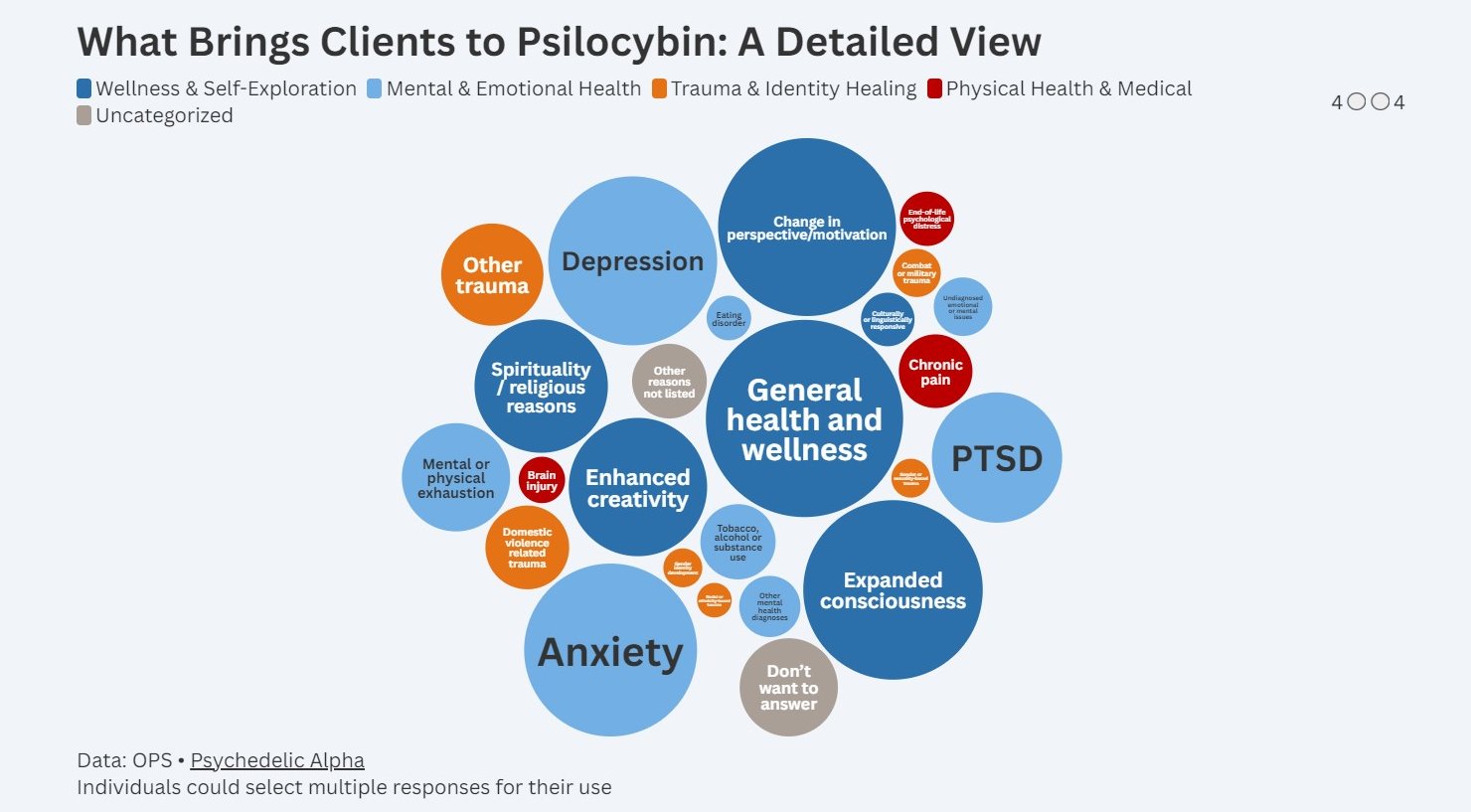
https://psychedelicalpha.com/news/oregon-psilocybin-services-tracker-q1-2025
[5145]
Another naturalistic study,
"Investigation of self-treatment with lysergic acid diethylamide and
psilocybin mushrooms: Findings from the Global Drug Survey 2020" by
Kopra et al (2023)
"...investigated the patterns
of use, self-reported outcomes and outcome predictors of psychedelic
self-treatment of mental health conditions or specific
worries/concerns in life.
"Methods:
We use data from the Global
Drug Survey 2020, a large online survey on drug use collected between
November 2019 and February 2020. In all, 3364 respondents reported
their self-treatment experiences with lysergic acid diethylamide
(N = 1996) or psilocybin mushrooms
(N = 1368). The primary outcome of interest was the
17-item self-treatment outcome scale, items reflecting aspects of
well-being, psychiatric symptoms, social-emotional skills, and health
behaviours.
"Results:
Positive changes were observed
across all 17 outcome items, with the strongest benefits on items
related to insight and mood. Negative effects were reported by 22.5%
of respondents. High intensity of psychedelic experience, seeking
advice before treatment, treating with psilocybin mushrooms and
treating post-traumatic stress disorder were associated with higher
scores on the self-treatment outcome scale after averaging values
across all 17 items. Younger age, high intensity of experience and
treating with LSD were associated with increased number of negative
outcomes.
"Conclusions:
This study brings important
insights into self-treatment practices with psychedelics in a large
international sample. Outcomes were generally favourable, but negative
effects appeared more frequent than in clinical settings. Our findings
can help inform safe practices of psychedelic use in the community,
and inspire clinical research. Future research can be improved with
utilisation of prospective designs and additional predictive
variables."
https://pmc.ncbi.nlm.nih.gov/articles/PMC10350727/ [3879]
Herrmann et al (2025) had 19 parameters when "Exploring the potential
psychological predictors associated with changes in depression,
anxiety, and well-being following naturalistic psychedelic use":
"Although research shows that psychedelic use may lead to improvement
in mental health and well-being, the underlying changes in
psychological predictors associated with these improvements remain
unclear. 161 participants were recruited in a prospective online
survey assessing naturalistic psychedelic use. We used lasso
regression to assess how 19 distinct changes in psychological
variables (e.g., meaning in life, mindfulness) were linked to future
changes in depression, anxiety, and well-being changes. We found
increases in meaning in life (β = 0.229, 95 % CI [0.101, 0.357],
p < 0.01), agreeableness (β = 0.193, [0.077, 0.361], p <
0.05), mindfulness (β = 0.174, [0.022, 0.383], p < 0.05), and
extraversion (β = 0.135, [0.002, 0.246], p = 0.046) to be the
variables most strongly associated with future increases in
well-being. Increases in mindfulness (β = −0.347, [-0.481,
−0.220], p < 0.001), emotional stability (β =
−0.158, [-0.279, −0.020], p < 0.05), and extraversion
(β = −0.147, [0.022, 0.383], p < 0.05) were the most
strongly associated with future decreases in anxiety. Lastly,
increases in self-esteem (β = −0.216, [-0.365,
−0.056], p < 0.05) were most strongly associated with changes
in depression. Changes in mindfulness and emotional stability were
also associated with depression; however, they were not significant.
Mindfulness was the sole predictor that ranked within the top three
across all outcomes. These findings suggest that these differing
predictors may underpin the observed psychological improvements
following naturalistic psychedelic use."
https://www.sciencedirect.com/science/article/abs/pii/S0022395625005205
[5421]
Discussing the motives for use
of serotonergic psychedelics, Basedow and Kuitunen-Paul (2022) report
"In this systematic review, we
investigated which use motives for the substance class of SPs are
reported for different user populations. The most prominent motive for
the use of SPs across all 37 studies was expansion. Nonetheless, over
half of the studies also reported coping and enhancement reasons,
while social and conformity reasons were rarely involved in the use of
SPs. Opposed to our expectation quantitative and qualitative
approaches were not related to different proportions of reported use
motives. Furthermore, SP use motives did not differ between users of
different substances, by year of publication or between different
participant populations.
"It seems that a strong public
presence of SPs as agents with properties related to coping has not
led to a strong presence of this motive in user reports. In contrast,
the motive that was most often reported was expansion. The expansion
motive was added to the classic four-factor structure, based on and
replicated in studies with alcohol-users, to explain motives that
seemed to be reported frequently and exclusively in users of cannabis.
It relates to processes of subjectively increasing self-knowledge and
creativity, as well as changes in awareness and perception. Adding
this motive to the use motive structure was likely due to cannabis'
psychedelic properties. Therefore, it is fitting that a large
proportion of SP users reports expansion motives, since the motive was
created specifically to capture psychedelic subjective effects.
Interestingly, cannabis use, for which the motive was specifically
created, is linked to enhancement more strongly than to the expansion
motive.
"Additionally, we showed that
reported motives do not differ between questionnaire types, indicating
that the five factor use motives apply well to the lived experience of
SP users. However, we did observe a small, but non-significant,
difference for coping motives, in the sense that qualitative reports
more frequently led to the report of coping motives compared to
quantitative reports (75% vs. 59% respectively). Coping motives
describe substance use as a form of emotion regulation, specifically
the regulation (and reduction) of negative affective states. One
reason might be the wording of structured coping questions. These are
often focused on general negative affect instead of describing
specific negative states. This general description might lead people
not to identify with the item in question and therefore respond with
disagreement. On the other hand, in qualitative reports, participants
have the opportunity to explain how they use SPs to cope with specific
ailments or emotional states. What they frequently do not have is the
opportunity to add individual motives to the questionnaire-specific
set of motives. This might result in non-reporting and underreporting
of motives which were not covered by the applied questionnaire as
previously shown for certain cannabis use motive measures, for example
using because of substance-specific craving. Another explanation of
this potential finding is a reduction of social desirability bias in
qualitative interviews. While in standard survey research social
desirability is an issue, in qualitative interviews the interviewer
might have built enough trust with the interviewee, which in turn
could lead to more honest answers.
"We observed no differences in
terms of the year of publication, the investigated SPs or participant
populations. This observation, in combination with the above finding
related to different questionnaire types, supports the conclusion that
the motives for SP use are remarkably similar across contexts. The
motive of expansion being the most common holds up across substances,
contexts and time. This finding supports the classification of SPs as
a homogeneous class of substances, even though singular members of
this group might differ in terms of pharmacology or subjective
effects. The distinction of SPs as a coherent class is further
supported by previous research showing that other substances, such as
cannabis and MDMA are more often associated with the motive of
enhancement instead of expansion."
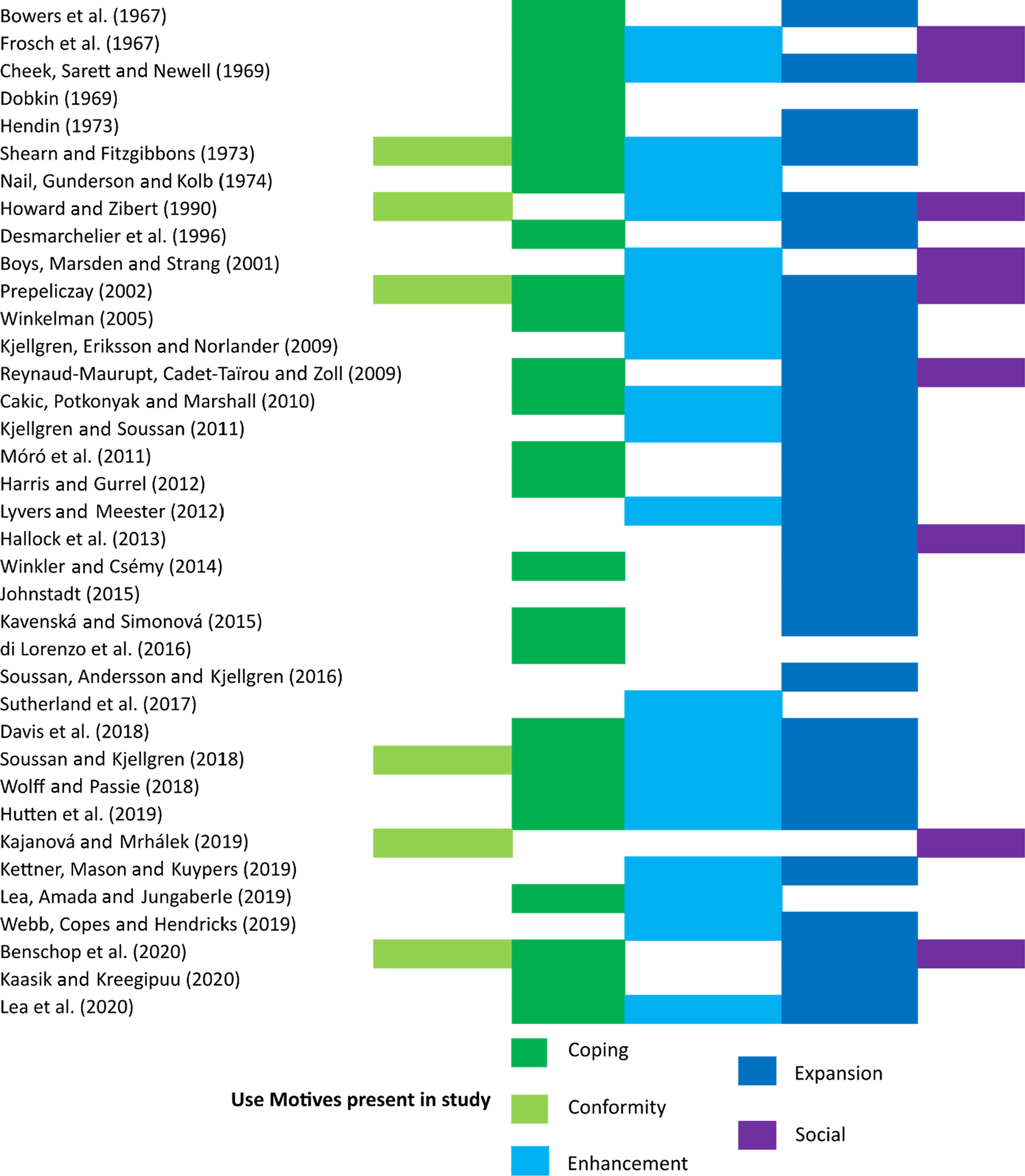
https://onlinelibrary.wiley.com/doi/full/10.1111/dar.13480
[4263]
"Depression affects an
estimated 300 million people around the world, an increase of nearly
20% over the past decade. Worldwide, depression is also the leading
cause of disability."
...explain Metaxa and Clarke
for the BMJ in "Efficacy of psilocybin for treating symptoms of
depression: systematic review and meta-analysis" (2024) and their
results are condensed into the following figures.
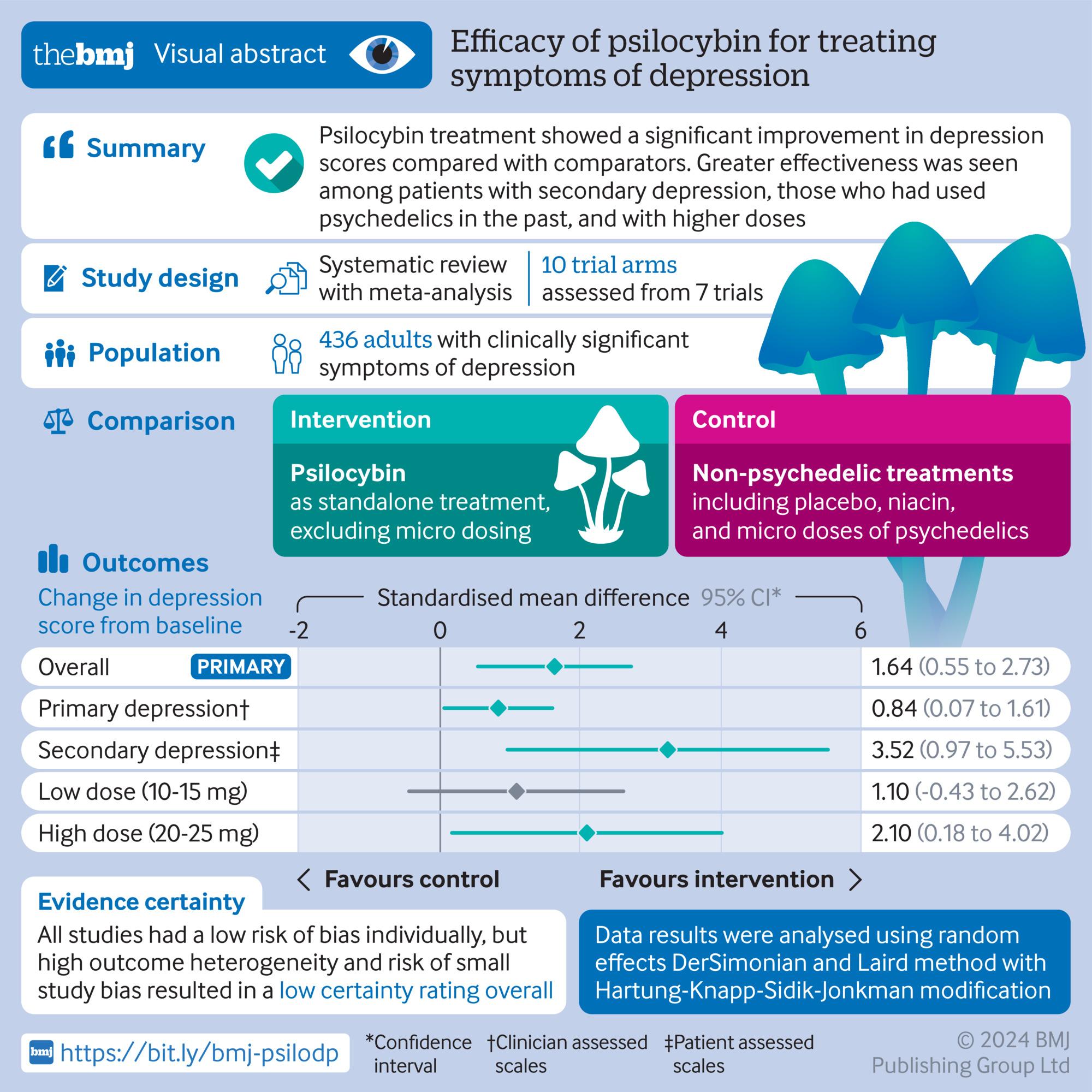
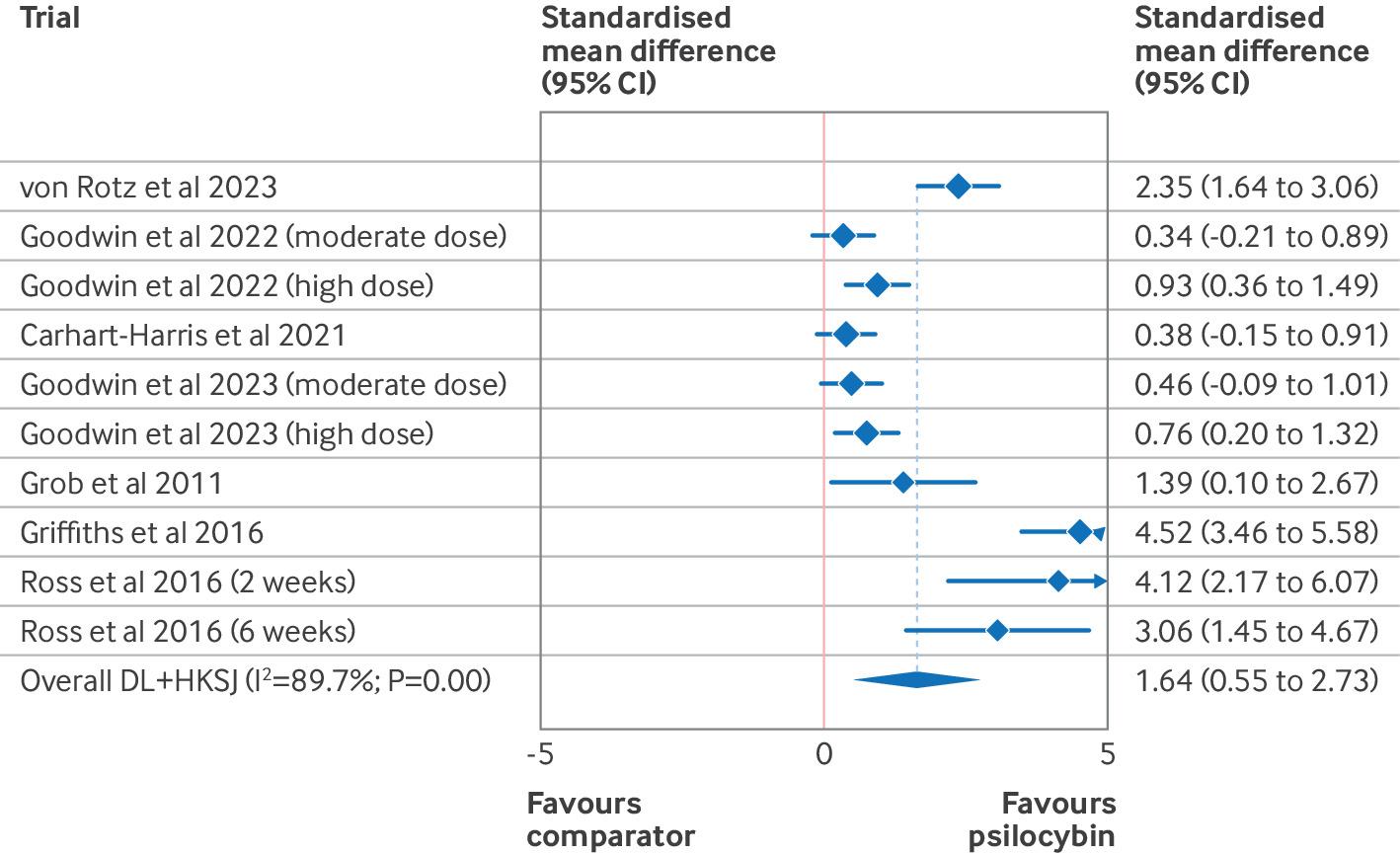
And the scientists "discovered"
that what you expect to happen plays an important role in the efficacy
of psychedelics.
"Treatment effects of
psilocybin were significantly larger among patients with secondary
depression, when self-report scales were used to measure symptoms of
depression, and when participants had previously used psychedelics.
Further research is thus required to delineate the influence of
expectancy effects, moderating factors, and treatment delivery on the
efficacy of psilocybin as an antidepressant."
https://www.bmj.com/content/385/bmj-2023-078084 [4626]
Because this news about
expectation will always be news to somebody, the Defence reminds the
Court that officialdom and other random people who spread scare
stories about psychedelics tend to create the very negative results
they claim to be observing, via expectancy or hesitancy.
Most of the political
commentators have never observed or experienced any bad trips
themselves - consequently all their "knowledge" comes from hearsay,
with a high degree of propagandising, political targeting, and media
amplification. All in all it is an area badly in need of
secularisation. The less bad trips are discussed, the fewer there will
be.
And what could be a worse trip than not only
spending your declining decades confused and unable to function
effectively, but also preventing others from avoiding the same?
In "Psilocybin for dementia prevention? The
potential role of psilocybin to alter mechanisms associated with major
depression and neurodegenerative diseases" Haniff et al (2024) examine
the mechanisms by which psilocybin exerts its neuroprotective effects,
first by explaining:
"Adult hippocampal neurogenesis (AHN)
is a phenomenon that describes the birth of new neurons in the dentate
gyrus throughout life and it is associated with spatial learning,
memory and mood regulation. Microglia are innate immune system
macrophages in the central nervous system that carefully regulate AHN
via multiple mechanisms. Disruption in AHN is associated with both
dementia and major depression and microgliosis is a hallmark of
several neurodegenerative diseases.
"Emerging evidence suggests
that psychedelics promote neuroplasticity, including neurogenesis, and
may also be immunomodulatory. In this context, psilocybin, a
serotonergic agonist with rapid-acting antidepressant properties has
the potential to ameliorate intersecting pathophysiological processes
relevant for both major depression and neurodegenerative diseases. In
this narrative review, we focus on the evidence base for the effects
of psilocybin on adult hippocampal neurogenesis and microglial form
and function; which may suggest that psilocybin has the potential to
modulate multiple mechanisms of action, and may have implications in
altering the progression from major depression to dementia in those at
risk."
And they say
"...mechanisms connecting AHN
and microglia, perhaps mediated by prolonged or inappropriate
inflammatory processes, play a role in major depression and cognitive
impairment (Fang et al., 2023; Herman, Simkovic, & Pasinetti,
2019) illustrated in Fig. 1. The downstream effect of innate immune
system dysregulation may exacerbate inflammation and lead to
subsequent neurodegeneration (Hayley, Hakim, & Albert, 2021;
Herman, Simkovic, & Pasinetti, 2019)."
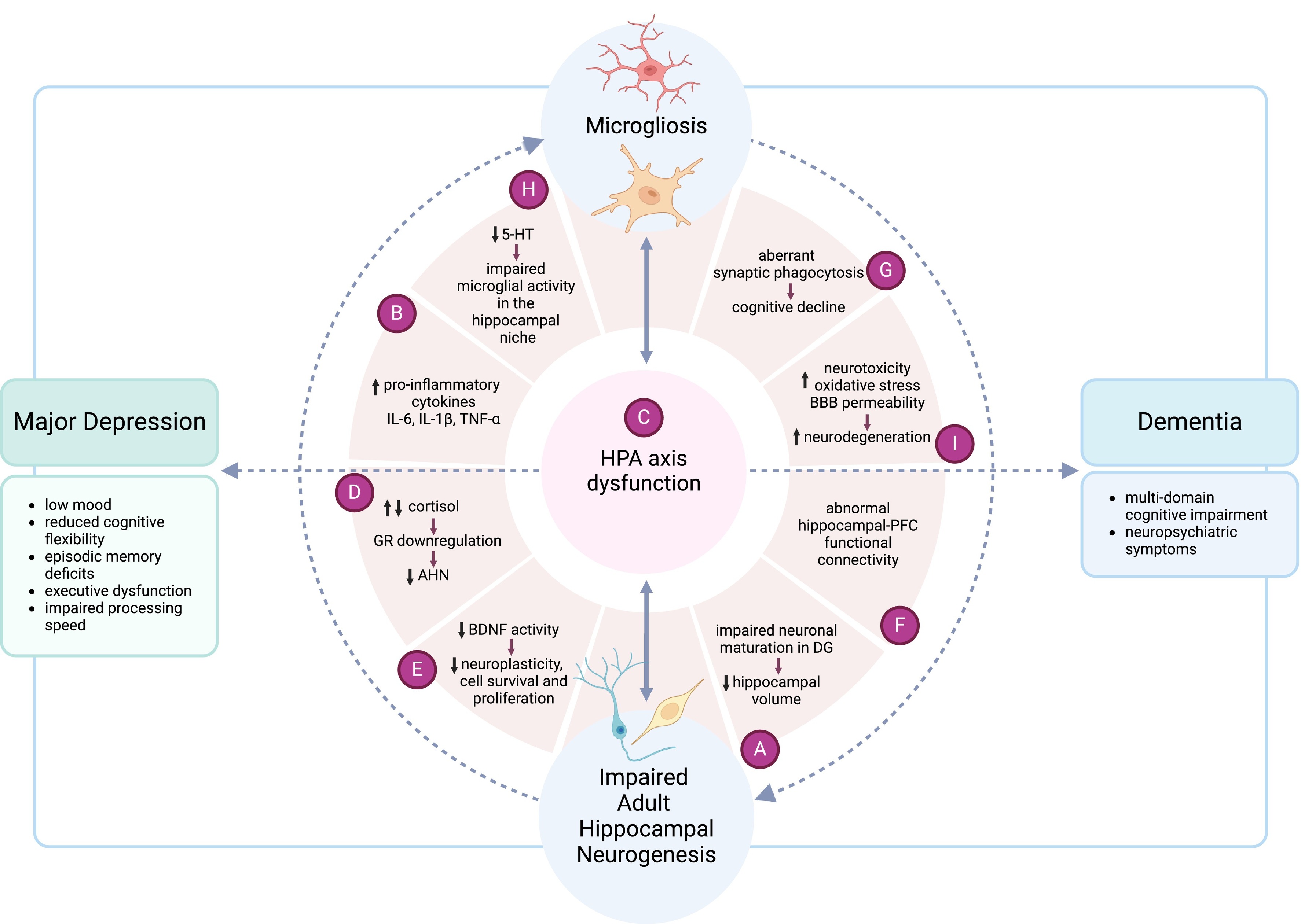
https://www.sciencedirect.com/science/article/pii/S0163725824000615
[3847]
One "prolonged or inappropriate inflammatory process" still hanging
around is Covid. At the Cognitive Neuroscience Unit, School of
Psychology, SRH University of Applied Sciences Heidelberg, Meyer and
Zaiser (2025) have extended the knowledge of adult hippocampal
neurogenesis with some "Insights on the neurocognitive mechanisms
underlying hippocampus-dependent memory impairment in COVID-19"
employing an ingenious indirect measure via psychological tests the
mnemonic similarity task (MST) and relational elaboration and
coherence (REC):
"Given the susceptibility of hippocampal neurogenesis to COVID-19 and
its potential impact on pattern separation, cognitive consequences
related to memory precision were anticipated. Specifically, we
expected significant deficits in mnemonic pattern separation among
individuals who had tested positive for COVID-19, compared to
previously not infected participants, while other mnemonic functions,
such as item recognition memory, would largely remain intact. Our
results exactly confirm this hypothesis, showing that previously
infected individuals exhibited a marked and selective impairment in
mnemonic discrimination, which relies on hippocampus-dependent pattern
separation, leaving item recognition memory intact. This suggests that
compromised hippocampal neurogenesis following SARS-CoV-2 infection
may contribute to the memory deficits observed in COVID-19 survivors.
However, while the MST is a valuable tool for assessing cognitive
functions related to pattern separation, it is important to
acknowledge that it serves only as an indirect measure of neurogenesis
and the integrity of the DG. To account for cognitive processes beyond
hippocampus-dependent pattern separation, we also examined the REC
score, which assesses item recognition memory (i.e., the ability to
recognize a target item as 'old') that should be less reliant on
hippocampal processing and rather reflect the integrity of other
memory-related structures of the medial temporal lobe, such as the
perirhinal cortex....The absence of significant group differences in
REC scores suggests that item memory remains intact in COVID-19
survivors, further supporting the specificity of the observed deficits
in hippocampus-dependent processes. This distinction further
emphasizes the MSTs utility in isolating hippocampus-dependent
processes, specifically pattern separation, from other cognitive
functions, such as item recognition memory, which rely on perirhinal
cortex integrity. However, it is important to note that the MSTs
reliance on behavioral performance to infer hippocampal function means
that it cannot directly measure neurogenesis or the structural
integrity of specific hippocampal regions."
https://www.nature.com/articles/s41598-025-04166-2 [5100]
More on the REC paradigm:
https://mural.maynoothuniversity.ie/id/eprint/4952/1/YBH_sketch.pdf
[5101]
Describing "Serotonin, immune
function, and psychedelics as potent anti-inflammatories" Nichols and
Foster (2025) report that:
"Some psychedelics, but not all, have been found to have powerful
anti-inflammatory and immunomodulatory effects through activation of
5-HT2A receptors in preclinical experimental systems and models of
human inflammatory diseases. Human studies examining anti-inflammatory
effects of psychedelics are limited but suggestive that psychedelics
may represent a new strategy to treat inflammatory diseases. In this
review we will present an overview of serotonergic modulation of
immune function, the role of 5-HT2A receptors in these processes, and
a summary of key findings with psychedelics with regards to
anti-inflammatory efficacy."
https://www.sciencedirect.com/science/article/abs/pii/S0074774225000261
[5102]
Legal scholars will be reaching for their antidepressants when they
read this paper by Reiche et al (2025) indicating the problems
suffered by victims of NEPUD, which found no cognitive deficits found
in sporadic psychedelic users compared to non-users, sporadic lifetime
use of psychedelics associates with increased cognitive flexibility,
and that the amount of lifetime psychedelic use predicts degree of
increased cognitive flexibility.
"From 2611 screened individuals, N = 136 participants (84 psychedelic
users and 52 controls) were included. Participants were aged
1850 years. Neuropsychological performance was broadly equivalent
between users and controls. However, matched-pair analyses showed that
psychedelic users had a modest advantage in executive functions,
especially superior performance on the Wisconsin Card Sorting Test
(WCST) (p < .05). Dose-response analyses further corroborated these
findings, indicating a positive association between lifetime
psychedelic use and performance on the WCST, specifically total errors
(p < .001), perseverative responses (p < .001), perseverative
errors (p < .001), non-perseverative errors (p = .008), and
conceptual level responses (p = .004).
"Conclusions
The study did not detect any negative associations between sporadic
lifetime psychedelic use and cognition. Instead, a moderate
association with executive functioning was found, indicating increased
cognitive flexibility in users. Dose-response analyses further
supported this relationship."
https://www.sciencedirect.com/science/article/pii/S0278584625001071?via%3Dihub
[4904]
Meanwhile, back in the laboratories
of the University of Michigan Ann Arbor, with an improved experimental
methodology Brouns et al (2025) find that "Single-dose psychedelic
enhances cognitive flexibility and reversal learning in mice weeks
after administration":
"Psychedelic compounds have demonstrated remarkable therapeutic
potential for treating neuropsychiatric disorders by promoting
sustained neuroplasticity in the prefrontal cortex (PFC). Cognitive
flexibilitythe ability to adapt previously learned rules to novel
situationsrepresents a critical PFC function that is frequently
impaired in depression, PTSD, and neurodegenerative conditions. In
this study, we demonstrate that a single administration of the
selective serotonin 2A receptor agonist 25CN-NBOH produces
significant, long-lasting improvements in cognitive flexibility in
both male and female mice when measured 23 weeks posttreatment. Using
a novel automated sequential learning paradigm, psychedelic-treated
mice showed superior adaptability in rule reversal tasks compared to
saline controls, as evidenced by enhanced poke efficiency, higher
percentages of correct trials, and increased reward acquisition. These
behavioral findings complement existing cellular research showing
psychedelic-induced structural remodeling in the PFC and uniquely
demonstrate sustained cognitive benefits persisting weeks after a
single psychedelic dose. Our automated behavioral task provides a
high-throughput method for evaluating cognitive flexibility effects of
various psychedelic compounds, offering important implications for
therapeutic applications in conditions characterized by cognitive
rigidity, including depression, PTSD, and potentially Alzheimer's
disease."
https://genomicpress.kglmeridian.com/view/journals/psychedelics/aop/article-10.61373-pp025r.0002/article-10.61373-pp025r.0002.xml
[5297]
Considering that the morality-enhancing effects of psychedelics
outweigh the moral principles upon which their prohibition is based,
Vojin Rakić of the Center for the Study of Bioethics (CSB), Belgrade
(2025) writes:
"A contribution of major importance to our understanding of psilocybin
as a moral enhancer is the first path-breaking academic publication on
this topic, 'Psychedelic Moral Enhancement' by Brian Earp. Building on
Earp, Rakić argues that psilocybin is, for two reasons, a more
effective moral bio-enhancer than non-psychedelic substances, such as
oxytocin, SSRIs, and vasopressin. First, it tends to create sensations
of selflessness and oneness with the world. These sensations are
directly linked to altruism and integrated love, which is a
cornerstone of morality. Non-psychedelic substances, even the ones
with the strongest potential to morally enhance their consumers, might
stimulate empathy, which, in turn, may strengthen altruism. Hence,
their effects are mediated and therefore indirect. On the other hand,
the effects of psilocybin on altruism and love, and consequently on
morality, are not mediated via empathy, but have a more direct effect.
Second, psilocybin stimulates happiness. As happiness and morality are
in a circularly supportive relationship, psilocybin might also, in
that manner, function as a moral enhancer."
https://onlinelibrary.wiley.com/doi/10.1111/bioe.70043 [5558]
Five years after Ptuj police took
away all of the above a further meta-analysis of psilocybin and
depression, including 26 papers, appeared in the Journal of Affective
Disorders in December 2025. According to Khan et al:
"Psilocybin's regulation of serotonin 5-HT2A receptors, which improves
neuroplasticity, disrupts maladaptive cognitive processes and
encourages emotional integration, is the backend of its therapeutic
benefits. The meta-analysis results indicate that psilocybin has an
outstanding capacity to reduce the symptoms of anxiety/MDD
(SMD = −1.438, 95 % CI: −1.729 to −1.146,
p < 0.001) and mood disorders (SMD = −1.476, 95 % CI:
−1.773 to −1.178, p < 0.001). Sustained improvements
are frequently observed after a single therapy session."
https://www.sciencedirect.com/science/article/abs/pii/S0165032725023249
[5755]
And three months after that, in March 2026, Verónica
Mäki-Marttunen looked again at existing datasets, finding that
"Psilocybin shapes the slow, global propagation of brain activity over
the cortical layout of 5HT2a receptors" as
"...faster propagation speed was related to increased total functional
connectivity and a contraction of the principal gradient. The results
support the view that these functional connectivity indices obtained
from entire signal time courses reflect the modulation of specific
global events of propagation. Furthermore, we found that the cortical
distribution of 5HT2a receptors could contribute to the modulation of
travelling wave propagation by psilocybin. These findings provide a
link between macroscopic signatures of neuromodulatory activity,
global brain events and receptor action, with relevance for
understanding the mechanisms of psychedelic effects."
https://www.nature.com/articles/s42003-026-09912-4_reference.pdf
[6072]
Parker Singleton et al (2026) report
in Nature Mental Health
"Over 130 clinical trials on the therapeutic potential of psilocybin
have been initiated in the past two decades, sponsored by over 100
different institutions, and there is estimated to be a potential
market size of $10.75 billion for the clinical use of psychedelics by
2027. Thirty-nine of these initiated trials are for
treatment-resistant depression or major depressive disorder, for which
the US Food and Drug Administration has granted psilocybin
Breakthrough Therapy designation to accelerate the approval process.
The largest published trial to date assessed a single dose of
psilocybin for a treatment-resistant episode of major depression in
233 individuals, finding that 25 mg, but not 10 mg, of psilocybin
reduced depression scores significantly more than a 1 mg dose at 3
weeks."
https://www.nature.com/articles/s44220-026-00630-8.epdf
[6076]
"Changes in anxiety, quality of life,
and functioning following psilocybin-assisted therapy in veterans with
treatment-resistant depression" (2026) by Kelly et al found
"Psilocybin produced large, sustained reductions in anxiety scores up
to 12 months; Quality of life and functional impairment improved early
but waned later; PTSD symptoms showed sizable yet variable reductions
over follow up; While improvements in exploratory outcomes tracked
with depressive symptom changes, subjective experience measures did
not correlate with treatment response."
https://www.sciencedirect.com/science/article/abs/pii/S0165032726009158
[6203]
Lago et al (2026) present a remarkable case history in "Transient
multidomain functional improvement in advanced Alzheimer's disease
following high-dose psilocybin-containing mushroom administration: a
case report" (2026).
Before:
"The patient was an octogenarian Japanese-American woman who lived with continuous family supervision and caregiver support. Progressive cognitive and functional decline had evolved over approximately 10 years. During the preceding 5 years, verbal output became predominantly monosyllabic, accompanied by severe reduction in spontaneous interaction, chronic urinary incontinence, executive dysfunction, impaired mobility, dysphagia, and marked dependence in activities of daily living."
Afterwards...
"One month after the initial session,
the patient remained continent and functionally improved compared with
baseline. A second supervised psilocybin session using 3 g was
subsequently performed and was associated with greater verbal
expressivity, improved facial mimicry, spontaneous humor, emotionally
valenced autobiographical imagery, and increased agility while
walking.
"The patient spontaneously stated: 'It is pleasant to come here.'"
https://www.frontiersin.org/journals/neuroscience/articles/10.3389/fnins.2026.1813281/full [6202]
As reported by medicalxpress.com,
"They found that after taking a
single high dose of psilocybin, the patient regained several abilities
she had lost years earlier. Within 19 hours of taking the dose, she
was able to hold hourlong conversations about her life, whereas before
the study her speech had been limited to one or two words at a time.
She began to show emotions and respond to humor.
"Not only did her bladder control improve, but her diapers remained
dry even overnight, and she also started dressing herself. She began
to maintain eye contact and smile back at people. Many of the gains
persisted for weeks, with some continuing after the second, lower
dose."
https://medicalxpress.com/news/2026-06-high-dose-psilocybin-temporarily-lost.html [6204]
In Slovenia they would all have been
fined and the therapists fired.
---------------------------------------------------------------------------------------------------------
The Englishman
stands for the rights of everyone disadvantaged, discriminated
against, persecuted, and prosecuted on the false or absent bases of
prohibition, and also believes the victims of these
officially-sanctioned prejudices have been appallingly treated and
should be pardoned and compensated.
The Englishman requests the return of his CaPs and other rightful
property, for whose distraint Slovenia has proffered no credible
excuse or cause.
The Benedictions represent both empirical entities as well as beliefs.
Beliefs which the Defence evidence shows may be reasonably and
earnestly held about the positive benefits of CaPs at the population
level, in which the good overwhelmingly outweighs the bad. Below, the
latest version of this dynamic list.
THE BENEDICTIONS
REFERENCES
TIMELINE OF DRUG LAW v. SCIENCE