PERCEPTION AND AGING
Aging is a hot topic and everybody is
interested in their own longevity, but outside of their immediate family most
are mostly unconcerned with lifespan or healthspan at the population level.
Those who hold the levers of power are not particularly extra-sensitive in this
regard. They should be. A law or policy can make the difference between millions
of years of life or useful years gained or lost. The Courts should listen to the
ever-expanding repository of knowledge and not insist on making decisions based
on what was known when this or that law was written,
Now this is hard work and expert
evidence can sometimes be hard to arrange. Nor is it ideal if evidence is
contrained by financial limitations. In the area of aging many sources are
available at varying levels of technicality. Someone who understands English and
is looking for a primer on the basic issues might try the following interview
with ribosome-researching Nobel prizewinner Venki Ramakrishnana, to pick up some
hints and useful terminology.
https://www.youtube.com/watch?v=i6Y7q1Ta2wI [3459]
A proposition of this Defence is that
psychedelics help people to sharpen their wits and to outwit considerably
better-funded and better-connected enemies such as President Nixon and the
United Nations. This may not be true for every individual, but the proposition
is that their repression is a net loss for the world overall.
The parallel growth in psychedelic
use and ecology, and the historical connections between drugs, self-awareness,
and what we today would call green awareness, are not a coincidence. They may
not be obvious to non-users, because nothing is.
This is not some snobbery. What we
today call green awareness is no more than being somewhat more aware of your
surroundings than people who play football on poisonous artificial grass.
Artificial grass is intergenerationally poisonous and solipsism or defining
opposition to it as hippy shit is not going to change its physical consequences
for the qualities of your offspring's genitalia or inflammasome.
Nevertheless, some are going to
ignore hazards while others are going to do something about it. Having at least
a proportion of people who aware of what is going on around them is not
evolutionarily useful only for the individual organism, but in social
constructs, also for the group and the species. Sliding around on some
overheated plastic, on the other hand, is not concerned with general benefit.
The Defence asserts that caps on
average performance such as the ZPPPD's prohibition of LSD are no more
reasonable than demanding the home team plays football with their bootlaces tied
together, or that left-handed students write with their right hand.
It might seem equitable. But there
will be no net benefit to sport or literature.
Football authorities may make such
rules, teachers might fail the southpaw "wrong" pupils in their exams, but it
won't make any difference.
It is the same with psychedelics. For
the Defendant and many others more informed than the people making up the rules,
these drugs have a role to play in understanding the self and others, and in
saving the planet and its inhabitants.
Use of psilocybin and LSD keeps you young and is life
extending, for a mixture of biochemical and behavioural reasons.
Psychedelics help you listen to your
body. On a social interaction level, our senses help us to avoid stupid things:
stupid foods, stupid drugs, and stupid people. Granularity of perception is good
for survival. Knowing your limits is a good thing.
Here Evgeny Lebedev describes the outcome
of ayahuasca sessions. As a Russian born member of the House of Lords, he is the
owner of The Independent and bought the Evening Standard for 1. The son of a
KGB spy at the USSR's London Embassy, he ponders the epigenetic effects of a
Soviet ancestry, and describes how, during his DMT experience, he relived being
wheeled in to a Russian operating theatre for major surgery aged four months and
unable to see his mother for days. The Defence thinks his psyche might be
somewhat more familiar to Slovenians than that of the comparatively freewheeling
western world view. Basically Evgeny has come out of his shell a little.
https://www.youtube.com/watch?v=jGf3QU-1q1s [3460]
What about the dreaded euphoria of
psychedelic drugs? On the biochemical front, if it makes you feel better,
without taking away other sensations as with the case of SSRIs, then you're
probably better. Let us examine some of the territories wherein we might find
evidence of quantifiable longevity benefits.
Jinfiniti Precision Medicine, an
Augusta, Georgia-based health, anti-aging, and wellness company, is partnering
with scientists from a Canadian psilocybin truffle producer to explore the
potential roles that psychedelic truffles can play for age-related and
psychiatric disorders. They
"...realized that chronic diseases
like cancer and diabetes all have a common root: aging. We share a theory with
many in the burgeoning longevity community that if you can delay or reverse
aging, you will also delay or reverse chronic diseases. In other words,
prevention is the best medicine for chronic diseases and where we can help save
the most lives. But where do you start? Adopting exercise and a good diet is a
good place, but you shouldn't stop there."
https://psychedelicspotlight.com/psilocybin-truffles-anti-aging-benefits/
[1112]
In 2016 Bonkowski and Sinclair wrote in
"Slowing ageing by design: the rise of NAD+ and sirtuin-activating compounds"
that although the discovery of the effect of caloric restriction on longevity
dates to 1935...
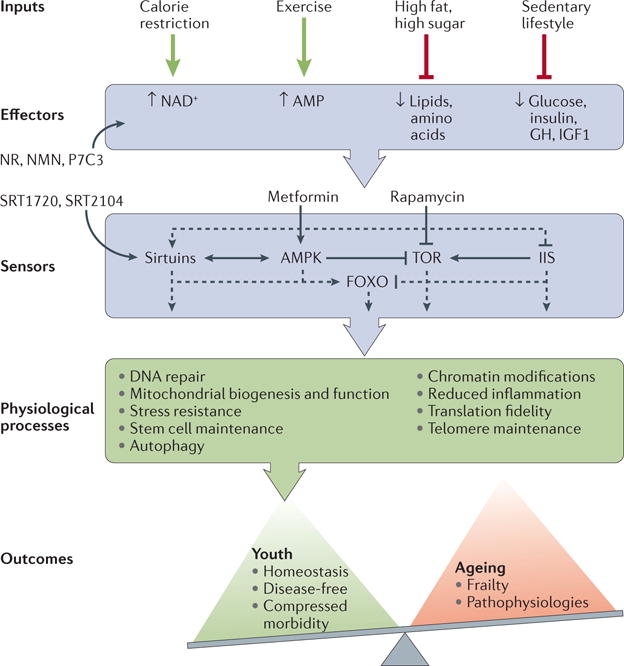
"Numerous studies of simple and complex model organisms over the past 20 years
have lent credence to the idea that a set of evolutionarily conserved longevity
pathways are responsible for the effects of calorie restriction on lifespan.
Dozens of genes and pathways have now been uncovered that compress the period of
morbidity and extend the lifespan of model organisms, from yeast to rodents.
Major signalling targets include insulin/insulin-like growth factor 1 (IGF1)
signalling, target of rapamycin (TOR), adenosine monophosphate-activated protein
kinase (AMPK) and the nicotinamide adenine dinucleotide (NAD+)-dependent sirtuin
deacylases. It is believed that these pathways evolved to sense and respond to
the nutritional environment and to promote cellular defence mechanisms in the
face of extrinsic adversity."
https://pmc.ncbi.nlm.nih.gov/articles/PMC5107309/ [5228]
In Madrid, Benavides-Piccione et al
(2012) made an "Age-Based Comparison of Human Dendritic Spine Structure Using
Complete Three-Dimensional Reconstructions":
"Dendritic spines of pyramidal
neurons are targets of most excitatory synapses in the cerebral cortex. Recent
evidence suggests that the morphology of the dendritic spine could determine its
synaptic strength and learning rules. However, unfortunately, there are scant
data available regarding the detailed morphology of these structures for the
human cerebral cortex. In the present study, we analyzed over 8900 individual
dendritic spines that were completely 3D reconstructed along the length of
apical and basal dendrites of layer III pyramidal neurons in the cingulate
cortex of 2 male humans (aged 40 and 85 years old), using intracellular
injections of Lucifer Yellow in fixed tissue. We assembled a large, quantitative
database, which revealed a major reduction in spine densities in the aged case.
Specifically, small and short spines of basal dendrites and long spines of
apical dendrites were lost, regardless of the distance from the soma. Given the
age difference between the cases, our results suggest selective alterations in
spines with aging in humans and indicate that the spine volume and length are
regulated by different biological mechanisms."
https://www.ncbi.nlm.nih.gov/pmc/articles/PMC3698364/ [1741]
Further evidence of the link between aging and
cognitive decline is abundant in the literature. For instance a 2019 study by
cognitive neuroscientists at Columbia University, New York, NY, employed four
age groups: young adults (YA; age 2034, n = 103), younger middle-aged adults
(yMA; age 3549, n = 63), older middle-aged adults (oMA; age 5064, n = 136),
and older adults (OA; age 6580, n = 146),
employed four age groups: young adults (YA; age 2034,
n = 103), younger middle-aged adults (yMA; age 3549, n = 63), older middle-aged
adults (oMA; age 5064, n = 136), and older adults (OA; age 6580, n = 146), who
"...completed a battery of
neuropsychological tasks as part of their baseline study visit. Tasks were
administered in the following fixed order: Wechsler Adult Intelligence Scale
(WAIS-III; Wechsler, 1997), Letter-Number Sequencing, American National Adult
Reading Test (AMNART; Wechsler, 1997), Selective Reminding Task (SRT) immediate
recall (Buschke and Fuld, 1974), WAIS-III Matrix Reasoning (Wechsler, 1997), SRT
delayed recall and delayed recognition (Buschke and Fuld, 1974), WAIS-III Digit
Symbol (Wechsler, 1997), Trail-Making Test versions A and B (TMT-A/B; Reitan,
1978), Controlled Word Association (C-F-L) and Category Fluency (animals; Benton
et al., 1983), Stroop Color Word Test (Golden, 1975), Wechsler Test of Adult
Reading (WTAR; Holdnack, 2001), WAIS-III Vocabulary (Wechsler, 1997), and
WAIS-III Block Design (Wechsler, 1997). Based on prior analyses using these
tasks in our lab, the tasks were clustered into four primary cognitive domains
(Razlighi et al., 2017): Episodic Memory (all SRT outcomes), Vocabulary (WAIS
Vocabulary, WTAR, AMNART), Processing Speed (WAIS Digit Symbol, Stroop Color,
Stroop Color Word, TMT-A), and Fluid Reasoning (WAIS Matrix Reasoning, WAIS
Block Design, TMT-B)."
and they say
"...aging results in weakening
within-network connectivity, lower system segregation and local efficiency, and
higher participation coefficient. Further, the results suggest that nearly every
primary sensory and cognitive network faces some degree of age-related decline,
from reduced within-network connectivity (auditory, default mode,
fronto-parietal, cingulo-opercular, dorsal attention, and salience networks),
higher participation coefficient (somatomotor, visual, default mode,
fronto-parietal, and ventral attention networks), or reduced local efficiency
(visual network). Additionally, some of these connectivity metrics were related
to cognitive performance. Altogether these results suggest a general reduction
in network integrity in the context of aging, which could be associated with
cognitive outcomes."
https://www.frontiersin.org/articles/10.3389/fnagi.2019.00234/full [1738]
That same year, Farrs-Permanyer et
al at the University of Barcelona investigated "Age-related changes in
resting-state functional connectivity in older adults":
"A total of 114 individuals, 48 to 89
years old, were scanned using resting-state functional magnetic resonance
imaging in a resting state paradigm and were divided into six different age
groups (< 60, 6064, 6569, 7074, 7579, ≥ 80 years old). A partial correlation
analysis, a pooled correlation analysis and a study of 3-cycle regions with
prominent connectivity were conducted. Our results showed progressive diminution
in the functional connectivity among different age groups and this was
particularly pronounced between 75 and 79 years old. The oldest group (≥ 80
years old) showed a slight increase in functional connectivity compared to the
other groups. This occurred possibly because of compensatory mechanism in brain
functioning."
https://www.ncbi.nlm.nih.gov/pmc/articles/PMC6557095/ [1739]
Aging is an accumulation of cellular
damage, involving gradual degradation of the apoptosis-senescence balance [3459].
Using a large longitudinal database of complete blood count measurements, Pyrkov
et al determined an absolute lifespan limit of 120-150 years, and how they did
that is quite complicated but they
"...conclude that the criticality
resulting in the end of life is an intrinsic biological property of an organism
that is independent of stress factors and signifies a fundamental or absolute
limit of human lifespan."
https://www.nature.com/articles/s41467-021-23014-1.pdf [1136]
...and point out that the results of
a 2019 study by Whittemore et al at the Spanish National Cancer Research Centre,
Madrid, which predicts maximum human lifespan limits from telomere shortening,
are compatible with their own estimations.
Previous studies suggested telomere
shortening rate, and not initial telomere length, was an indicator of longevity.
They examined telomere shortening in a variety of species, namely
"...the telomeres of laboratory mice
(Mus musculus) (Fig. 1A), bottlenose dolphins (Tursiops truncatus) (Fig. 1B),
goats (Capra hircus) (Fig. 1C), reindeer (Rangifer tarandus) (Fig. 1D), American
flamingos (Phoenicopterus ruber) (Fig. 1E), griffon vultures (Gyps fulvus) (Fig.
1F), Audouin's gulls (Larus audouinii) (Fig. 1G), and Sumatran elephants
(Elephas maximus sumatranus) (Fig. 1H). Laboratory mice were included as a
control, as we had previously shown a rate of telomere shortening of around
7,000 bp [base pairs] per y, which is 100-fold faster than that reported in
humans."
Their results:
"...support the notion that critical
telomere shortening and the consequent onset of telomeric DNA damage and
cellular senescence are a general determinant of species life span."
https://www.pnas.org/doi/pdf/10.1073/pnas.1902452116 [1137]
Let's give a shout out to the gene
silencing sirtuins, which are upregulated by THC. Cannabis mimics caloric
restriction.
"The SIR complexes mediate silencing
at the mating type loci, telomeres, and rDNA loci. Sir2 associates with Sir1/3/4
to repress the transcription of cryptic mating type loci (HML and HMR), while
Sir2/3/4 are recruited to telomeres by telomere binding proteins to mediate
telomere maintenance."
And that's our human right if we want
to live longer, as sirtuins mediate calorie-restriction induced "beneficial
effects including life span extension in a NAD+-dependent manner." [1601]
"NAD is a pyridine nucleotide. It
provides the oxidation and reduction power for generation of ATP by
mitochondria. For many years [during which cannabis-related longevity was
outlawed] it was believed that the primary function of NAD/NADH in cells was to
harness and transfer energy from glucose, fatty and amino acids through pathways
like glycolysis, beta-oxidation and the citric acid cycle.
"Today [2021], however, NAD is
recognized as an important cell signaling molecule and substrate. The many
regulatory pathways now known to use NAD+ in signaling include multiple aspects
of cellular homeostasis, energy metabolism, lifespan regulation, apoptosis, DNA
repair and telomere maintenance.
"This resurrection of NAD importance
is due in no small part to the discovery of NAD-using enzymes, especially the
sirtuins."
and
"NAD also functions as a substrate
for enzymes such as DNA ligases, NAD-dependent oxidoreductases, poly-ADP-ribose
polymerase (PARP), and more recently the Sir2p family of NAD-dependent
deacetylases."
and
"Several diseases have been tied,
directly or indirectly, to changes in NAD level or NAD/NADH balance. NAD/NADH
levels regulate corepressor CtBP activity, and have thus been shown to have a
role in carcinogenesis.
"PARP1 has been implicated in
mechanisms underlying type 1 diabetes. PARP1 uses NAD as a substrate and plays a
role in DNA-base excision repair, signaling due to DNA damage and regulation of
transcription and proteosomal function. Overactivation of PARP1 leads to NAD
depletion and cell death by necrosis.
"NAD depletion by PARP1 also is
believed to play a role in diabetic endothelial dysfunction.
"Thus from this rudimentary
examination of NADs role in cells, one can conclude that if the availability of
NAD to cells is somehow disrupted, cellular function would be seriously and
negatively impacted. What is bad for the cell is quite definitely bad for the
organism.
"A Role in Aging
Diabetes and related vascular
dysfunctions and metabolic diseases are often referred to as age-related
diseases. Calorie restriction (CR) research, which examines how eating less may
improve longevity, points to the seemingly strong connection of NAD to aging.
Sirtuins (SIRT in mammalian research, Sir2 in the yeast research) are
NAD+-dependent deacetylases and ADP-ribosylases that have been shown to play a
role in the regulation of stress response, gene transcription, cellular
metabolism and longevity."
https://www.promegaconnections.com/nad-a-renaissance-molecule-and-its-role-in-cell-health/
[1603]
"NAD metabolism: Role in senescence
regulation and aging" by Chini et al (2023) has a section on the complexity of
NAD metabolism:
"The metabolism of NAD is a complex
and dynamic process playing a crucial role in organismal health (Chini et al.,
2021). The electron transfer reactions involving NAD result in the
interconversion between its oxidized and reduced forms. These reactions are
reversible, and the sum of NAD+ and NADH is maintained. NAD+/NADH ratios are
influenced by the metabolic status of the organism (Kulkarni & Brookes, 2019;
Via et al., 2016; Ying, 2006). Alterations in this ratio play a crucial role in
the regulation of cellular functions since NAD participates in many signal
transductions and protein modification reactions (Denu, 2003; Saville et al.,
2020; Yang & Sauve, 2006, 2016). Maintaining the total NAD pool requires a
significant energy expenditure, mainly because some tissues have very high NAD
turnover rates (Liu, Su, et al., 2018; Zeidler, Chini, et al., 2022). Overall,
the complexity of NAD metabolism can be explained by its multiple synthetic
routes and consuming enzymes, many of which function primarily in cell
signaling, DNA repair, and energy metabolism regulation (Kincaid & Berger, 2020;
Strmland et al., 2021).
"Levels of cellular NAD are
intricately controlled by the balance between its synthesis and degradation
(Figure 1). Synthesis of NAD in the body occurs through both extracellular and
intracellular pathways (Cambronne & Kraus, 2020; Cant et al., 2015; Liu, Su, et
al., 2018). Multiple pathways for NAD synthesis have been described in mammalian
cells and tissues, including the de novo pathway from tryptophan, the salvage
pathway through the recycling or incorporation of nicotinamide, and the
PreissHandler pathway (Figure 1). Importantly, the expression of different
enzymes of synthesis and degradation of NAD vary at the subcellular, cellular,
and tissue levels (Camacho-Pereira et al., 2016; Cambronne & Kraus, 2020;
Fortunato et al., 2022; Liu, Su, et al., 2018; Zeidler, Chini, et al., 2022)."
https://onlinelibrary.wiley.com/doi/10.1111/acel.13920 [3904]
As they age, Slovenians drink. Andrew
Huberman on how alcohol works: NAD:NADH ratio controls degradation of ethanol
into acetylaldehyde; the ratio is the rate limiting step to how quickly you can
metabolise alcohol; acetate is a fuel source - why alcohol is empty calories;
GABA-ergic top-down inhibition of neurons of the pre-frontal cortex, responsible
for forethought, decision-making, and limiting impulsivity; alcohol prevents
memory formation; brain areas associated with tact shut down; long term,
frequency of use leads to reduction in impulse control as well as acute use.
https://www.youtube.com/watch?v=CJynHWYo7D8 [3900]
2020 saw "SIRT1 Activation by Natural
Phytochemicals: An Overview":
"The most studied member of this
class of enzymes is sirtuin 1 (SIRT1), whose expression is associated with
increasing insulin sensitivity. SIRT1 has been implicated in both tumorigenic
and anticancer processes, and is reported to regulate essential metabolic
pathways, suggesting that its activation might be beneficial against disorders
of the metabolism. Via regulation of p53 deacetylation and modulation of
autophagy, SIRT1 is implicated in cellular response to caloric restriction and
lifespan extension."
https://www.frontiersin.org/articles/10.3389/fphar.2020.01225/full [2676]
The following year, 2021, saw "A
Comprehensive Analysis into the Therapeutic Application of Natural Products as
SIRT6 Modulators in Alzheimers Disease, Aging, Cancer, Inflammation, and
Diabetes"
"Sirtuin 6 (SIRT6) is an NAD+
dependent histone deacetylase enzyme and a unique Sirtuin family member. It
plays a crucial role in different molecular pathways linked to DNA repair,
tumorigenesis, glycolysis, gluconeogenesis, neurodegeneration, cardiac
hypertrophic responses, etc. Thus, it has emerged as an exciting target of
several diseases such as cancer, neurodegenerative diseases, aging, diabetes,
metabolic disorder, and heart disease. Recent studies have shown that natural
compounds can act as modulators of SIRT6."
https://www.mdpi.com/1422-0067/22/8/4180 [2677]
From the February 2012 discovery of Kanfi
et al in Israel that "The sirtuin SIRT6 regulates lifespan in male mice" it took
a mere two months to discover that "Cannabidiol induces autophagy and improves
neuronal health associated with SIRT1 mediated longevity" involving a substance
Wang et al at the University of Wollongong felt comfortable investigating, yet
which had "no medical uses" according to the law at the time.
"We report that cannabidiol (CBD), a natural compound from Cannabis sativa,
extends lifespan and rescues age-associated physiological declines in C.
elegans. CBD promoted autophagic flux in nerve-ring neurons visualized by a
tandem-tagged LGG-1 reporter during aging in C. elegans. Similarly, CBD
activated autophagic flux in hippocampal and SH-SY5Y neurons. Furthermore,
CBD-mediated lifespan extension was dependent on autophagy genes (bec-1, vps-34,
and sqst-1) confirmed by RNAi knockdown experiments. C. elegans neurons have
previously been shown to accumulate aberrant morphologies, such as beading and
blebbing, with increasing age. Interestingly, CBD treatment slowed the
development of these features in anterior and posterior touch receptor neurons
(TRN) during aging. RNAi knockdown experiments indicated that CBD-mediated
age-associated morphological changes in TRNs require bec-1 and sqst-1, not
vps-34. Further investigation demonstrated that CBD-induced lifespan extension
and increased neuronal health require sir-2.1/SIRT1. These findings collectively
indicate the anti-aging benefits of CBD treatment, in both in vitro and in vivo
models, and its potential to improve neuronal health and longevity."
https://link.springer.com/article/10.1007/s11357-022-00559-7 [4953]
To clarify for the Court: Australia legalized living longer on prescription on
24 February 2016. On 15 December 2020, the Therapeutic Goods Administration
(TGA) down-scheduled certain low-dose CBD preparations (up to 150 mg/day,
containing at least 98% CBD and no more than 2% other cannabinoids) from
Schedule 4 to Schedule 3 (pharmacist-only medicine), allowing over-the-counter
sales without a prescription. However no such life-extending nutraceutical
products have actually been approved by the antipodean authorities.
Israel legalized medical CBD in 1999. In March 2022 Israel removed the longevity
drug from the Dangerous Drugs Ordinance. As of May 2024, CBD is legally
available in pharmacies for "medical use". "Non-medical" longevity remains a
gray area.
The perhaps necessary research for a belated understanding of the mechanisms of
longevity continued in 2025 with Feldman-Trebelsi et al who are curious about
what differs between the metabolisms of short- versus long-lived animals, and
who
"...propose a link between the conservation of protein acetylation and mammalian
longevity."
They note:
"Various attempts were also performed at the -omics level to identify the
regulation of lifespan in long-lived animals. Meta-analysis of age-related gene
expression profiles in mice, rats, and humans identified common signatures of
ageing, including inflammation, immune response, and energy metabolism-related
pathways. Wider meta RNA-seq analyses across databases of 26 or 41 mammalian
species also identified transcriptional signatures of known longevity-related
pathways. In addition to the above-mentioned pathways, these analyses identified
DNA repair, IGF1 expression, and mitochondrial translation. Interestingly, the
expression of these genes was modulated by pro-longevity interventions,
including mTOR inhibition and caloric restriction (CR). In contrast to
transcriptome analyses, most attempts to identify longevity-associated proteomic
signatures were performed in humans. For example, a recent study identified 754
human plasma proteins that are associated with chronological age and are mostly
related to inflammatory response, organismal injury, cell and organismal
survival, and cell death pathways. In addition, Coenen et al. identified 273
plasma proteins significantly associated with ageing. Pathway and network
analyses of these proteins highlighted several pathways, including those that
were shown to regulate longevity, such as IGF signaling, sulfur binding, TNFα
(inflammation), and metabolic diseases. Likewise, among the pathways of
ageing-related proteins identified by Wyss-Coray and his colleagues were sulfur
binding and IGF1-related hormonal signaling. Besides transcriptome and proteome
analyses, several studies attempted to characterize the human age-related
metabolome and found several known pathways that were shown to regulate
longevity, such as kynurenine NAD+ biosynthesis, one carbon/transsulfuration,
inflammation, oxidative stress, and lipid metabolism pathways."
https://www.nature.com/articles/s41467-025-58762-x [4954]
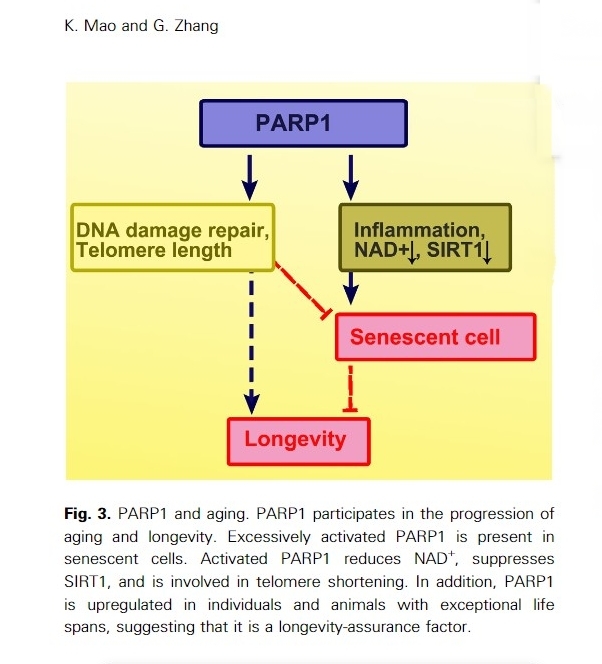
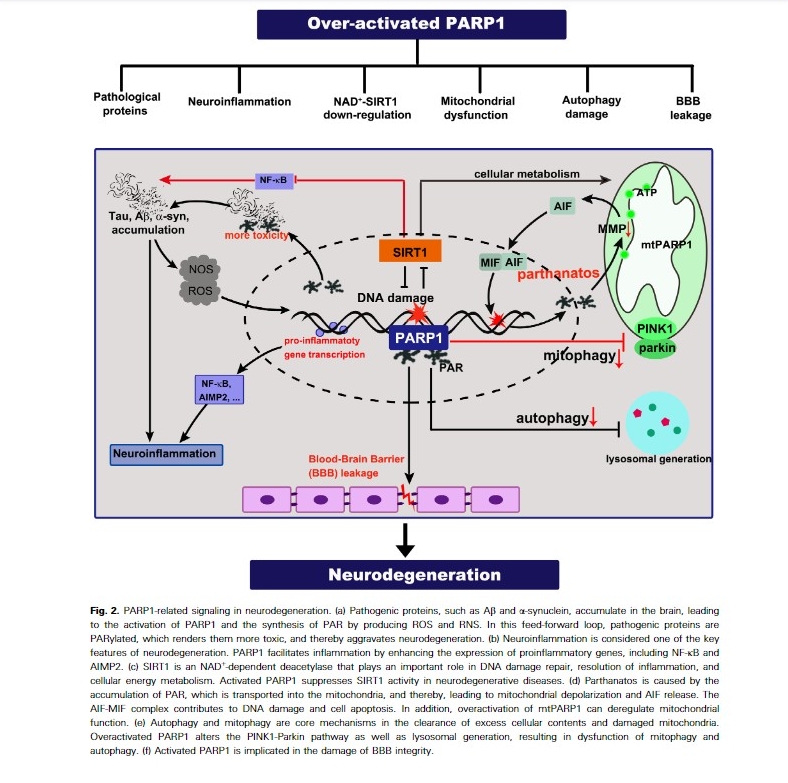
In 2022 Mao and Zhang in Wuhan, China
let us know "The role of PARP1 in neurodegenerative diseases and aging"
"The human poly
(ADP-ribose)-polymerase (PARP) family consists of at least 17 members that share
aconserved catalytic domain (CD), which transfers ADP-ribose units to substrate
proteins. Poly(ADP-ribose)-polymerase 1 and 2 (PARP1 and PARP2) are prominent
members of this protein family, and PARP1 undertakes the majority of activity
(8590%), participating in multiple cellular processesranging from DNA damage
repair, genomic stabilitymaintenance to cell proliferation, differentiation, and
apoptosis. Poly(ADP-ribosyl)ation (also known asPARylation), using NAD+as the
substrate, is a reversible post-translational modification. Activated PARP1
catalyzes the covalent attachment of poly(ADP-ribose) on itself
(auto-PARylation) and other acceptor proteins (trans-PARylation), and PARylation
can alter the structure and biochemical properties of the modified proteins. As
one of the major responders to DNA damage, PARP1 promotes chromatin relaxation
by adding ADP-ribose units to histones andcoordinates the spatiotemporal
assembly of DNA repair proteins in the face of DNA strand interruptions.
Furthermore, PARP1 affects chromatin remodeling and gene transcription in a
PARylation-dependent fashion. Covalently attached PAR can be hydrolyzed by
ADP-ribose hydrolase 3 (ARH3) and PAR glycohydrolase (PARG), which ensure the
precise regulation of free or bound PAR polymers."
and
"PARP1 inhibitor can improve the
function of senescent cells by increasing NAD+levels and SIRT1 activity."
 https://febs.onlinelibrary.wiley.com/doi/epdf/10.1111/febs.15716?src=getftr
[3053]
https://febs.onlinelibrary.wiley.com/doi/epdf/10.1111/febs.15716?src=getftr
[3053]
Shalev et al let us know that
"Phytocannabinoid Compositions from Cannabis Act Synergistically with PARP1
Inhibitor against Ovarian Cancer Cells In Vitro and Affect the Wnt Signaling
Pathway" (2022)...
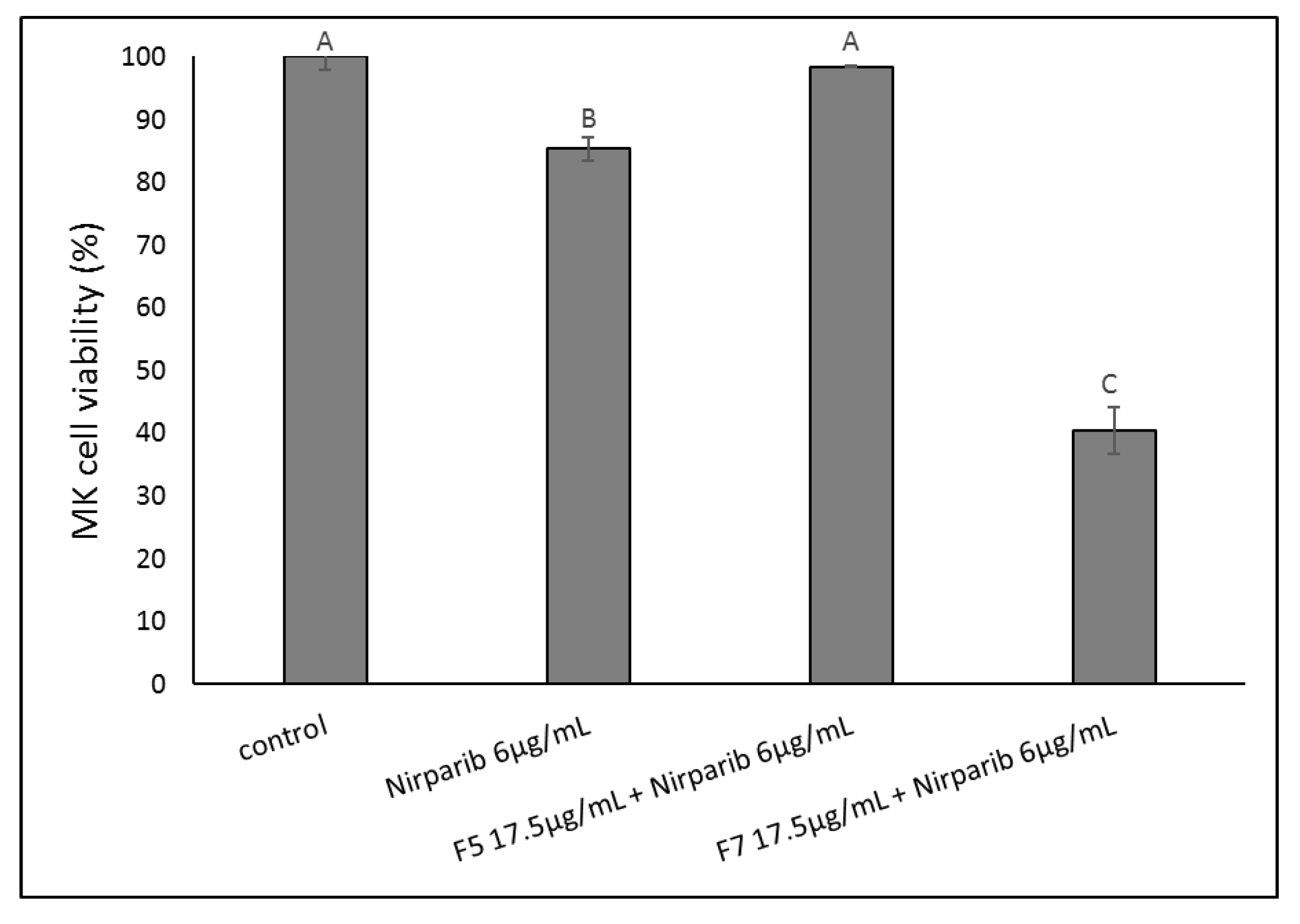
"Cytotoxic activity was determined by
XTT assay on HTB75 and HTB161 cell lines. Apoptosis was determined by flow
cytometry. Gene expression was determined by quantitative PCR and protein
localization by confocal microscopy. The two most active fractions, F5 and F7,
from a high Δ9-tetrahydrocannabinol (THC) cannabis strain extract, and their
standard mix (SM), showed cytotoxic activity against OC cells and induced cell
apoptosis. The most effective phytocannabinoid combination was
THC+cannabichromene (CBC)+cannabigerol (CBG). These fractions acted in synergy
with niraparib, a PARP inhibitor, and were ~50-fold more cytotoxic to OC cells
than to normal keratinocytes. The F7 and/or niraparib treatments altered Wnt
pathway-related gene expression, epithelial-mesenchymal transition (EMT)
phenotype and β-catenin cellular localization. The niraparib+F7 treatment was
also effective on an OC patient's cells. Given the fact that combinations of
cannabis compounds and niraparib act in synergy and alter the Wnt signaling
pathway, these phytocannabinoids should be examined as effective OC treatments
in further pre-clinical studies and clinical trials."
[ ]
]
"F5 contained mainly THC and
cannabinol (CBN) and CBG to a lesser extent, while F7 included mainly THC and
cannabichromene (CBC), with smaller proportions of CBN and CBG, as well as
traces of other phytocannabinoids."
https://www.mdpi.com/1420-3049/27/21/7523 [2134]
Of course you don't have to wait
until you have ovarian cancer to inhibit your PARP, with or without this other
stuff they need to make a patent.
Hwang et al (2023) in "Cell death
induction and intracellular vesicle formation in human colorectal cancer cells
treated with Δ9-Tetrahydrocannabinol" found:
"The MTT assay showed that treatment
with 40 μM Δ9-THC and above inhibited the proliferation of colorectal cancer
cells. Multiple intracytoplasmic vesicles were detected upon microscopic
observation, and fluorescence-activated cell sorting analysis showed cell death
via G1 arrest. Δ9-THC treatment increased the expression of cell death marker
proteins, including p53, cleaved PARP-1, RIP1, and RIP3, suggesting that Δ9-THC
induced the death of colorectal cancer cells. Δ9-THC treatment also reduced ATP
production via changes in Bax and Bcl-2. Δ9-THC regulated intracytoplasmic
vesicle formation by modulating the expression of PPARγ and clathrin, adding
that antiproliferative activity of Δ9-THC was also affected."
and
"Δ9-THC also increased the expression
of RIP1 and RIP3, which are marker proteins of pyroptosis."
https://www.ncbi.nlm.nih.gov/pmc/articles/PMC10682224/ [3461]
For those who would rather die than
get high, Fonseca et al (2018) at the University of Porto:
"...observed that at concentrations
higher than 5 μM, eCBs and CBD induced a significant reduction in cell viability
in both Ishikawa and Hec50co cells, whereas THC did not cause any effect. In
Ishikawa cells, contrary to Hec50co, treatment with AEA and CBD resulted in an
increase in the levels of activated caspase -3/-7, in cleaved PARP, and in
reactive oxygen species generation, confirming that the reduction in cell
viability observed in the MTT assay was caused by the activation of the
apoptotic pathway. Finally, these effects were dependent on TRPV1 activation and
intracellular calcium levels. These data indicate that cannabinoids modulate
endometrial cancer cell death."
https://pubmed.ncbi.nlm.nih.gov/29441458/ [3462]
But in 2024 the entourage effect was
back. According to Shaley et al in "Integrated transcriptome and cell phenotype
analysis suggest involvement of PARP1 cleavage, Hippo/Wnt, TGF-β and MAPK
signaling pathways in ovarian cancer cells response to cannabis and PARP1
inhibitor treatment":
"Recently, we identified a high-THC
cannabis-extract fractions and combinations of cannabis molecules that have
cytotoxic activity against OC cells (Shalev et al., 2022). These extract
fractions and compound-combinations induced cell apoptosis (Shalev et al.,
2022). Moreover, the F7 fraction containing mostly THC, cannabichromene (CBC) to
a lesser extent, with smaller proportions of cannabinol (CBN) and cannabigerol
(CBG), and traces amount of other phytocannabinoids and terpenes (Peeri et al.,
2021; Shalev et al., 2022), increased OC cell sensitivity to the
poly(ADP-ribose)-polymerase (PARP)1 inhibitor niraparib in vitro. It was
demonstrated that niraparib + F7 activity involves the wingless/int1 (Wnt)
signaling pathway (Shalev et al., 2022)."
https://www.ncbi.nlm.nih.gov/pmc/articles/PMC10844430/ [3463]
In Italy, Valeri et al (2022) believe
"Previous evidence highlights the
effect of cannabinoids in neuroprotection and several tests connect both natural
and synthetic C. sativa compounds with neurogenesis, like VCE-003.2, opening new
opportunities to explore other beneficial properties of this plant. Our team
previously demonstrated the role of CBG in influencing the synaptic pathways and
as an anti-oxidant and anti-inflammatory agent, but its role in the regeneration
of neurons is not well understood.
"Using the motor-neuron cell model
NSC-34, we simulated an acute trauma using scratch injury and test if CBG,
administered as pre-treatment or post-treatment, could improve the outcome of
damaged neurons and/or can have a role in the axonal regrowth."
and
"Western Blot and statistical
analyses showed significant differences in protein level of Parp1 between
scratched and treated cells, indicating a reduction in apoptosis signal. The
level of BDNF is significantly reduced after scratch and in the pre-treated
cells, while post-treated cells showed an increased amount of BDNF protein
levels, suggesting that CBG is effective on BDNF only when administered as
post-treatment. Light neurofilament protein levels increase after the scratch
and decrease in the pre-treated cells, confirming the transcriptomic data, while
post-treated cells showed a significantly increased amount of light
neurofilament protein levels."
https://www.ncbi.nlm.nih.gov/pmc/articles/PMC8875351/ [3464]
Over in Honolulu, finding that "CBGA
ameliorates inflammation and fibrosis in nephropathy", Suzuki et al (2023)
"...assessed the protein levels of
poly ADP-ribose polymerase 1 (PARP1), which is an apoptotic marker that is
cleaved by caspase-331. The full-length PARP1 was visibly reduced and the
cleaved PARP1 increased in cisplatin-induced nephropathy (cisplatin (+) in Fig.
3d). CBGA and CBGA + CBD treatment suppressed this increase of cleaved PARP1
protein."
https://www.ncbi.nlm.nih.gov/pmc/articles/PMC10113213/ [3465]
But the Defence insists you don't
have to wait until you have a spinal injury, kidney inflammation, or ovarian,
endometrial or colorectal cancer, to inhibit your PARP, with or without any
other stuff these researchers may need to make a patent. In general, the
Defendant isn't interested, in his anti-PARP actvities, in other people's patent
problems.
The same applies to
cholangiocarcinoma (CCA), regarding which Leelawat et al published "Antitumor
Effects of Delta (9)-Tetrahydrocannabinol and Cannabinol on Cholangiocarcinoma
Cells and Xenograft Mouse Models" in 2022.
"The effect of THC and CBN on the
apoptosis of CCA cells was confirmed by the detection of cleaved PARP. PARP is a
nuclear DNA-binding protein that can detect DNA strand breaks and is involved in
base excision repair. Once PARP is cleaved by caspase during apoptosis, its DNA
repair function is impaired. The results showed that a band of 89 kDa,
representing cleaved PARP, was clearly found in cells treated with THC or CBN at
concentrations of 20 μM (Figure 4(c))."
https://www.hindawi.com/journals/ecam/2022/6477132/ [3055]
"Background Cholangiocarcinoma (CCA) incidence in Northeastern Thailand is very
high and a major cause of mortality," report Phansila et al (2025):
"For ST [standard palliative pain management] patients, follow-up time was 790
person-months, with a mortality rate of 48.35/100 person-months. For CT
[medicinal cannabis treatment] patients, follow-up time was 476 person-months,
with a mortality rate of 10.9/100 person-months. The median survival time after
registration at a palliative clinic was 0.83 months (95% CI: 0.710.95) for ST
and 5.66 months (95% CI: 1.949.38) for CT. Multivariate analysis showed CT was
significantly associated with prolonged survival (HRadj = 0.28; 95% CI:
0.200.37; p < 0.001)."
https://sciety-labs.elifesciences.org/articles/by?article_doi=10.12688/f1000research.123250.3
[5620]
By 2023, according to Curry et al of
the Department of Medicinal Chemistry, Virginia Commonwealth University,
Richmond
"Human sirtuins play important roles
in various cellular events including DNA repair, gene silencing, mitochondrial
biogenesis, insulin secretion as well as apoptosis. They regulate a wide array
of protein and enzyme targets through their NAD+-dependent deacetylase
activities. Sirtuins are also thought to mediate the beneficial effects of
low-calorie intake to extend longevity in diverse organisms from yeast to
mammals. Small molecules mimicking calorie restriction to stimulate sirtuin
activity are attractive therapeutics against age-related disorders such as
cardiovascular diseases, diabetes and neurodegeneration.
"Little is known about one of the
mitochondrial sirtuins, SIRT5. SIRT5 has emerged as a critical player in
maintaining cardiac health and neuronal viability upon stress, and functions as
a tumor suppressor in a context-specific manner."
https://febs.onlinelibrary.wiley.com/doi/10.1111/febs.16887 [2675]
Qian et al add, in "Alteration in the
chromatin landscape during the DNA damage response: Continuous rotation of the
gear driving cellular senescence and aging" (2023):
"Prior studies highlight the
importance of poly-ADP-ribose polymerases (PARPs) as DNA damage sensors in DDR.
The hyperactivation of PARP1 can be triggered by severe DNA damage. Hyperactive
PARP1 consumes cellular NAD+ at a high rate, which indirectly inhibits sirtuins.
This leads to the accumulation of chromatin acetylation and contributes to
aging. Furthermore, SIRT6 interacts with NF-κB and mediates the deacetylation of
H3K9 on the promoter of NF-κB target genes, which inhibits the NF-κB signaling
pathway and attenuates cellular SASP [senescence-associated secretory phenotype]
and the aging-related phenotype. DNA damage may induce the activation of
PARP1-mediated ADP-ribosylation, which is associated with aging-related
neurodegenerative diseases and mammalian longevity. All these results imply that
the DDR-induced chromatin ADP-ribosylation suppresses deacetylation to
potentially promote aging and aging-associated disorders. Overall, the frequent
occurrence of DNA damage and repair triggers continuous epigenetic changes,
which accumulate over time and shape heterogeneous chromosomal modifications
that contribute to aging (Fig. 3)."
and
"The open question is to what extent
chromatin remodeling, which is mediated by DNA damage, contributes to aging.
Theoretically, if the accumulation of DNA damage is the main cause of aging,
then improving the efficiency of DNA repair would be expected to reverse aging
and aging-related diseases. Unfortunately, due to the complexity of repair
mechanisms in humans, the ability to artificially intervene in DNA repair is
still very limited."
https://www.sciencedirect.com/science/article/pii/S156878642300126X [3052]
Partly it is limited by restrictions
on substances which assist pathways against cellular senescence. Asked, in 1925
or 1961 or 1971 or 1991 or 2000, "Do these things make you live longer?" the
plenipotentiaries would have unanimously declared the answer to be no. For
political, religious or superstitious, but not scientific reasons.
"Cellular proteostasis is key to
ensuring successful development, healthy aging, resistance to environmental
stresses, and to minimize homeostatic perturbations from pathogens such as
viruses. Cellular mechanisms for maintaining proteostasis include regulated
protein translation, chaperone assisted protein folding, and protein degradation
pathways. Adjusting each of these mechanisms based on the need for specific
proteins is essential to maintain all cellular functions relying on a correctly
folded proteome."
https://en.wikipedia.org/wiki/Proteostasis [3429]
In 2024 Toiber et al at the Ben
Gurion University of the Negev revealed:
"An important hallmark of aging and
particularly of neurodegeneration is the loss of proteostasis, which often
leads to cellular stress responses and even cell death. However, the causal
mechanisms driving proteostasis are unclear. Here, we show that SIRT6 has a
critical role in maintaining proteostasis. It negatively regulates global
translation by controlling ribosomal genes, nucleolar function and TIP5
chromatin localization. SIRT6 deletion dramatically increases nucleolar size,
rRNA production and protein translation. However, the expression of
protein-folding genes remains unchanged, failing to compensate for excessive
translation, hence leading to reduced protein folding capacity and the
production of aggregates. In vivo, we establish a C. elegans model (sir-2.4 KO)
that shows reduced heat shock resistance and an accelerated age-dependent
reduction in motility. Sir-2.4 depletion in a neuronspecific protein
aggregation-prone polyQ strain led to premature motility loss indicative of
motor neuron dysfunction. These results point to proteostasis-stress intolerance
in the absence of the SIRT6 ortholog that can be rescued by pharmacologically
reducing protein translation rates. Together, our data suggest that SIRT6
deficiency in aging and neurodegeneration contributes to proteostasis loss
through gene dysregulation of nucleolar function and the translation machinery.
These results highlight that deficient proteostasis is the consequence of
chromatin dysregulation that ultimately leads to neurodegeneration."
https://assets-eu.researchsquare.com/files/rs-4215918/v1/1ce6ed5b-cb2f-4ff2-8b41-373555b870be.pdf?c=1716963385
[3428]
So do we want to keep young and
beautiful? Gerasymchuk et al (2022) wondered if the increasing presence of
phytocannabinoids in cosmetics was just hype.
"In light of the increased popularity
of phytocannabinoids (pCBs) and their appearance in beauty products without
rigorous research on their rejuvenation efficacy, we decided to investigate the
potential role of pCBs in skin rejuvenation. Utilizing healthy and
stress-induced premature senescent (SIPS) CCD-1064Sk skin fibroblasts, the
effects of pCBs on cellular viability, functional activity, metabolic function,
and nuclear architecture were tested. Both delta-9-tetrahydrocannabinol (THC)
and cannabidiol (CBD) within the range of 0.5 M to 2.0 M increased cell growth
in a dose-dependent manner while significantly decreasing senescence as measured
by beta-galactosidase activity. Utilizing a scratch assay, both THC and CBD (2.0
M) significantly improved wound healing in both healthy and SIPS fibroblasts.
THC and CBD altered nuclear architecture and mRNA levels of cell cycle
regulators and genes involved in ECM production. Subsequently, we found ELN,
Cyclin D1, PCNA, and BID protein levels altered by SIPS but ameliorated after
pCBs exposure in human dermal fibroblasts. Lastly, we compared the efficacy of
THC and CBD with common anti-aging nutrient signaling regulators in replicative
senescent adult human dermal fibroblasts, CCD-1135Sk. Both THC and CBD were
found to improve wound healing better than metformin, rapamycin, and
triacetylresveratrol in replicative senescent CCD-1135Sk fibroblasts. Therefore,
pCBs can be a valuable source of biologically active substances used in
cosmetics, and more studies using clinical trials should be performed to confirm
the efficacy of phytocannabinoids."
https://www.ncbi.nlm.nih.gov/pmc/articles/PMC9738082/ [3433]
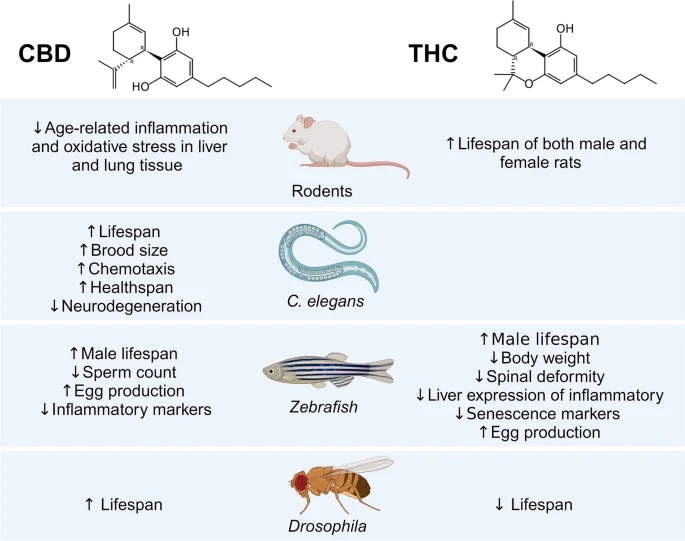
Wang and Arnold (2024) summated very
positive anti-aging results for CBD and biphasic effects with THC in a range of
tests on Caenorhabditis, rats and zebra fish, in support of the amazing
proposition that cannabinoids
"...are reported to improve quality
of life and general well-being in human trials, and there is increasing
preclinical research highlighting that they have anti-ageing activity. Moreover,
preclinical evidence suggests that endogenous cannabinoids regulate ageing
processes. Here, we review the anti-ageing effects of the cannabinoids in
various model systems, including the most extensively studied nematode model,
Caenorhabditis elegans. These studies highlight that the cannabinoids lengthen
healthspan and lifespan, with emerging evidence that they may also hinder the
development of cellular senescence. The non-psychoactive cannabinoid cannabidiol
(CBD) shows particular promise, with mechanistic studies demonstrating it may
work through autophagy induction and activation of antioxidative systems.
Furthermore, CBD improves healthspan parameters such as diminishing age-related
behavioural dysfunction in models of both healthy and accelerated ageing.
Translation into mammalian systems provides an important next step. Moreover,
looking beyond CBD, future studies could probe the multitude of other cannabis
constituents for their anti-ageing activity."
Regarding those environmental
stressors, there is no evidence that the Town Smell is a necessary or desirable
anti-aging feature of the human environment, or holidaymakers would be flocking
to Ptuj for its famous sun-and-smell cure.
On the other hand:
"In the human brain, CB1R mRNA
expression gradually decreased with age in the prefrontal cortex (PFC) (Fig. 2).
In addition, aged rats displayed increased CB1R protein expression in the
entorhinal and temporal cortices but decreased expression in the postrhinal
cortex compared to young rats. Further, aged female mice showed increased CB1R
mRNA expression in subregions of the cortex compared to young mice. However,
aged mice exhibited decreased CB1R mRNA expression in the lateral septal area
compared to younger animals."
https://link.springer.com/article/10.1007/s11357-024-01162-8 [3430]
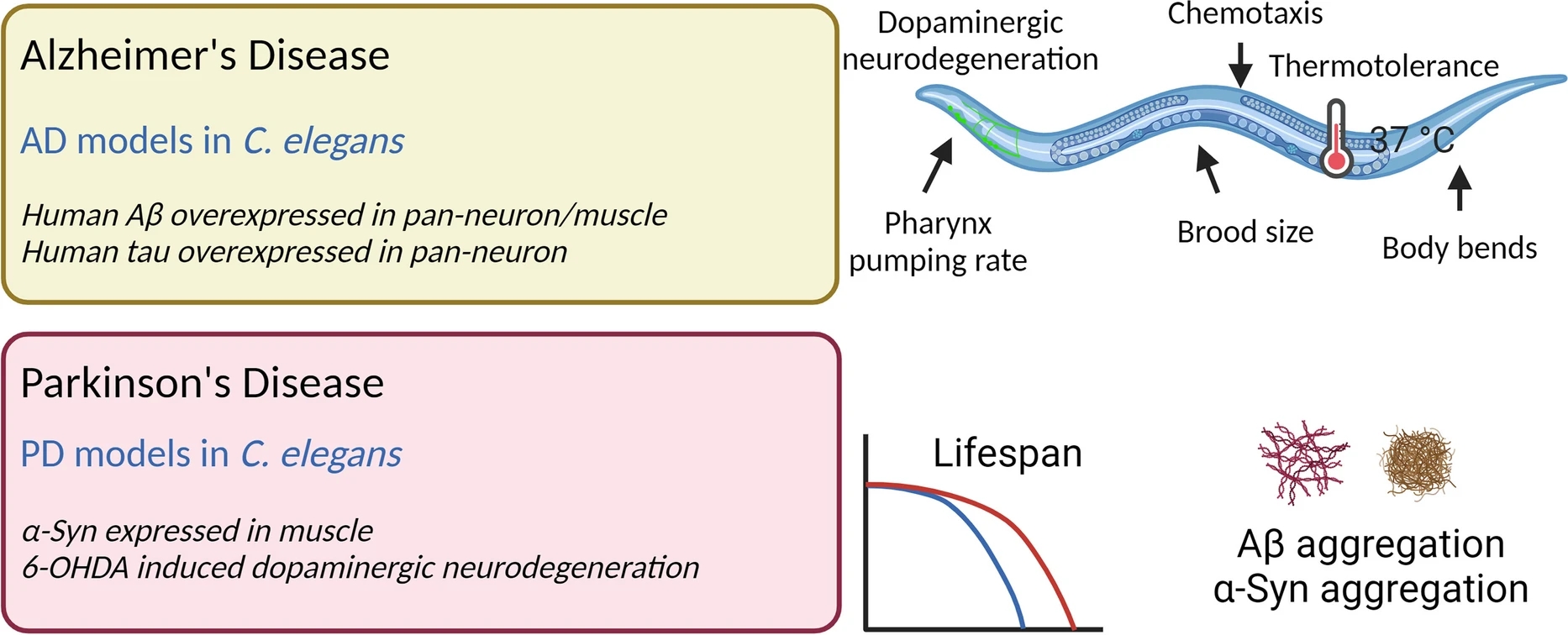
In C. elegans, body bending, head
thrashing and pharyngeal pumping are measures of vitality, which can be assessed
manually or, more reliably, by automated algorithms. In body bending, some
debate over methods has ensued. Zhang and Chen (2023) think they have cracked
it:
"Hence, a method is proposed for
automatically counting and analyzing the body bending behavior. In the first
place, the numerical coordinate regression method with convolutional neural
network is used to obtain the head and tail coordinates of nematodes. Next,
curvature-based feature point extraction algorithm is used to calculate the key
points of the nematode centerline. Including the pharynx, inflection points, and
peak points. The vertical distance between each peak point and the straight line
between the pharynx and the tail is then calculated. The maximum distance is
selected as a reference value for the body bend count and marked positive and
negative according to the position of the peak point. Next, the number of body
bends is counted according to the change in the maximum distance per frame. That
is, when the sign of the maximum distance changes and the absolute value reaches
the maximum, the count is pushed forward. Nematode amplitude is also quantified
by calculating the angle between the peak point and two adjacent inflection
points. Finally, experiments are performed to prove the accuracy and
effectiveness of the proposed algorithm. Different strains of nematodes are
selected to analyze differences in body bending behavior, demonstrating a
relationship between nematodes vitality and lifespan."
https://bmcbioinformatics.biomedcentral.com/articles/10.1186/s12859-023-05307-y
[3433]
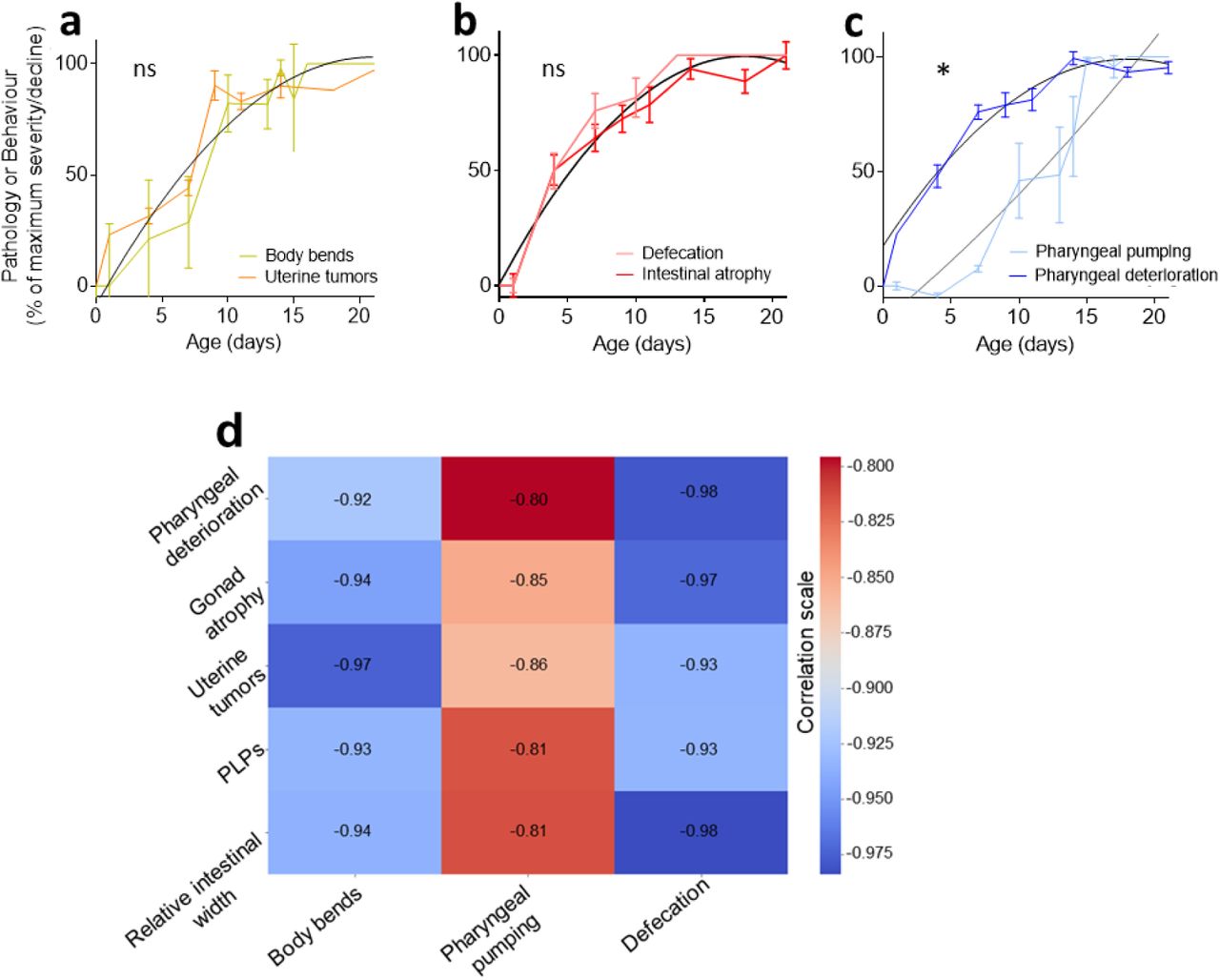
According to Kern et al in "Machine
learning predicts lifespan and underlying causes of death in aging C. elegans"
(2024):
"Senescence (aging) leads to
senescent pathology that causes death, and genes control aging by determining
such pathology. Here we investigate how senescent pathology mediates the effect
of genotype on lifespan in C. elegans by means of a data-driven approach, using
machine learning (ML). To achieve this we gathered extensive data on how diverse
determinants of lifespan (sex, nutrition, genotype) affect patterns of
age-related pathology. Our findings show that different life-extending
treatments result in distinct patterns of suppression of senescent pathology. By
analysing the differential effects on pathology and lifespan, our ML models were
able to predict >70% of lifespan variation. Extent of pathology in the pharynx
and intestine were the most important predictors of lifespan, arguing that
elderly C. elegans die in part due to late-life disease in these organs.
Notably, the mid-life pathogenetic burst characteristic of hermaphrodite
senescence is absent from males."
So...
"As C. elegans hermaphrodites grow
older they exhibit various behavioral impairments affecting, among other things,
locomotion, defecation and pharyngeal pumping."
https://www.biorxiv.org/content/10.1101/2024.03.20.585803v1.full [3432]
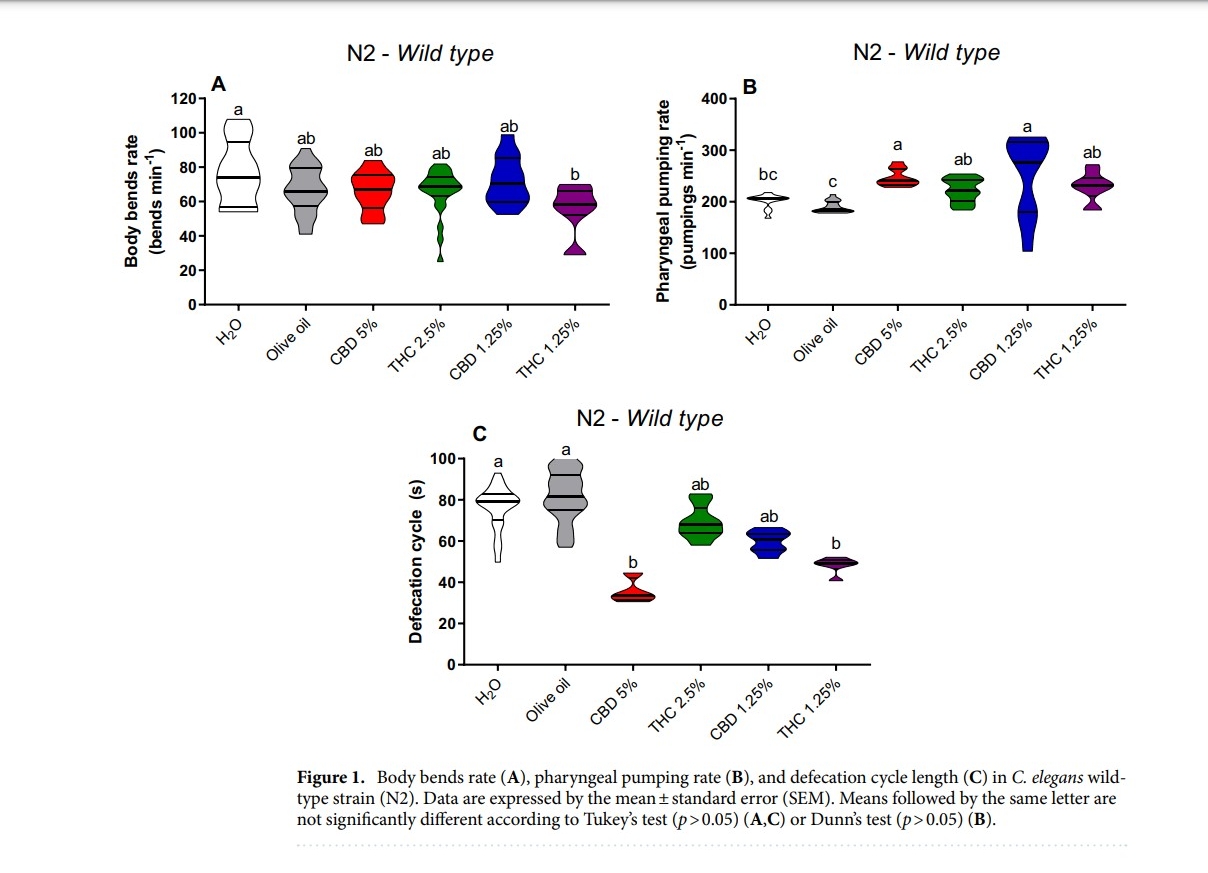
Vanin et al (2021) did not see any
need to disentangle the effects of specific cannabinoids in "Neuroprotective
potential of Cannabis sativa‑based oils in Caenorhabditis elegans", reminding us
that:
"The nematode Caenorhabditis elegans
is an important experimental model, which has diferent neurotransmitter systems
that coordinate its behavior and has a transgene strain that encodes the human
β-amyloid 142 peptide in body wall muscle, one of the main proteins involved in
Alzheimers disease. Therefore, the objective of this study was to evaluate the
protective potential of terpenoids found in C. sativa in the GNS and CholNS of
C. elegans. The efect of two C. sativa oils with variations in CBD and THC
concentrations on acetylcholinesterase (AChE) activity, lipid peroxidation, and
behavior of C. elegans was evaluated. C. sativa oils were efficient in
increasing pharyngeal pumping rate and reducing defecation cycle, AChE activity,
and ROS levels in N2 strains. In the muscle: Abeta1-42 strain, mainly when using
CBD oil, worm movement, body bends, and pharyngeal pumping were increased, with
a reduced AChE activity. Consequently, greater investments in scientifc research
are needed, in addition to breaking the taboo on the use of the C. sativa plant
as an alternative for medicinal use, especially in neurodegenerative diseases,
which have already shown positive initial results."
"Naturally, in C. elegans mutant
strains for neurodegenerative diseases, as well as in patients afected by
neurodegenerative diseases, there is a harmful decrease in the levels of
neurotransmitters and also in the activity of enzymes that act in the synapse
process. To reverse this efect, defining compounds capable of activating and
stabilizing these enzymes at normal levels is an important process to reduce the
progression of neurodegenerative diseases. The modulation of enzymes such as
AChE can positively infuence neurotransmission in neurodegenerative patients
since in many diseases such as Alzheimers and Parkinsons, intense and dense
protein neurofibrillary tangles are formed in the synaptic clefts. Therefore,
the activation of nervous system enzymes intensifes the processes, equalizing
the synapses.
"In addition, the endocannabinoid
system receptors, mainly CB1, are important biomarkers of body weight gain.
Cannabis is known to increases appetite, particularly in high-fat foods. This
occurs as the endocannabinoid system regulates energy balance and food intake at
various functional levels, both in the brain and in the gastrointestinal tract.
Thus, the increase in the pharyngeal rate in the mutant strains can also be
related to the food-inducing efect of these organisms. This is particularly
important in patients sufering from neurodegenerative diseases with loss of
appetite, where the use of oils can also favor an improvement in food intake.
"Studies such as the one presented
are important to clarify the true mechanisms by which fragmented or small
improvements are observed in chronic diseases linked to the central nervous
system. However, even more importantly, it is necessary to show through science,
the need [to] not discriminate between these therapies. Considering that, in
many cases, it is the most effective and perhaps the only alternative
available,"
https://www.nature.com/articles/s41598-022-19598-3.pdf [3431]
With the greatest of respect, we have
not banned, on the say-so of a jazz-hating racist, a circus promoter, or a Prime
Minister who lived in a tin shed and forbade his family and guests hot water
except on Sundays, such other well-known longevity promoting items such as olive
oil, fish or wheat, while we wait for science to test their effects on the
wriggliness or digestive performance of worms.
Nor is a prohibition of longevity
required while capitalism attempts to prolong, for the sectoral benefit of
pharmacists, these nevertheless fascinating confirmations of what everyone
except the government and the NIJZ knows: that if it feels good, do it.
----------------------------------------------------------------------------
The Englishman stands
for the rights of everyone disadvantaged, discriminated against, persecuted, and
prosecuted on the false or absent bases of prohibition, and also believes the
victims of these officially-sanctioned prejudices have been appallingly treated
and should be pardoned and compensated.
The Englishman requests the return of his
CaPs
and other
rightful property, for whose distraint Slovenia has proffered no credible excuse
or cause.
The Benedictions represent both empirical entities as
well as beliefs. Beliefs which the Defence evidence shows may be reasonably and
earnestly held about the positive benefits of CaPs at the population level, in
which the good overwhelmingly outweighs the bad. Below, the latest version of
this dynamic list.
THE BENEDICTIONS
REFERENCES
TIMELINE OF DRUG LAW v. SCIENCE